Laying gray concrete paving slabs in house courtyard driveway patio. Professional workers bricklayers are installing new tiles or slabs for driveway, sidewalk or patio on leveled foundation base made of sand at public or private residence.
Concrete paving is a popular choice for driveways, parking areas, access roads, walkways, and other outdoor surfaces because it offers strength, stability, and a clean finished appearance. However, the total expense of a concrete paving project can vary considerably depending on the property’s conditions and the work required. Understanding these costs before construction begins helps property owners plan realistically and avoid unexpected expenses.
When researching concrete pavement cost per square foot, it is important to look beyond the basic price of the concrete itself. Excavation, ground preparation, slab thickness, reinforcement, drainage, labor, and finishing all contribute to the final investment. Knowing how these elements affect a project makes it easier to compare estimates and choose a solution that provides lasting value.
1. Project Size and Pavement Layout
The size of the area being paved is one of the first factors contractors consider when preparing an estimate. Larger surfaces generally require more concrete, aggregate, labor, and equipment. However, the overall layout can also influence the amount of work involved.
A simple rectangular driveway may be relatively straightforward to measure, prepare, and pour. In comparison, a surface with curved edges, multiple sections, tight corners, or changes in elevation may require additional formwork and finishing time. Accurate measurements are essential because they help determine material quantities and reduce the risk of ordering too much or too little concrete.
Property owners should also consider future needs. If a driveway may eventually accommodate additional vehicles or a wider access route, including those requirements in the initial design could help avoid expensive modifications later.
2. Site Preparation and Excavation Requirements
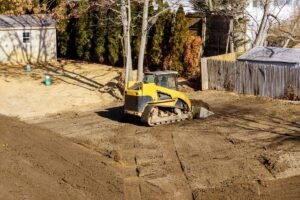
The condition of the property before construction can have a significant effect on concrete paving expenses. Existing vegetation, old pavement, loose soil, buried debris, or uneven ground may need to be addressed before the new surface can be installed.
Removing Existing Materials
If the area already contains damaged concrete, asphalt, or landscaping, removal and disposal may be necessary. The amount of demolition work depends on the material, its thickness, site accessibility, and the equipment required.
Narrow entrances or restricted working areas can make excavation and material removal more complicated. These conditions should be assessed before the contractor finalizes the estimate.
Grading and Ground Compaction
After excavation, the ground needs to be shaped and prepared to support the pavement. Proper grading establishes the required elevations, while compaction helps create a stable subgrade.
If the soil is soft, inconsistent, or unsuitable for the intended application, additional preparation may be needed. Skipping this work to reduce the initial price can contribute to settlement, cracking, and uneven pavement over time.
3. Concrete Thickness and Material Specifications
Concrete thickness affects both material quantities and the pavement’s ability to handle expected loads. A walkway used mainly by pedestrians has different requirements from a driveway supporting passenger vehicles or a commercial area exposed to delivery trucks.
The contractor should recommend a suitable slab thickness based on the intended use, soil conditions, and supporting base. Choosing a specification without considering these factors can lead to unnecessary material expenses or inadequate structural performance.
Concrete mix requirements also influence pricing. Different applications may call for particular strength and durability characteristics, depending on expected traffic and environmental exposure. Ask for the proposed specifications in writing so you can understand what is included in the quotation.
4. Reinforcement and Joint Installation
Concrete can develop cracks as it cures, shrinks, and responds to temperature changes. Reinforcement and control joints are important design considerations that help manage these conditions.
Depending on the project, contractors may recommend reinforcing steel or welded wire mesh. These materials can increase installation costs, but their use should be based on the pavement design and expected loading rather than added automatically to every project.
Control joints create planned locations for shrinkage-related cracking. Their spacing and placement should account for slab dimensions, thickness, and layout. Property owners should ask how joints will be incorporated and whether reinforcement is included in the estimate.
5. Drainage and Property Conditions
A concrete surface needs suitable drainage to prevent water from collecting in unwanted areas. Poor water management can affect the pavement’s surroundings and may contribute to erosion or loss of support beneath the slab.
For properties with slopes, low spots, or existing runoff problems, contractors may need to adjust grading and pavement elevations. Additional drainage features could also be necessary depending on the site.
Local weather conditions are another consideration. In areas that experience heavy rainfall, temperature changes, or seasonal freezing, pavement design and water management deserve particular attention. A contractor should consider how the finished surface will perform under the property’s typical conditions instead of focusing only on installation-day requirements.
6. Labor, Equipment, and Site Accessibility
Concrete paving involves several stages, including excavation, base preparation, form installation, concrete placement, finishing, and curing. The labor required depends on the project’s size, complexity, and site conditions.
Equipment needs can also affect the budget. Some properties provide easy access for delivery vehicles and machinery, while others have narrow entrances, limited working space, or difficult terrain. Restricted access may require additional handling or a different construction approach.
Before accepting an estimate, ask whether labor, equipment, concrete delivery, site cleanup, and waste removal are included. Understanding these details helps prevent confusion when the project is underway.
7. Finishing Options and Maintenance Expectations
The desired appearance of the finished pavement can influence the overall price. Standard concrete finishes are often suitable for practical surfaces, while decorative options may involve additional labor, materials, and installation steps.
Some property owners prefer exposed aggregate, textured finishes, or colored concrete to complement the surrounding landscape and buildings. These choices should be considered alongside practical needs such as traction, cleaning, and maintenance.
It is also worth discussing curing procedures and when the pavement can safely be used. Concrete needs appropriate time to develop strength, and premature vehicle access can damage a newly installed surface. Following the contractor’s guidance helps protect the investment.
8. How to Compare Concrete Paving Estimates
A low quotation does not always represent the best overall value. One contractor may include excavation, aggregate base, reinforcement, and drainage adjustments, while another may quote only for concrete placement.
When comparing proposals, check whether they clearly describe:
- Total pavement dimensions and planned thickness.
- Excavation, grading, and subgrade preparation.
- Aggregate base materials and compaction.
- Concrete specifications and reinforcement.
- Joint placement, finishing, and curing arrangements.
- Drainage work, equipment, delivery, and cleanup.
- Potential additional costs if unexpected site conditions arise.
Request clarification whenever an estimate contains vague descriptions or excludes important work. A detailed proposal makes it easier to understand the project’s actual scope and compare contractors on an equal basis.
Planning With the Right Construction Support
Property owners arranging excavation, grading, or concrete-related site work may consider Brynion Excavation when exploring suitable professional support. Discussing the property’s layout, ground conditions, access limitations, and intended pavement use can help establish the work required before finalizing a project budget.
Concrete paving expenses are influenced by much more than surface area alone. Careful planning, appropriate material specifications, proper ground preparation, and effective drainage all contribute to a dependable result. Before moving forward, request a detailed estimate and discuss your priorities with an experienced contractor so you can make an informed investment in a durable surface.