-
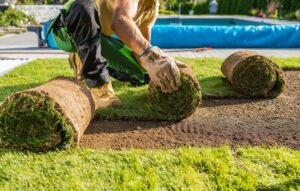
Sod installation Fort Worth TX gives homeowners and property managers the fastest, most reliable way to establish a thick, vibrant green lawn without waiting months for grass seed to take root. A healthy, lush lawn instantly elevates curb appeal and increases property value across North Texas. However, growing turf from scratch in Fort Worth requires overcoming unique climate obstacles, including blistering summer temperatures, sudden dry spells, and heavy black clay soil.
By investing in professional sod installation Fort Worth TX, you bypass the frustration of patchy seed growth and washouts. Mature, farm-harvested turf rolls are laid directly onto prepared ground, delivering an instant landscape transformation, immediate erosion control, and natural protection against invasive weeds from day one.
Choosing the Best Grass Varieties for Sod Installation in Fort Worth, TX
Selecting the right turfgrass variety is the first step toward a thriving landscape. Different grass species thrive under specific light conditions, foot traffic levels, and maintenance preferences.
1. Bermudagrass (TifTuf, Tifway 419, Celebration)
Bermudagrass is the most widely installed warm-season grass in Fort Worth. It thrives in full sunlight, recovers rapidly from heavy activity, and boasts incredible drought tolerance once established.
-
Best For: Full sun yards, active families, and high-traffic areas.
-
Sunlight Requirements: 6+ hours of direct sunlight daily.
-
Drought Resistance: Excellent.
2. St. Augustine (Raleigh, Palmetto)
St. Augustine grass is famed for its broad blades and rich, dark green, carpet-like appearance. It is the premier option for property owners with mature oak trees or shaded structures where Bermudagrass struggles.
-
Best For: Dappled shade and shaded residential lots.
-
Sunlight Requirements: Partial shade to full sun (4 to 5 hours minimum).
-
Maintenance: Requires higher water and regular fertilizing.
3. Zoysia Grass (Palisades, Zeon)
Zoysia is a premium turfgrass that combines the soft texture of fine blades with exceptional durability. It forms a dense canopy that naturally prevents weed growth and grows moderately slower, meaning less frequent mowing.
-
Best For: Barefoot comfort, moderate shade, and luxury landscapes.
-
Sunlight Requirements: Partial sun to full sun.
-
Maintenance: Low mowing frequency, though initial investment is higher.
4. Native Buffalograss (Prairie, 609)
For an eco-conscious yard requiring minimal water and fertilizer, native Buffalograss is an excellent choice. It maintains a natural prairie texture and survives extreme Texas heat with very little intervention.
-
Best For: Low-maintenance lawns, native plant enthusiasts, and low-water zones.
-
Sunlight Requirements: Direct, unshaded sunlight.
-
Maintenance: Minimal mowing and irrigation needed.
-
Post-Installation Care and Watering Schedule
The survival of fresh sod depends almost entirely on watering practices during the first month.
Weeks 1 and 2: Root Establishment Phase
-
Watering Frequency: Water 2 to 3 times daily for short periods (10 to 15 minutes per zone).
-
Goal: Keep the sod pad and underlying topsoil continuously moist without causing soggy runoff.
-
Foot Traffic: Strictly keep pets and humans off the lawn to prevent shifting the loose sod rolls.
Weeks 3 and 4: Deep Root Growth
-
Watering Frequency: Transition to 1 deep watering per day in the early morning.
-
Goal: Encourage roots to grow deeper down into the newly tilled soil in search of moisture.
-
First Mowing: Gently test if the sod has rooted by lifting a corner. If it resists, perform your first mow using a raised deck height, making sure not to remove more than one-third of the blade height.
Month 2 and Beyond: Maintenance Irrigation
-
Watering Frequency: Shift to standard local watering schedules (1 to 1.5 inches of water per week).
-
Goal: Maintain healthy green growth while remaining compliant with Tarrant Regional Water District watering schedules.
Conclusion
Investing in professional sod installation in Fort Worth, TX is one of the most effective ways to replace dead, weed-filled lawns with strong, vibrant turfgrass. By picking a grass variety suited to your sunlight exposure, properly breaking up dense North Texas clay, and sticking to an effective early watering routine, your fresh lawn will establish deep roots and thrive through scorching summers and cold winters for years to come.