Landscaping Around Playgrounds
A playground is more than a collection of play equipment. The surrounding landscape plays an important role in creating a safe, comfortable, and engaging environment for children, families, schools, councils, and local communities. Well-planned landscaping around playground areas can improve accessibility, provide shade, manage drainage, and create a visually appealing setting.
For public spaces across New South Wales, professional public domain landscaping in NSW can help ensure playground environments are practical, welcoming, and suitable for regular community use.
The Importance of Landscaping Around Playgrounds
The area surrounding playground equipment needs to support both play and everyday use. Thoughtful landscaping can help define different zones while creating a comfortable environment for children and supervising adults.
Planting, pathways, seating, shade structures, lawns, and other landscape elements can work together to make the entire playground area more functional. Landscaping can also improve the visual connection between the playground and the surrounding park or public space.
Safety Considerations for Playground Landscaping
Safety should be considered throughout the planning and construction process. Landscape elements need to be positioned carefully so they do not create unnecessary hazards around play areas.
Plant selection is particularly important. Plants with sharp thorns, irritating foliage, or potentially harmful characteristics may not be appropriate near children’s play spaces. Trees and planting should also be positioned with consideration for visibility and supervision.
Paths and access areas should provide clear movement around the playground while avoiding unnecessary obstacles. Appropriate surface selection and drainage are also important considerations for maintaining a usable outdoor environment.
Shade and Comfort
Playgrounds can become uncomfortable during warmer weather when there is limited shade. Landscaping can help create cooler and more comfortable areas for children and families.
Strategically positioned trees and suitable planting can provide natural shade while contributing to the overall appearance of the site. Shade structures may also be incorporated where appropriate.
When selecting trees for playground environments, factors such as growth patterns, root systems, maintenance requirements, and available space should be considered.
Public Domain Landscaping in NSW
Public domain landscaping in NSW involves creating and improving outdoor spaces that are accessible to the wider community. These projects may include parks, playgrounds, streetscapes, community spaces, recreational areas, and other public environments.
Public landscaping projects need to consider more than appearance. Accessibility, durability, maintenance, drainage, pedestrian movement, and long-term functionality are all important factors.
For playground projects, the landscape should integrate naturally with existing public infrastructure while providing a practical environment for children and visitors.
Planting Around Playground Areas
Appropriate planting can enhance the appearance of a playground while helping define different areas within the site. Trees, shrubs, grasses, and groundcovers can be used to create visual interest without interfering with play activities.
Planting should be selected according to the local environment and expected maintenance requirements. Hardy, suitable species can help reduce ongoing maintenance while supporting a healthier landscape.
Plants should also be positioned to maintain clear sightlines where supervision is important.
Paths and Accessibility
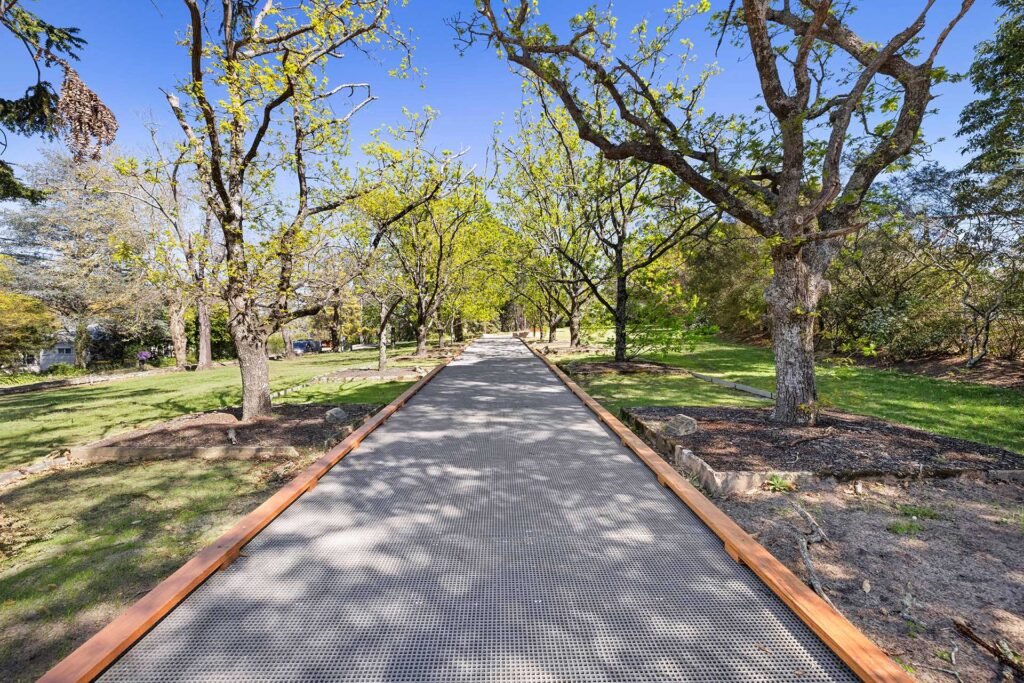
Accessible pathways are an important component of playground landscaping. Clearly defined paths can connect playground equipment with entrances, seating areas, nearby facilities, and other parts of the public space.
Path design should consider users with different mobility requirements, including parents with prams and people using mobility devices.
A well-connected layout can make the playground easier to navigate while improving the overall usability of the surrounding public area.
Seating and Family Areas
Seating provides parents, carers, and other visitors with comfortable places to supervise children and enjoy the outdoor environment.
Benches, picnic tables, and other seating options can be positioned around the playground while maintaining appropriate visibility of play areas. Landscaping around seating can provide additional privacy, shade, and visual separation without restricting supervision.
Drainage and Water Management
Effective drainage is essential for playground landscapes. Standing water can damage landscape features and make areas difficult or unsafe to use.
Landscape planning should consider natural water flow, surface levels, soil conditions, and appropriate drainage solutions. Good water management can help protect pathways, planting areas, play surfaces, and surrounding infrastructure.
Creating Sustainable Playground Landscapes
Sustainability is increasingly important in public landscaping projects. Thoughtful landscape planning can help reduce water consumption, support local biodiversity, and minimise long-term maintenance requirements.
Native and climate-appropriate plants can be considered where suitable. Mulching, efficient irrigation, appropriate soil preparation, and responsible water management can also contribute to a more sustainable landscape.
Sustainable landscaping should balance environmental benefits with the practical requirements of a busy public playground.
Planning a Successful Playground Landscape
A successful playground landscape begins with understanding how the space will be used. Designers and contractors should consider children’s activities, supervision, pedestrian movement, accessibility, maintenance, surrounding infrastructure, and environmental conditions.
Professional planning can help coordinate landscape elements with playground equipment and existing site features. This creates a cohesive environment rather than treating the playground and landscape as separate components.
For councils, schools, developers, and community organisations, working with experienced landscaping professionals can also help address the specific requirements of public outdoor spaces.
Conclusion
Effective landscaping around playground areas can transform a basic play space into a welcoming and functional community environment. From planting and shade to pathways, seating, drainage, and accessibility, every landscape element contributes to how the space is experienced.
Professional public domain landscaping in NSW can help create durable and attractive playground environments that support children, families, and the wider community while meeting practical site requirements.