Pizza is one of the most popular foods worldwide, enjoyed by people of all ages. Whether it is a quick lunch, a family dinner, or a party treat, good packaging plays an important role in keeping pizza fresh and delicious. Understanding pizza box dimensions helps restaurants, takeaway businesses, and packaging companies choose the right boxes for different pizza sizes. A properly sized box protects the pizza, prevents toppings from moving, and makes delivery easier. From small personal pizzas to large family-sized options, choosing suitable packaging can improve the overall customer experience.
Why Are Pizza Box Dimensions Important?
Pizza box size is more important than many people realize. A box that is too small can squeeze the pizza, damage its crust, or ruin the toppings. On the other hand, an oversized box may allow the pizza to slide around during transportation.
The right dimensions provide enough room for the pizza while keeping it secure. They also help restaurants manage storage space, reduce packaging waste, and maintain a professional presentation. For pizza businesses, selecting appropriate packaging is a simple way to improve food quality and customer satisfaction.
Standard Pizza Box Dimensions for Different Sizes
Pizza boxes are available in different measurements depending on the size and style of the pizza. Although dimensions can vary between manufacturers, some standard measurements are commonly used.
Small Pizza Box Dimensions
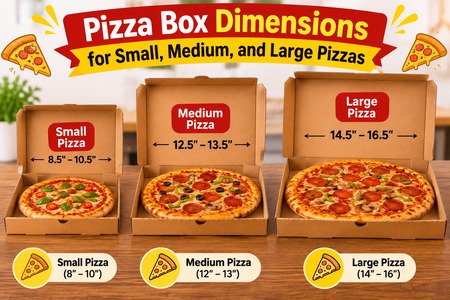
Small pizza boxes are generally designed for personal pizzas measuring around 8 to 10 inches in diameter. These boxes are suitable for individual customers who prefer smaller portions.
Common small pizza box dimensions include:
- 8-inch pizza box: Approximately 8.5 x 8.5 inches
- 9-inch pizza box: Approximately 9.5 x 9.5 inches
- 10-inch pizza box: Approximately 10.5 x 10.5 inches
Small boxes are easy to carry and require less storage space. They are also a practical choice for restaurants offering personal pizzas, children’s meals, and individual takeaway orders.
Medium Pizza Box Dimensions
Medium pizzas are popular among couples, small families, and customers who want to share a meal. They usually measure around 12 inches in diameter.
Typical medium pizza box dimensions include:
- 12-inch pizza box: Approximately 12.5 x 12.5 inches
- 13-inch pizza box: Approximately 13.5 x 13.5 inches
These boxes provide sufficient space around the pizza, helping prevent the crust and toppings from touching the sides. Medium pizza packaging is widely used by restaurants because it offers a convenient balance between portion size and affordability.
Large Pizza Box Dimensions
Large pizzas are ideal for families, parties, and group gatherings. They commonly measure between 14 and 16 inches in diameter, depending on the restaurant.
Common large pizza box dimensions include:
- 14-inch pizza box: Approximately 14.5 x 14.5 inches
- 16-inch pizza box: Approximately 16.5 x 16.5 inches
Large boxes need strong construction to support the pizza without bending. They should also provide enough height to protect thick crusts and generous toppings. Choosing durable large pizza packaging helps maintain the pizza’s shape during delivery.
Extra-Large Pizza Box Dimensions
Some restaurants offer extra-large pizzas measuring 18 inches or more. These pizzas require wider packaging that can support their weight and size.
An 18-inch pizza may require a box measuring approximately 18.5 x 18.5 inches. However, exact measurements depend on the pizza style, crust thickness, and manufacturer’s design.
Extra-large boxes are particularly useful for family restaurants, catering businesses, and special events. Since these packages are bigger, businesses should choose strong cardboard that can handle transportation without collapsing.
How to Choose the Right Pizza Box Size
Choosing the correct pizza box involves more than simply matching the box to the pizza diameter. Several factors should be considered before selecting packaging.
Measure the Pizza Correctly: Start by measuring the pizza from one edge of the crust to the opposite edge. This gives you the actual diameter and helps determine the appropriate box size.
Consider Crust Thickness: Thick-crust pizzas, stuffed-crust options, and pizzas with extra toppings may require additional space. Make sure the box provides enough height to prevent the lid from pressing against the food.
Check the Material: Corrugated cardboard and food-grade paperboard are common packaging materials. Select a material that provides suitable strength and protects the pizza during delivery.
Think About Ventilation: Proper ventilation allows excess steam to escape. Without ventilation, trapped moisture can make the crust soft and affect the pizza’s texture.
Consider Storage Space: Restaurants should also think about how boxes will be stored. Standardized sizes can make packaging easier to organize and manage.
Materials Used in Pizza Boxes
Pizza boxes are commonly manufactured using cardboard and paper-based materials. These materials are popular because they are lightweight, practical, and suitable for food packaging.
Corrugated cardboard offers additional strength because it contains a fluted layer between flat sheets. This construction helps protect pizzas from pressure during transportation.
Paperboard is another option, often used for lightweight packaging. Businesses may also choose recyclable materials to reduce unnecessary packaging waste.
When selecting a pizza box, always consider food safety, durability, and the packaging requirements of your business.
The Role of Packaging in Customer Satisfaction
Packaging is often the first thing customers notice when receiving a takeaway order. A clean, sturdy, and properly sized box creates a positive impression before the customer even opens it.
The right packaging keeps pizzas organized and makes them easier to transport. It also reduces the chances of crushed edges, displaced toppings, and damaged crusts.
Businesses that focus on packaging quality can build stronger customer relationships. This is especially important in a competitive food industry where customers expect both excellent taste and reliable service.
Why Businesses Should Focus on Better Packaging
Modern food businesses understand that packaging is an important part of their brand identity. Customers appreciate boxes that are practical, attractive, and easy to handle. For businesses exploring packaging trends and creative ideas, platforms and resources such as Bizz Craves can be part of discovering fresh inspiration for improving business presentation and customer experiences. Restaurants can also customize their pizza boxes with logos, brand colors, promotional messages, and contact information. Custom printing helps businesses become more recognizable while creating a professional appearance.
However, attractive designs should never replace quality. A pizza box must still be strong enough to protect the food and maintain its freshness during delivery.
Common Mistakes to Avoid When Selecting Pizza Boxes
Some businesses make packaging mistakes that can affect their operations and customer satisfaction. Here are a few common problems to avoid:
Choosing a box that is too small: This can damage the pizza and squeeze the crust.
Using oversized packaging: Extra space may allow the pizza to move during transportation.
Ignoring box strength: Weak cardboard can bend under the weight of larger pizzas.
Forgetting ventilation: Poor airflow can lead to excess moisture inside the box.
Overlooking food safety: Always select packaging materials designed for food contact.
Avoiding these mistakes helps businesses provide better packaging and a more reliable takeaway experience.
Conclusion
Understanding pizza box dimensions for small, medium, and large pizzas makes it easier to choose suitable packaging for different food businesses and customer needs. Small boxes are ideal for personal pizzas, medium boxes work well for couples and smaller families, while large and extra-large boxes provide enough space for sharing.
The right packaging protects pizza quality, supports convenient delivery, and creates a positive impression. By considering measurements, materials, ventilation, and durability, restaurants can select boxes that meet their requirements. Whether you run a small takeaway shop or a busy pizza restaurant, investing in the right pizza packaging is a smart step toward better customer satisfaction and business success.
Here are 5 SEO-friendly FAQs for your article, “Pizza Box Dimensions for Small, Medium, and Large Pizzas.”
Frequently Asked Questions (FAQs)
What are the standard pizza box dimensions?
Standard pizza box dimensions depend on pizza size. Small boxes are usually 8.5 × 8.5 inches, medium boxes are around 12.5 × 12.5 inches, and large boxes are approximately 14.5 × 14.5 or 16.5 × 16.5 inches.
What size pizza box is needed for a 12-inch pizza?
A 12-inch pizza typically requires a box measuring approximately 12.5 × 12.5 inches. This provides enough extra space to protect the crust and toppings.
What are the dimensions of a large pizza box?
Large pizza boxes generally measure between 14.5 × 14.5 inches and 16.5 × 16.5 inches, depending on the pizza’s diameter and thickness.
Why are pizza box dimensions important?
Pizza box dimensions are important because they protect the pizza during storage and delivery. Properly sized packaging prevents toppings from moving, keeps the crust intact, and maintains food quality.
Which material is best for making pizza boxes?
Corrugated cardboard and food-grade paperboard are popular choices for pizza boxes. They are lightweight, practical, and provide suitable protection during transportation.