Powered access equipment is used across construction, maintenance, warehousing and industrial environments. Although MEWPs provide an effective way to reach elevated work areas, they must be operated by people who understand the equipment and its safety requirements.
IPAF training helps operators develop the knowledge and practical skills needed to use powered access equipment safely. Businesses and individuals researching IPAF MEWP training should understand the available categories, course requirements and factors that influence training costs.
What Is IPAF Training?
IPAF training is designed for people who operate or work with mobile elevating work platforms. It covers equipment operation, hazard awareness, safe working practices and relevant operating procedures.
Training combines theoretical learning with practical instruction and assessment, depending on the course and category.
The International Powered Access Federation (IPAF) promotes the safe and effective use of powered access equipment through training, guidance and industry resources.
Understanding IPAF MEWP Training Categories
Different MEWP categories relate to different types of powered access equipment. Selecting the correct category is important because training should match the machine an operator will use.
Common operator categories include:
IPAF 1b Training
This category covers static boom-type mobile elevating work platforms. These machines are designed to provide elevated access while remaining stationary during operation.
IPAF 3a Training
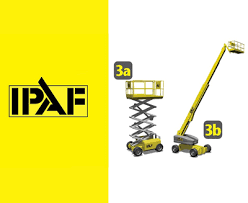
This category covers mobile vertical MEWPs, including many types of mobile scissor lifts. It is relevant to operators who use equipment designed primarily for vertical access.
IPAF 3b Training
This category covers mobile boom-type MEWPs, including suitable self-propelled boom lifts that provide elevated access and horizontal outreach.
Operators should select training based on the equipment they are expected to operate. Course categories and eligibility should always be confirmed with the training provider.
IPAF 3a and 3b Training: What Is the Difference?
IPAF 3a and 3b training cover different machine types. The 3a category focuses on mobile vertical platforms, while 3b covers mobile boom-type platforms.
A worker who operates both scissor lifts and mobile boom lifts may need training in both categories, depending on their job responsibilities and the applicable requirements.
Completing the appropriate training helps operators understand the different controls, operating limitations and hazards associated with each machine type.
Choosing the Right IPAF Training Centres
When comparing IPAF training centres, learners and employers should check that the provider is appropriately accredited for the required training.
Important factors include:
- Whether the centre offers the required MEWP categories.
- Availability of suitable training machines.
- Qualified instructors and practical facilities.
- Course structure and assessment arrangements.
- Training dates and location.
- Details of certification and PAL Card processes.
Businesses operating across different locations may also need to consider travel time and the availability of training for groups of employees.
Access Rental Gulf provides information about its IPAF training services for businesses and individuals in the Gulf region.
What Determines IPAF Training Cost?
IPAF training cost can vary depending on several factors. There is no single price that applies to every course or training centre.
The cost may depend on:
- The selected training category.
- Whether one or multiple categories are required.
- Course duration and training arrangements.
- Training centre location.
- Availability of practical equipment.
- Certification and administration arrangements.
- Group bookings or employer requirements.
The best approach is to request a quotation from an appropriate training centre and confirm exactly what the course fee includes.
Finding IPAF Training Near Me
People searching for IPAF training near me should compare training providers based on location, course categories and accreditation.
However, the nearest centre may not always offer the required machine category or suitable course dates. It is worth confirming these details before booking.
Employers should also consider whether group training can be arranged for their workforce, particularly when several employees require the same category.
Preparing for an IPAF Course
Before attending training, learners should understand the course requirements and bring any requested identification or documentation.
They should also be prepared to take part in both theoretical and practical learning where required.
Operators should remember that training is only one part of safe MEWP operation. Workplace familiarisation, site-specific instruction, risk assessment and supervision remain important.
Conclusion
IPAF MEWP training helps operators understand the safe use of powered access equipment. Whether someone requires IPAF 1b training, IPAF 3a training or IPAF 3a and 3b training, the correct course should match their equipment responsibilities.
By comparing suitable IPAF training centres, course categories and costs, individuals and employers can make informed decisions about operator development and workplace safety.