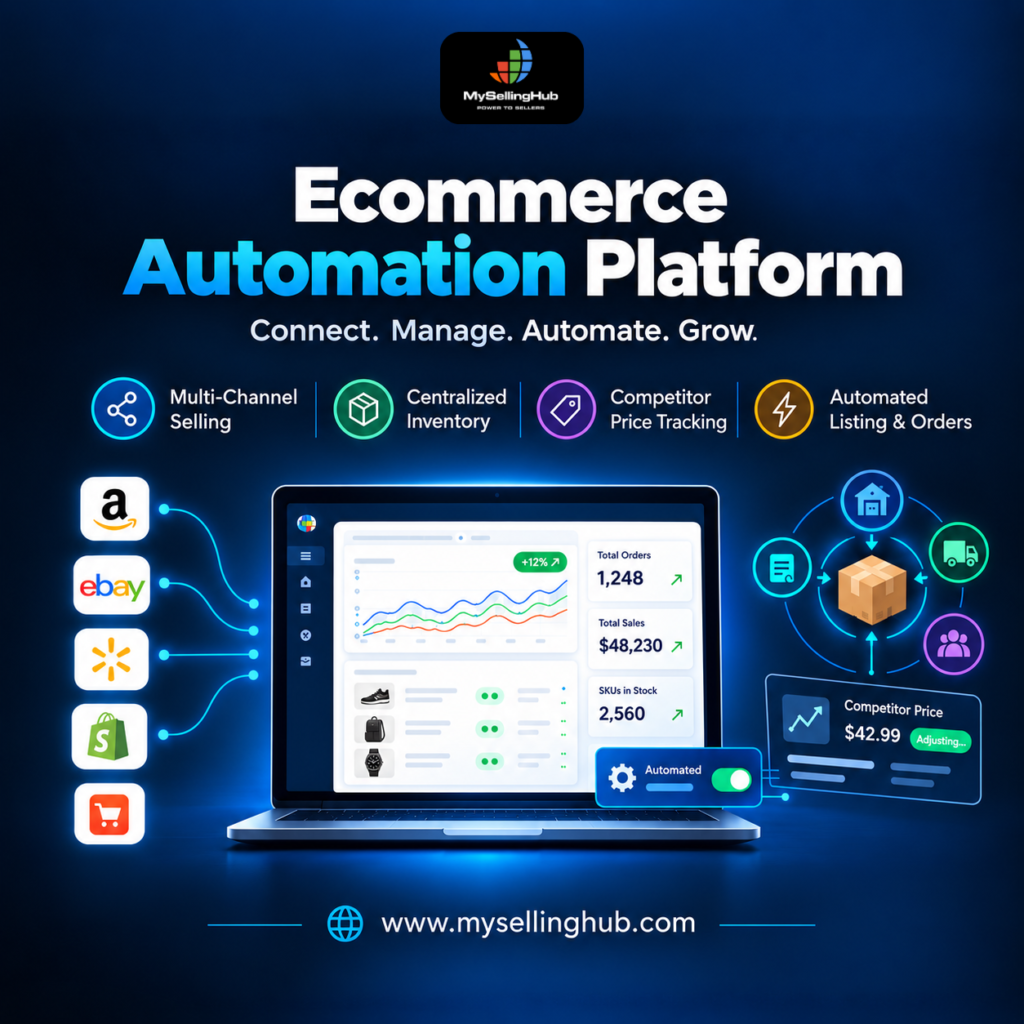
Running an online business means taking care of many things every day. Sellers need to manage products, update stock, check orders, change prices, and keep track of different sales channels. An ecommerce automation platform helps businesses handle many of these tasks from one place instead of doing everything by hand. As a business grows, these tasks can become harder to manage. Selling on more marketplaces and online stores also means more work for the team. Using different tools for every task can lead to mistakes and delays. Ecommerce automation software helps bring these tasks together and makes daily work easier. Here are five ways it is changing how online businesses work.
1. Automating Inventory Management Across Sales Channels
Keeping stock numbers correct can be hard when a business sells on many platforms. For example, a product may sell on one marketplace, but its stock number may not change on another. This can lead to selling products that are no longer available. Multichannel inventory management helps keep stock details updated across connected sales channels. When a product sells on one platform, inventory synchronisation can update its stock number on other supported platforms. This reduces the need for manual updates and helps prevent overselling. Supplier inventory updates also help businesses keep their stock numbers correct by sharing the latest details about available products.
2. Simplifying Product Listings and Catalog Management
Sellers often have to add the same product details to different marketplaces and online stores. Doing this again and again takes time and can lead to mistakes. A central product catalogue keeps details like product names, descriptions, prices, and SKUs in one place. Product listing management tools use these details to create or update listings across connected sales channels. SKU mapping also helps match the same product across different platforms. This makes it easier to track products and keep their details the same. However, each marketplace has its own listing rules, so some changes may still need to be made by hand.
3. Making Order Management More Organised
When orders come from different marketplaces and online stores, it can be hard to track them all. Staff may need to open several websites and copy order details into spreadsheets. Centralised order management brings orders from connected sales channels into one place. Teams can check which orders are new, which are being packed, and which have been shipped. This makes it easier to follow each order and reduces typing mistakes. As the number of orders grows, a clear system helps the team manage daily work without losing track of customer orders.
4. Improving Pricing and Competitor Monitoring
Online prices can change at any time. Sellers who check competitor prices by hand may miss important changes. Ecommerce automation tools can track competitor prices and help sellers change their prices using set rules. This is called automated repricing. Sellers can set the lowest and highest prices they are willing to accept and decide which products should follow these rules. This gives them more control over their prices and saves time spent checking other stores. However, automated repricing does not promise more sales or higher profits. Sellers still need to check prices and make the final decisions.
5. Connecting Suppliers, Teams, and Business Updates
Many businesses get supplier details through emails, chat messages, and spreadsheets. When this information is kept in different places, it can be hard to find what the team needs. A connected platform brings supplier details, product information, and team communication closer together. Team members can check product details or supplier updates without searching through many tools. This helps everyone stay on the same page and reduces the chance of missing important messages. It also gives teams more time to focus on other daily tasks.
Manual Work vs Automated Workflows
Manual work means doing the same task again and again. For example, sellers may need to update stock on every marketplace, add product details to each store, check orders on different websites, and compare competitor prices by hand. These tasks take time and can lead to mistakes. Automated workflows help complete many of these repeated tasks through connected systems. This gives teams more time to focus on work that needs human thinking, such as choosing suppliers, planning offers, and helping customers.
Here are five examples of manual and automated work:
- Stock updates: Update product quantities by hand on each platform or sync stock across connected channels.
- Product listings: Add product details to every store or use one catalogue to manage them.
- Order tracking: Check orders on different websites or view them in one central place.
- Price checking: Visit competitor websites by hand or use tools to track price changes.
- Supplier updates: Search through emails and spreadsheets or check supplier details in one connected system.
Not every task needs to be automated. These systems also depend on correct setup, supported integrations, and accurate data. Some features may work differently across marketplaces and online stores. Teams still need to check the information and make sure everything is working as expected.
Why Connected Ecommerce Systems Matter
Many online businesses use different tools to manage stock, orders, product listings, and supplier details. While each tool may do its job, moving information between them can take extra time. It can also lead to old or incorrect details. A connected platform brings these tasks together and makes daily work easier to follow. Teams can check stock, orders, listings, and supplier updates from one place. This helps businesses manage more products and sales channels without adding the same amount of manual work. It also helps keep important business information in one place. While this does not promise higher sales or lower costs, it can reduce repeated tasks and help teams use their time better.
Conclusion
Managing multiple sales channels becomes easier when product catalogues, listings, inventory, orders, pricing, and supplier details are connected in one place. Businesses that use multichannel inventory management can handle daily tasks without switching between several tools. This gives teams a clearer view of their work and helps them spend less time on repeated updates. The results will depend on the connected platforms, system setup, and quality of the information used. Visit MySellingHub is one such platform that can help simplify daily ecommerce operations.