In 2026, the treadmill test remains a cornerstone of proactive heart health management. As cardiovascular diseases continue to affect younger demographics in urban hubs like Bangalore, more people are searching for a treadmill test near me to assess their fitness levels or investigate symptoms like chest pain and palpitations. However, not all diagnostic centers offer the same level of safety, technological precision, or medical expertise.
Choosing a center is no longer just about the lowest price or the closest location. With the integration of artificial intelligence in ECG analysis and the ongoing quality crisis in unaccredited labs across India, patients must be more discerning. A treadmill test, also known as a TMT or exercise stress test, puts your heart under physical strain to reveal issues that might stay hidden while you are at rest. Selecting the right facility ensures that this “stress” is managed safely and interpreted accurately.
Before you book your appointment, it is essential to compare clinical standards, technological capabilities, and the presence of qualified medical professionals. This guide breaks down the critical factors you should evaluate to ensure you receive a high-quality cardiac assessment that provides real peace of mind.
1. Clinical Expertise and Professional Supervision
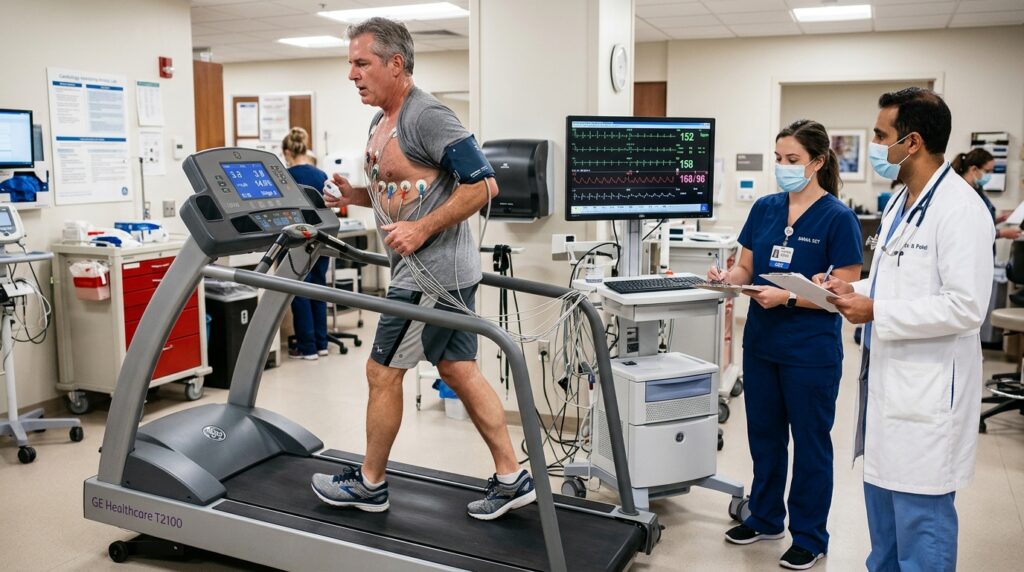
One of the most overlooked factors when searching for a treadmill test near me is who actually monitors the procedure. While technicians are trained to set up the equipment and place the electrodes, the physical presence of a qualified cardiologist or a medical professional trained in Advanced Cardiac Life Support (ACLS) is non-negotiable. During the test, your heart rate and blood pressure are intentionally raised, which can occasionally lead to arrhythmias or other cardiac events that require immediate medical intervention.
A center that relies solely on a technician to run the treadmill and record the ECG may miss subtle indicators of distress. Expert supervision ensures that the test protocol—usually the Bruce or Modified Bruce protocol—is adjusted in real-time based on your physical response. This level of personalized care is what differentiates a standard diagnostic lab from a high-end cardiac center.
Furthermore, the interpretation of the results requires a nuanced understanding of cardiology. While AI tools are increasingly helping to filter out “noise” from the ECG signals caused by movement, the final diagnostic sign-off should always come from an experienced cardiologist. They will correlate your TMT findings with your medical history, symptoms, and other risk factors.
| Feature | Basic Diagnostic Lab | Specialized Cardiac Center |
| :— | :— | :— |
| Supervision | Technician-led with remote review | On-site Cardiologist or ACLS staff |
| Emergency Prep | Basic first aid kit | Defibrillator and emergency medications |
| Protocol | Standard Bruce protocol only | Tailored protocols (e.g., Modified Bruce) |
| Interpretation | General physician or automated report | Consultant Cardiologist |
2. Advanced Technology and AI Integration
The landscape of cardiac diagnostics in 2026 has been transformed by the use of smarter, more sensitive equipment. When comparing options for a treadmill test near me, ask about the age and type of the ECG machines used. Modern systems utilize advanced signal processing to reduce the electrical interference caused by muscle movement during running. This ensures that the heart’s electrical “signature” remains clear even at high speeds and inclines.
Artificial intelligence has also become a valuable tool in 2026 for interpreting exercise ECG data. Recent research indicates that AI models can now interpret TMT results with accuracy levels comparable to seasoned cardiologists. These AI algorithms help in spotting early signs of ischemia (reduced blood flow) that might be difficult for the human eye to detect during the rapid heartbeats of the peak exercise stage.
Technological precision also extends to the treadmill itself. Premium machines offer smoother transitions between speed and incline stages, which is crucial for patient comfort and safety. Centers using legacy equipment from several years ago may provide less reliable data, potentially leading to false positives or missed diagnoses.
- ECG Signal Filtering: Advanced noise-reduction technology prevents movement artifacts from blurring the results.
- AI-Assisted Analysis: Software that cross-references your heart’s response against millions of data points to improve sensitivity.
- Integrated Monitoring: Systems that simultaneously track oxygen saturation (SpO2) and automated blood pressure for a holistic view.
- High-Resolution Displays: Allows the medical team to see real-time 12-lead ECG changes with extreme clarity.
3. Accreditation and Safety Protocols
The safety of a diagnostic center is often reflected in its accreditations. In India, the National Accreditation Board for Testing and Calibration Laboratories (NABL) and the National Accreditation Board for Hospitals & Healthcare Providers (NABH) are the gold standards. Surprisingly, a 2026 report highlighted that out of nearly 3 lakh labs in India, only about 2,200 are NABL accredited. This makes accreditation a vital comparison point when looking for a treadmill test near me.
Accreditation ensures that the lab follows strict hygiene standards, regularly calibrates its equipment, and employs certified staff. For a TMT, where physical exertion is involved, hygiene is particularly important. The chest area where electrodes are placed must be properly cleaned, and the equipment itself should be sanitized between patients to prevent the spread of infections.
Safety protocols also include the center’s readiness for emergencies. A high-quality diagnostic facility will have a crash cart on-site, containing a defibrillator and emergency cardiac drugs. Before booking, you have every right to ask if the center is equipped to handle a cardiac emergency should one occur during the stress test.
- Check for NABL/NABH Logos: Look for these certifications on the center’s website or at the reception desk.
- Inquire About Emergency Equipment: Confirm the presence of a defibrillator in the TMT room.
- Sanitization Standards: Observe if the staff uses fresh electrodes and sanitizes the treadmill handles.
- Staff Certification: Verify that the person conducting the test is certified in basic or advanced life support.
4. Cost Comparison and Transparent Pricing in Bangalore
Price is always a factor when searching for a treadmill test near me, but it should be viewed in the context of value. In Bangalore, the average cost for a treadmill stress test in 2026 typically ranges around ₹2,000. While some labs may offer “discounted” rates as low as ₹1,200, these often lack on-site cardiologist supervision or use older, less accurate equipment.
When comparing costs, ask for a breakdown of what is included. Some centers charge extra for the cardiologist’s consultation or the final printed report. Transparent pricing means you won’t face hidden fees after the test is completed. Additionally, check if the diagnostic center is partnered with major health insurance providers or if the test can be included in a larger preventive health package, which often provides better value.
It is also worth noting that many term insurance policies in 2026 now require a TMT as part of their medical checkup. If you are taking the test for insurance purposes, ensure the center is approved by your insurance company to avoid having to repeat the test elsewhere.
- Base Price: Typically ₹1,800 to ₹2,500 in reputable Bangalore centers.
- Inclusions: Confirm if the cardiologist’s review and digital report access are included.
- Package Deals: Many centers offer TMT as part of a “Executive Cardiac Profile” which includes an Echo and blood tests.
- Insurance Tie-ups: Verify if the center supports cashless or reimbursable claims for diagnostic procedures.
5. Reporting Speed and Digital Accessibility
In the digital-first environment of 2026, how you receive your results is just as important as the test itself. A top-tier center for a treadmill test near me should provide digital reports within a few hours of the procedure. These reports should be accessible via a secure patient portal, WhatsApp, or email, allowing you to easily share them with your primary doctor or cardiologist.
Fast turnaround times are crucial, especially if you are experiencing symptoms and need a quick diagnosis to start treatment. Some centers now offer “Tele-cardiology” services where your results are reviewed by a specialist remotely, speeding up the process without compromising on quality.
Beyond just the speed, the report’s clarity is essential. Modern TMT reports in 2026 often include a “Duke Treadmill Score,” which provides a standardized calculation of your cardiac risk based on exercise duration and ECG changes. A good center will provide a report that is comprehensive but easy for a non-medical person to understand, with a clear “Normal” or “Abnormal” summary.
- Turnaround Time: Look for centers that provide results within 2 to 4 hours.
- Format: Digital PDF reports are standard; avoid centers that only provide physical paper copies.
- Digital History: Check if the center stores your reports for future comparison, which is vital for monitoring heart health over time.
- Specialist Access: Some centers offer a quick post-test briefing with a doctor to explain the immediate findings.
6. Patient Experience and Test Preparation
The actual experience of taking a treadmill test can be intimidating for some. When evaluating a treadmill test near me, consider the “soft” factors like the friendliness of the staff and the comfort of the waiting area. A center that provides clear pre-test instructions—such as what to wear and how long to fast—demonstrates a higher level of patient care.
Standard 2026 guidelines suggest avoiding caffeine, nicotine, and heavy meals for at least 3 hours before the test. Some medications, particularly beta-blockers, may need to be paused under your doctor’s supervision as they can prevent your heart rate from reaching the target zone. A diagnostic center that proactively reminds you of these steps is more likely to provide a high-quality experience.
Convenience also plays a role. If you are in Bangalore, look for centers that offer online booking and are located in areas with accessible parking. The easier the process is, the more likely you are to complete your regular cardiac screenings on time.
| Preparation Step | Why It Matters |
| :— | :— |
| Light Meal Only | Prevents nausea or discomfort during intense exercise. |
| Proper Footwear | Sneakers or running shoes are essential for safety on the treadmill. |
| Medication Check | Certain drugs can “mask” symptoms during the test. |
| Avoiding Caffeine | Caffeine can artificially elevate heart rates or interfere with signal accuracy. |
Conclusion: Making an Informed Choice
Choosing a center for a treadmill test near me is a significant step toward safeguarding your cardiovascular future. By prioritizing centers that offer on-site cardiologist supervision, utilize the latest AI-enhanced technology, and maintain NABL accreditation, you ensure that your heart health is in the best possible hands.
Don’t be afraid to ask questions before booking. Inquire about the equipment, the emergency protocols, and how quickly you will receive your results. In 2026, high-quality cardiac care is more accessible than ever, and a little bit of comparison can go a long way in ensuring your treadmill test is safe, accurate, and valuable.