Stroke recovery can be a long and sometimes confusing journey.
One day, a person may be able to walk, talk, and do everyday tasks normally. After a stroke, they may suddenly need help with simple things.
The good news is that recovery is possible for many people.
However, recovery does not look the same for everyone.
Some people improve quickly, while others need more time and support.
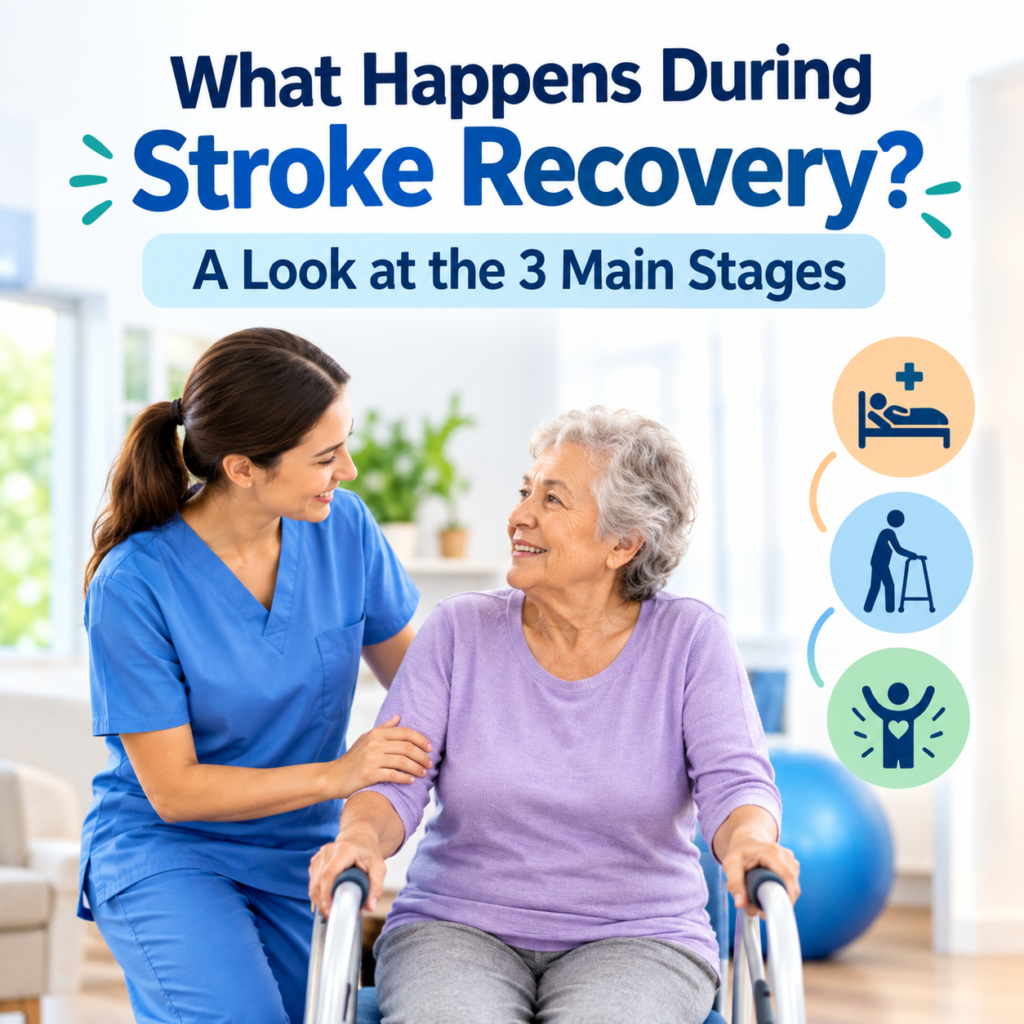
It can help families understand the three broad stages of stroke recovery.
These stages are not strict rules. Every person’s recovery follows its own path.
Stage 1: The Early Recovery Stage
The first stage begins immediately after the stroke.
During this time, doctors focus on stabilizing the patient and treating the stroke.
The medical team may perform brain scans and other tests.
They need to understand what type of stroke happened and which areas of the brain were affected.
The first few days can be very important.
The patient may be closely monitored for changes.
What Happens in the Hospital?
A stroke patient may receive care from several healthcare professionals.
Doctors and nurses monitor the person’s condition.
A physical therapist may check movement and strength.
A speech therapist may assess speaking and swallowing.
An occupational therapist may look at everyday activities.
The goal is to understand what the person can do and where they need help.
Early Problems After Stroke
A person may experience weakness or paralysis.
They may have trouble sitting, standing, or walking.
Speech may become difficult.
Some people have trouble understanding language.
Others may experience memory problems or confusion.
Swallowing may also become difficult.
The exact problems depend on which part of the brain was affected.
Stage 2: Rehabilitation
The second stage focuses more on rebuilding skills.
Rehabilitation may begin while the person is still in the hospital.
It may continue at home, in a rehabilitation center, or through outpatient therapy.
The goal is to help the person become as independent as possible.
Physical Therapy
Physical therapy can help improve movement and strength.
The therapist may work on sitting, standing, walking, balance, and coordination.
Exercises are usually adjusted to the person’s abilities.
At first, even a small movement may feel difficult.
With practice, some people gradually become stronger.
Speech Therapy
Speech therapy is not only about speaking.
A speech therapist may also help with understanding language, reading, writing, memory, and swallowing.
Some stroke survivors know exactly what they want to say but cannot find the words.
Others may have difficulty understanding what people say.
Therapy can help them work on these problems.
Occupational Therapy
Occupational therapy focuses on everyday life.
The therapist may help a person practice dressing, eating, bathing, using the bathroom, or preparing simple meals.
The goal is to help the person safely return to daily activities.
Sometimes the therapist also suggests changes to the home.
Stage 3: Long-Term Recovery
The third stage is the longer recovery period.
This stage can last months or even years.
Some people continue improving after the early stages.
Progress may become slower, but that does not always mean recovery has stopped.
The person may continue exercises and therapy based on their needs.
Recovery Can Be Uneven
Stroke recovery is rarely a straight line.
A person may improve one week and feel frustrated the next.
Some days may be easier than others.
Fatigue can also make activities more difficult.
This does not necessarily mean that recovery has failed.
Rest and patience are important.
Emotional Recovery Matters Too
Stroke affects more than physical abilities.
A person may feel angry, sad, worried, embarrassed, or frustrated.
They may feel upset because everyday tasks now take longer.
Some people may experience depression or anxiety after a stroke.
Emotional health should be taken seriously.
If the person shows ongoing signs of emotional distress, speak with a healthcare professional.
Family Support During Recovery
Family members can make recovery easier.
They can encourage the person to follow the rehabilitation plan.
They can help with appointments and daily tasks.
But it is also important to allow the person to do things independently when it is safe.
Small achievements should be recognized.
Getting dressed without help, walking a little farther, or saying a difficult word can all be meaningful steps.
Creating a Safe Home
A stroke can increase the risk of falls.
The home may need some changes.
Remove objects that can cause someone to trip.
Keep walking areas clear.
Install support bars where needed.
Make sure the bathroom is safe.
Good lighting can also help.
The rehabilitation team can suggest changes based on the person’s needs.
How Long Does Stroke Recovery Take?
There is no fixed recovery time.
Some people make noticeable progress within weeks.
Others may need many months.
Some people continue improving for a much longer period.
The recovery time depends on the severity of the stroke and many other factors.
Comparing one person’s recovery with another person’s recovery can create unnecessary stress.
Can a Person Fully Recover?
Some people recover very well.
Others continue to have long-term effects.
A person’s recovery may involve physical, communication, emotional, or cognitive changes.
The important thing is to focus on individual progress.
A healthcare team can help set realistic goals.
Final Thoughts
Stroke recovery usually involves several stages, but these stages are not exactly the same for everyone.
The early stage focuses on emergency treatment and stabilization.
The rehabilitation stage focuses on rebuilding skills.
The long-term stage focuses on continued improvement, independence, and managing ongoing challenges.
Recovery may take time.
Progress may be slow.
But small improvements can still be important.
Support from healthcare professionals, family members, and caregivers can make the recovery journey easier.
This article is for general information and does not replace advice from a qualified healthcare professional. If you want more simple and useful health tips, read more health blogs on Wisdom Sparkle.