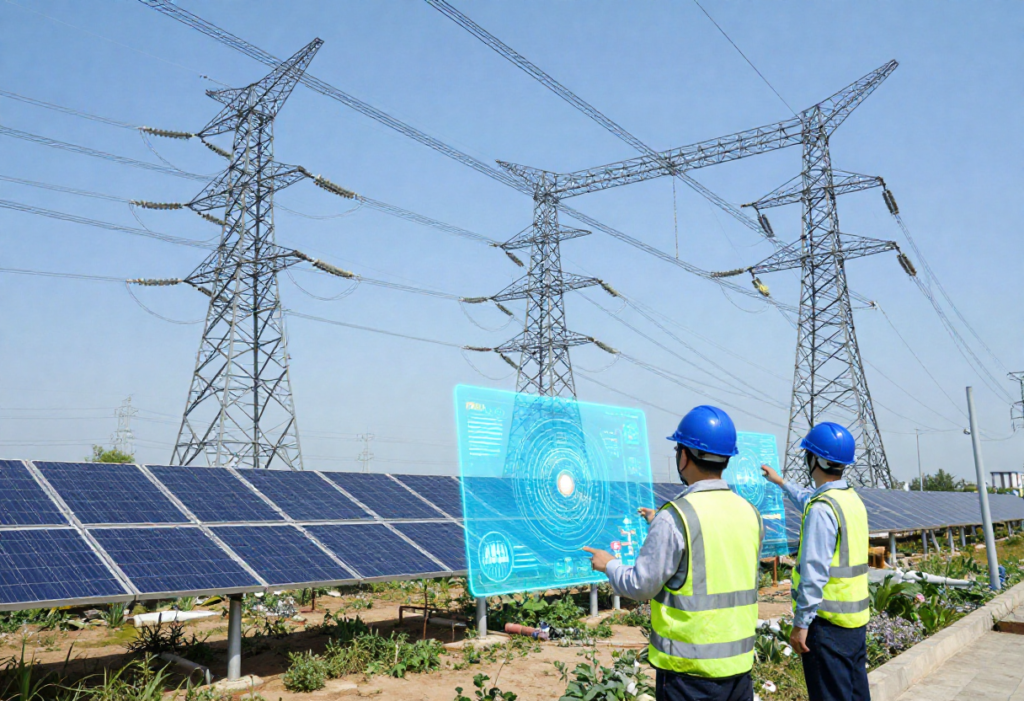
The power industry is undergoing a remarkable transformation driven by digital technology. As electricity demand continues to grow and power networks become more complex, engineers are increasingly relying on advanced digital tools to improve efficiency, reliability, and safety. From conducting detailed power system studies to optimizing power plant and power station design, digital solutions have become essential components of modern engineering practices.
Today, power system engineers can simulate, analyze, and optimize electrical networks with unprecedented accuracy. These innovations are helping utilities, industrial facilities, and energy developers reduce costs while ensuring stable and sustainable power delivery. This article explores how digital tools are reshaping power system engineering and why they are critical for the future of the energy sector.
The Digital Evolution of Power System Engineering
Traditional power system engineering relied heavily on manual calculations, physical drawings, and time-consuming field assessments. While these methods laid the foundation for the industry, they often limited the speed and accuracy of engineering decisions.
The introduction of specialized engineering software, cloud computing, digital twins, and artificial intelligence has significantly improved the way engineers design and manage electrical infrastructure. Modern digital tools enable real-time analysis, automated calculations, and advanced visualization, allowing engineers to identify potential issues before they become costly problems.
As power networks integrate renewable energy sources, battery storage systems, and smart grid technologies, digital engineering solutions are becoming more valuable than ever.
Enhancing Power System Study Accuracy
A comprehensive power system study is essential for ensuring the safe and reliable operation of electrical networks. These studies evaluate system performance under normal and fault conditions, helping engineers make informed design and operational decisions.
Digital simulation software allows engineers to perform:
- Load flow analysis
- Short-circuit studies
- Arc flash assessments
- Protection coordination studies
- Stability analysis
- Harmonic analysis
Advanced software platforms can model entire power networks with exceptional precision. Engineers can test multiple operating scenarios, evaluate equipment performance, and predict system behavior without disrupting actual operations.
By improving the accuracy of power system studies, digital tools help organizations reduce downtime, enhance safety, and optimize system performance. This data-driven approach supports better investment decisions and long-term infrastructure planning.
Revolutionizing Power Plant Design
The process of designing a modern power plant has become increasingly sophisticated. Whether developing conventional generation facilities, renewable energy plants, or hybrid energy systems, engineers must consider numerous technical, environmental, and economic factors.
Digital engineering tools streamline the entire design power plant process by enabling:
- 3D plant modeling
- Equipment selection and optimization
- Energy performance simulations
- Environmental impact assessments
- Construction planning
- Lifecycle cost analysis
Building Information Modeling (BIM) technology has become particularly valuable in power plant projects. BIM allows multidisciplinary teams to collaborate within a shared digital environment, reducing design conflicts and improving project coordination.
Engineers can visualize complete facilities before construction begins, identify potential challenges early, and improve overall project efficiency. This reduces rework, minimizes delays, and contributes to more successful project outcomes.
Improving Power Station Design Through Digital Modeling
Effective power station design requires careful integration of electrical, mechanical, structural, and control systems. Digital modeling tools allow engineers to create highly detailed representations of power stations and their associated infrastructure.
Using advanced design software, engineers can evaluate:
- Substation layouts
- Cable routing
- Equipment placement
- Grounding systems
- Protection schemes
- Network interconnections
Digital models help identify design conflicts before installation, reducing construction risks and improving operational reliability. Engineers can also simulate future expansion scenarios, ensuring that facilities remain adaptable to changing energy demands.
The ability to analyze multiple design alternatives quickly enables project teams to select the most efficient and cost-effective solutions while maintaining compliance with industry standards.
The Role of Artificial Intelligence and Data Analytics
Artificial intelligence (AI) and data analytics are becoming powerful tools within power system engineering. These technologies process large volumes of operational data to identify trends, predict failures, and support smarter decision-making.
AI-powered systems can assist engineers by:
- Predicting equipment maintenance needs
- Detecting abnormal operating conditions
- Optimizing energy generation schedules
- Improving grid reliability
- Enhancing asset management strategies
Predictive maintenance is one of the most impactful applications. By analyzing historical and real-time data, AI systems can forecast equipment failures before they occur. This allows maintenance teams to address issues proactively, reducing downtime and maintenance costs.
As digital transformation continues, AI will play an increasingly important role in improving the performance and resilience of power systems worldwide.
Digital Twins and the Future of Engineering
One of the most exciting advancements in the industry is the development of digital twin technology. A digital twin is a virtual replica of a physical asset, system, or facility that continuously updates using real-world operational data.
For power plants, substations, and electrical networks, digital twins provide engineers with a dynamic platform for monitoring, analysis, and optimization.
Benefits of digital twins include:
- Real-time performance monitoring
- Improved operational efficiency
- Faster troubleshooting
- Better maintenance planning
- Enhanced system reliability
Engineers can test modifications and operational strategies within the virtual environment before implementing changes in the real system. This significantly reduces risk and improves decision-making.
As energy infrastructure becomes increasingly complex, digital twins are expected to become a standard tool in advanced power system engineering projects.
Conclusion
Digital technology is fundamentally transforming the way power system engineering is performed. Advanced software platforms, AI-driven analytics, digital twins, and intelligent modeling tools are enabling engineers to design, analyze, and operate electrical systems more effectively than ever before.
From conducting accurate power system studies to optimizing design power plant projects and improving power station design, digital solutions are helping organizations achieve greater efficiency, reliability, and sustainability. As the energy industry continues to evolve, companies that embrace digital engineering tools will be better positioned to meet future challenges and deliver high-performing power infrastructure.
The future of power system engineering is digital, and the opportunities for innovation have never been greater.