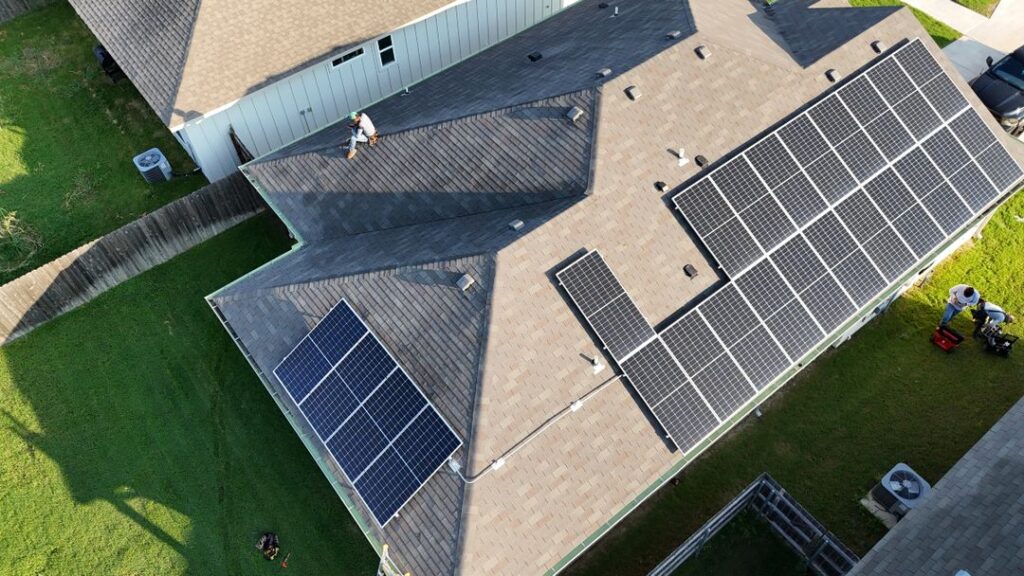
Dallas homeowners are no strangers to the destructive power of intense spring hailstorms and severe severe weather. When a major storm rips through the DFW metroplex, damaging your roof, the situation becomes twice as complex if your home already features a solar array.
Managing property restoration while protecting your clean energy investment requires a highly synchronized plan. You cannot simply let a standard roofing crew tear off shingles around active electrical equipment.
To ensure your home is repaired safely, your insurance claim is fully paid, and your system returns to peak performance, follow this step-by-step coordination blueprint.
Phase 1: Immediate Post-Storm Documentation
Before calling your insurance company or scheduling a contractor, you need to document the immediate status of your property.
-
Take Ground-Level Photos: Capture images of any large hailstones, fallen tree limbs, or visible roof shingle debris scattered around your yard.
-
Check Your Solar Monitoring App: Open your system’s monitoring portal (such as Enphase or SolarEdge) to check for sudden drops in power production, communications failures, or individual panel blackouts.
-
Request a Professional Diagnostic: Do not attempt to climb onto a slick, storm-damaged roof yourself. Instead, search for trusted solar panel repair and maintenance near me to have a licensed technician perform a safe, ground-level electrical string test and a rooftop physical evaluation.
Phase 2: Navigating the Insurance Claim and Supplements
If your home has verified storm damage, your homeowners insurance policy should cover the costs to restore your property. However, ensuring the solar labor is paid for requires specific documentation.
-
The Detach and Reset Line Item: Because the solar panels must be physically moved to execute the covered roof replacement, your insurance adjuster must include the cost of the solar labor in your claim. This is typically coded as a solar panel detach and reset on insurance paperwork.
-
File an Insurance Supplement: Insurance adjusters are experts in roofing, but they frequently underestimate the cost of specialized electrical labor. If your initial insurance adjustment estimate is too low to cover a certified technician, your solar contractor can submit an official insurance supplement. This document provides photo evidence and manufacturer specifications to prove the technical necessity of the higher labor rate.
Phase 3: Synchronizing the Contractors
The most critical aspect of managing storm recovery is coordinating the schedules of your roofing crew and your solar team. A breakdown in communication can leave your home exposed to leaks or cause your solar panels to sit unsecured in your yard for weeks.
The ideal project timeline follows a strict chronological sequence:
1. The Solar Teardown (Day 1)
A certified licensed solar contractor arrives ahead of the roofing crew. They safely isolate the system from the local utility grid, shut down high-voltage circuits, map the electrical array, and carefully lower the panels. The hardware must be packed vertically on weatherized pallets and stored securely away from the heavy falling debris of the upcoming roof tear-off.
2. The Roof Replacement (Days 2–3)
With the solar equipment completely cleared out of the way, your roofing team has a clean, unobstructed workspace. They tear down old shingles, repair damaged plywood decking, and complete the fresh roof installation footprint.
3. The Solar Reset (Day 4)
Once the new shingles are laid down, the solar team returns. They install brand-new, code-compliant flashing mounts directly onto the fresh shingle lines to guarantee a completely watertight seal. The structural racking is bolted down, the panels are secured back into place, and the complex electrical wiring is re-established cleanly under the array.
4. Inspection and Re-Commissioning (Day 5+)
A licensed master or journeyman electrician tests the system’s live voltage and grounding. Finally, they manage the official municipal building inspections and verify with Oncor that your grid connection is safe to turn back on.
Choosing a Qualified Partner in Dallas
When your home is caught between a roofing emergency and a solar investment, you cannot afford to rely on uncertified handymen. In the state of Texas, working on live solar circuits legally requires a specialized electrical license.
For homeowners across North Texas, SunAura stands out as an elite, licensed electrical contractor (TECL# 39213) specializing in high-performance solar panel removal and reinstall in Dallas, TX. Their in-house field teams cleanly bridge the gap between your roofing timeline and your clean energy asset.
From coordinating line-item estimates for your insurance adjuster to verifying your online monitoring app is actively logging green savings post-reset, SunAura ensures your home restoration is code-compliant, perfectly watertight, and completely stress-free.