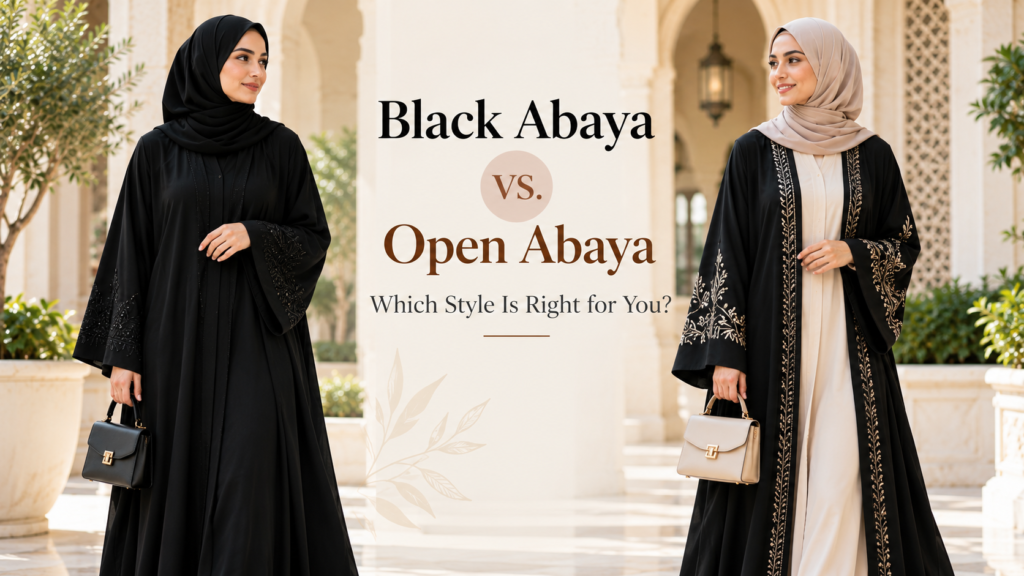
Choosing an abaya is not just about colour or appearance. The way it fits, how it opens, the fabric it uses, and when you plan to wear it can all affect whether it suits your needs. Some women prefer the simplicity of a classic black design, while others like the flexibility of an open-front abaya that can be layered over different outfits.
When shopping for an abaya for women, it helps to understand that these two terms describe different features. A black abaya can have a closed or open design, while an open abaya can come in black, beige, grey, or other colours.
Let’s look at the practical differences to help you choose a style that works for your wardrobe.
What Is a Black Abaya?
A black abaya is a long outer garment known for its simple, versatile appearance. It is commonly worn as part of modest clothing and can be styled for everyday activities, religious gatherings, and formal occasions. Although black is a traditional and widely worn colour, abayas are also available in many other shades.
A womens black abaya can be a practical wardrobe choice because it pairs easily with different hijabs, handbags, and footwear. Depending on the design, it may have a straight silhouette, embroidered sleeves, decorative cuffs, or a more minimal finish.
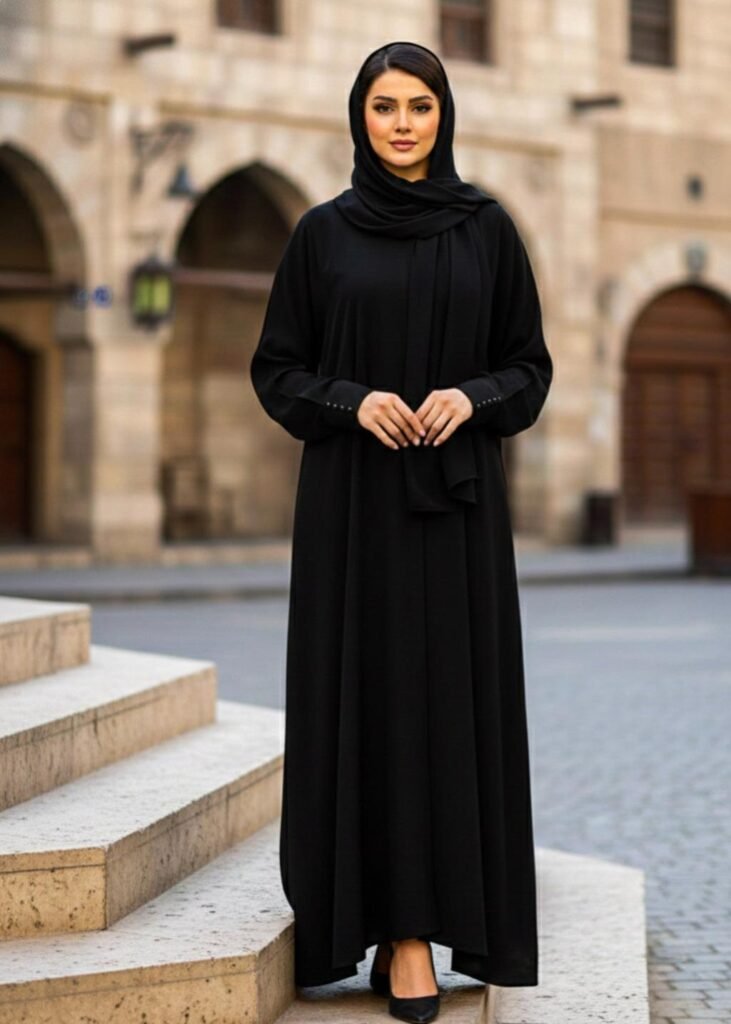
A black abaya does not have to be closed at the front. Some black abayas are designed to be worn open, so colour alone does not determine the garment’s construction.
What Is an Open Abaya?
An open abaya has an open front and is generally worn over another outfit, such as a long dress, tunic with trousers, or coordinated modest set. It works as an outer layer, allowing you to create different combinations using clothing you already own.
For example, you could wear a black open abaya over a cream dress for a contrasting look, or pair a beige open abaya with a neutral inner outfit. Some designs are plain and lightweight, while others feature embroidery, contrasting trims, or decorative sleeves.
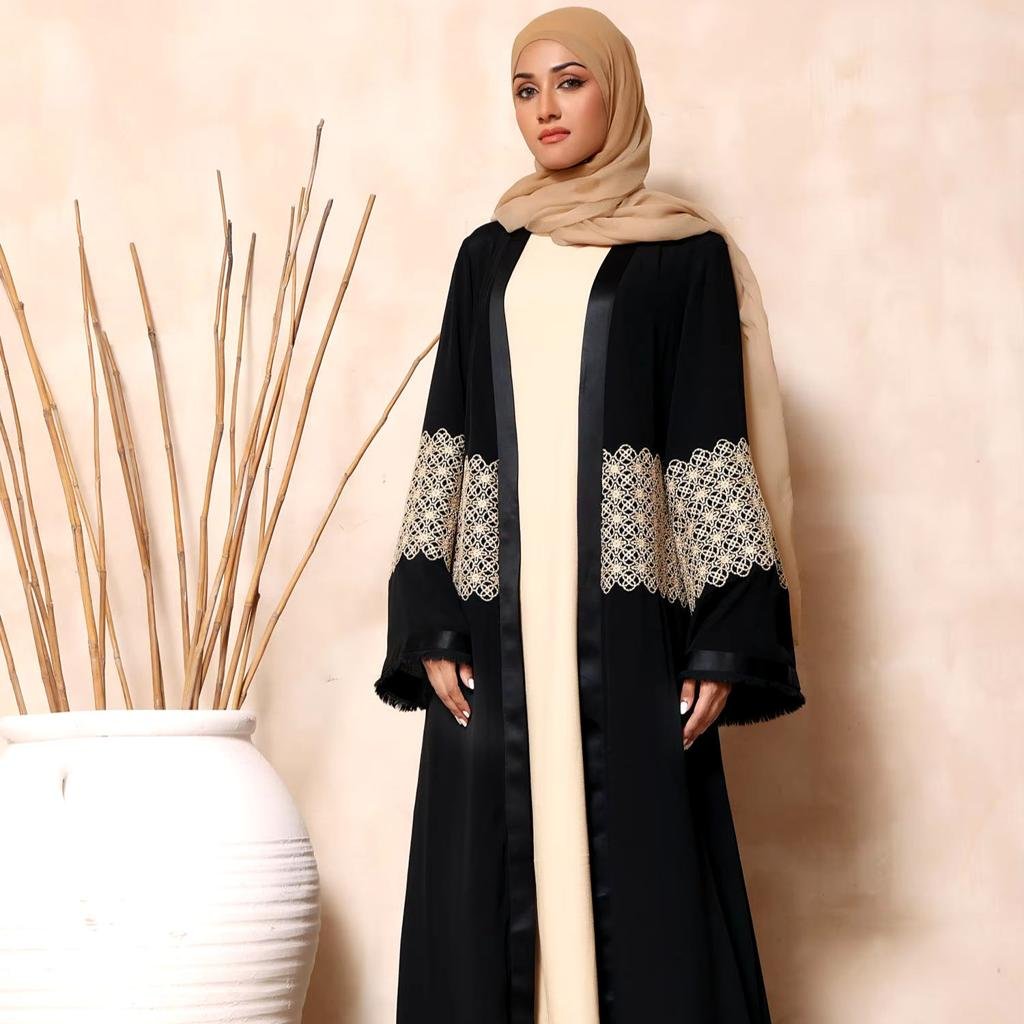
An open abaya can offer more styling flexibility, but the coverage depends on the garment and what you wear underneath. If coverage is important to you, check the front opening, fabric opacity, and inner outfit before purchasing.
Black Abaya vs. Open Abaya: The Main Differences
| Feature | Black abaya | Open abaya |
|---|---|---|
| What it describes | The colour of the garment | The front-opening design |
| How it is worn | May be closed or open | Usually layered over another outfit |
| Styling | Often easy to coordinate with different colours | Allows combinations with dresses, tops, and trousers |
| Coverage | Depends on its cut and construction | Depends on the design and inner clothing |
| Best suited to | Those who prefer a versatile black garment | Those who enjoy layering and creating different outfits |
The most important distinction is that these categories can overlap. You can choose a black closed abaya for a simple, complete outfit or a black open abaya if you prefer layering.
Which Style Should You Choose?
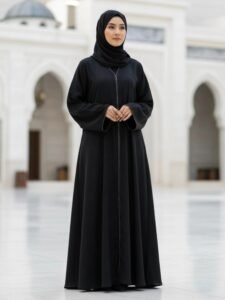
Choose a classic black abaya if…
You want a straightforward outfit that is easy to coordinate and suitable for regular wear. A simple design can work for errands, visiting family, or religious gatherings, while more detailed versions may suit formal occasions.

Choose an open abaya if…
You enjoy layering and want to wear one outer garment with several outfits. It can be a useful option if you like changing the look through different dresses, hijabs, and accessories.
Neither style is automatically better. Your daily routine, preferred level of coverage, climate, and personal taste are more useful guides than trends alone.
How to Choose the Right Fabric and Fit
Fabric can make a noticeable difference to how an abaya feels and drapes. Lightweight materials may be more comfortable in warm weather, while thicker or more structured fabrics can create a different silhouette. The best option depends on the climate, the garment’s construction, and how you plan to wear it.
Fit is equally important. Check the garment length, sleeve measurements, and size chart before ordering online. For an open abaya, consider whether it fits comfortably over the clothes you intend to wear underneath.
If you prefer additional coverage, look at fabric opacity and how the garment sits when you walk or move. Product photos can help, but measurements and fabric descriptions provide useful details that pictures alone may not show.
How to Style Your Abaya with a Hijab
A black abaya gives you plenty of options when choosing a hijab. Black creates a coordinated look, while cream, beige, taupe, or muted colours can add contrast without making the outfit difficult to style.
With an open abaya, you can coordinate the hijab with the inner dress instead of the outer layer. For example, a beige hijab and cream dress can work well under a black open abaya. For a more understated appearance, keep accessories simple and choose footwear suited to the occasion.
Where to Find an Abaya for Women
When shopping for an abaya for women, look beyond colour and appearance. Check the garment’s design, fabric, measurements, care instructions, and whether it is intended to be worn alone or layered over other clothing.
Shannoh offers a selection of modest clothing styles, including black abayas and open-front designs. You can explore the available options and compare details to find a garment that fits your preferences.
Final Thoughts
A black abaya and an open abaya serve slightly different purposes, but they are not mutually exclusive styles. Black describes the colour, while open describes the design. Understanding this distinction makes it easier to choose an abaya that works for your wardrobe.
If you prefer a simple, versatile look, a classic black abaya may be a good starting point. If you enjoy layering and creating different combinations, an open abaya may offer more flexibility. Choose based on comfort, fit, coverage, and how you plan to wear it.