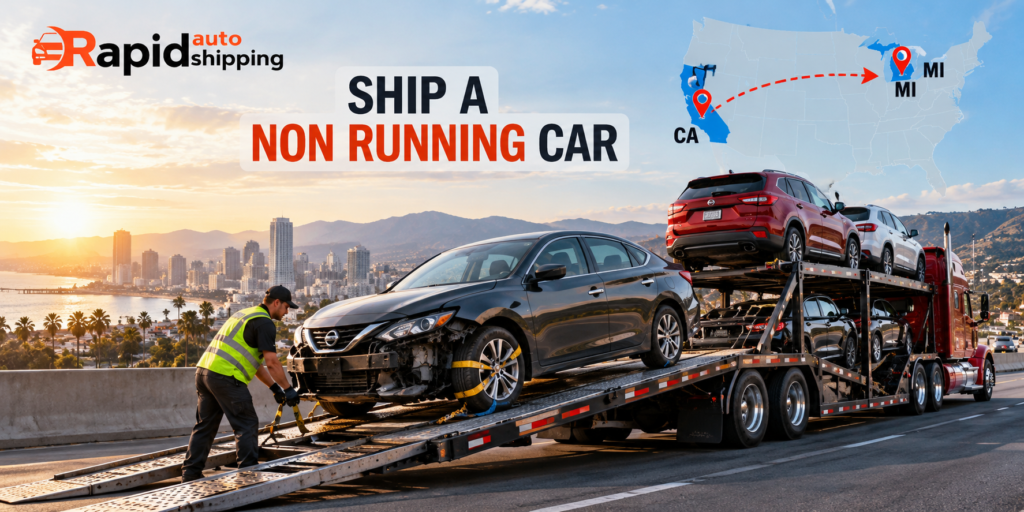
When a vehicle won’t start, has a dead battery, damaged wheels, transmission problems, or mechanical failure, moving it can seem like a major challenge. Fortunately, you can ship a non running car with professional auto transport services designed to handle inoperable vehicles safely.
Whether you are moving a project car, purchasing a damaged vehicle, relocating a classic automobile, or sending a disabled vehicle to a repair shop, specialized non running car shipping can save you the time, effort, and expense of arranging a tow and driving the vehicle yourself.
Rapid Auto Shipping helps customers arrange reliable vehicle transportation throughout the United States, including transportation for cars that cannot be driven. Understanding how the process works, what equipment may be required, and how much transportation can cost will help you make an informed decision.
Can You Ship a Non-Running Car?
Yes. You can ship a non-running car using an auto transport company equipped to handle inoperable vehicles.
A standard vehicle shipment generally assumes that the car can roll, steer, brake, and be loaded under its own power. A non-running vehicle may require additional equipment and labor because it cannot drive onto or off the carrier.
Professional carriers can use equipment such as:
- Winches
- Hydraulic lift gates
- Wheel dollies
- Skates
- Ramps
- Forklifts, when appropriate
- Specialized loading equipment
The exact equipment depends on the vehicle’s condition and the carrier’s capabilities.
Before booking, tell the transport company that the vehicle is inoperable. Explain whether it starts, rolls, steers, and brakes. Accurate information allows the carrier to prepare the appropriate equipment and provide a more accurate transportation estimate.
What Is Non-Running Vehicle Transport?
Non running vehicle transport is the process of moving a vehicle that cannot be driven normally. The vehicle may be mechanically disabled, damaged, partially disassembled, or simply unable to start.
A vehicle doesn’t necessarily have to be completely destroyed to qualify as non-running. For example, a car with a dead battery may be considered inoperable if it cannot be driven onto the carrier.
Common reasons people arrange inoperable car transport include:
- Engine failure
- Transmission problems
- Dead battery
- Flat or damaged tires
- Accident damage
- Flood or storm damage
- Broken suspension
- Steering problems
- Classic-car restoration
- Salvage or auction purchases
- Long-term storage
- Vehicles being transported to repair facilities
Providing the carrier with an accurate description of the vehicle is one of the most important steps in the shipping process.
How to Ship a Non-Running Car?
If you’re wondering how to ship a non-running car, the process is similar to standard auto transportation, but the vehicle requires additional preparation and loading considerations.
1. Get a Transportation Quote
Start by providing the pickup and delivery locations, vehicle information, desired shipping dates, and the vehicle’s operating condition.
Tell the company that the vehicle is non-running. If possible, provide details about whether the car can:
- Roll freely
- Steer
- Brake
- Shift into neutral
- Be winched
- Be accessed from the front or rear
These details can affect the carrier’s equipment requirements and the final price.
2. Confirm the Vehicle’s Condition
Be specific about why the vehicle cannot operate.
For example, saying “the car doesn’t run” is less useful than explaining, “the engine does not start, but the wheels roll and the steering works.”
If the car has accident damage, mention any damaged wheels, suspension components, or body parts that could affect loading.
3. Prepare the Vehicle
Remove personal belongings and loose items from inside the vehicle. Secure or remove aftermarket accessories that could become damaged during transportation.
If the vehicle has a dead battery, the carrier may need access to it for loading equipment. Make sure the keys are available and clearly labeled.
4. Arrange Pickup
At pickup, the carrier will inspect the vehicle and determine the safest way to load it.
A winch is commonly used to pull an inoperable vehicle onto the trailer. Wheel dollies or other equipment may be necessary if the wheels do not roll properly.
5. Vehicle Delivery
Once the car reaches its destination, the carrier unloads it using appropriate equipment.
Before signing the delivery paperwork, inspect the vehicle and document its condition.
How Much to Ship a Non-Running Car?
One of the most common questions is, “how much to ship a non-running car?”
There is no single price because auto transport rates vary according to several factors.
The biggest cost considerations include:
Distance: Longer routes generally require more transportation resources and fuel.
Vehicle size and weight: Large SUVs, trucks, and oversized vehicles can cost more to transport than smaller cars.
Vehicle condition: A non-running vehicle usually costs more than a running vehicle because specialized loading equipment and additional labor may be required.
Pickup and delivery locations: Rural or difficult-to-access locations can affect carrier availability and pricing.
Transport type: Open transport is typically more economical, while enclosed transportation can provide additional protection for valuable, classic, luxury, or collectible vehicles.
Seasonality: Auto transport demand can change throughout the year, affecting available carrier capacity and prices.
Accessibility: A vehicle located in a tight driveway, underground garage, or restricted-access area may require additional arrangements.
For an accurate estimate, provide complete information about your vehicle and its condition rather than requesting a quote as though the car were operational.
Shipping a Non-Running Car vs. Running Car
The biggest difference between standard auto shipping and shipping non running cars is loading.
A running vehicle can typically be driven onto the carrier. An inoperable vehicle cannot, so the carrier must use equipment and labor to move it.
This can increase transportation costs.
For example, a car with a dead battery may only need a winch or other loading assistance. A severely damaged vehicle with locked wheels, steering problems, or suspension damage may require significantly more work.
That’s why it is important to describe the vehicle’s condition accurately before the shipment is scheduled.
Can You Transport a Car Without Insurance?
Another common question is how to transport a car without insurance.
Insurance requirements can vary depending on your circumstances, the carrier, and applicable state or federal requirements. Before arranging transportation, verify what coverage is required and what protection is included with your shipment.
If you’re transporting a car without insurance, don’t assume that the carrier’s cargo coverage automatically replaces your own vehicle insurance. Ask the transport company what carrier insurance applies during transportation and request information about coverage limits and exclusions.
If the vehicle is valuable, heavily modified, collectible, or otherwise difficult to replace, you may also want to discuss additional coverage options with your insurance provider.
The safest approach is to understand exactly what coverage applies before the vehicle is loaded.
How to Transport a Car Without Insurance Safely
If you need to transport a car without insurance, focus on understanding the protection available during transportation.
Before booking:
- Ask whether the carrier has active cargo insurance.
- Request information about applicable coverage.
- Ask about exclusions and limitations.
- Photograph the vehicle before pickup.
- Document existing damage.
- Review the bill of lading at pickup and delivery.
- Ask your insurer whether temporary or shipment-specific coverage is appropriate.
Remember that insurance coverage and carrier liability are not necessarily the same thing. Confirm the details in writing before transportation begins.
Preparing a Non-Running Vehicle for Shipping
Proper preparation can make shipping a non running car easier and reduce potential delays.
Start by removing personal possessions and unnecessary loose items.
Then:
- Keep the keys available.
- Inform the carrier about mechanical problems.
- Check whether the wheels roll.
- Determine whether the steering works.
- Identify damaged tires or wheels.
- Mention any fluid leaks.
- Remove or secure loose exterior accessories.
- Take photographs from multiple angles.
- Keep important documents accessible.
If the vehicle has a serious fluid leak or hazardous condition, inform the transporter before pickup. The carrier needs to know about potential loading and transportation hazards in advance.
Open vs. Enclosed Transport for a Non-Running Car
Most vehicles can be transported using open auto transport, which is often the more economical option.
However, enclosed transportation may be worth considering for:
- Classic cars
- Collector vehicles
- Luxury vehicles
- Restored automobiles
- High-value project cars
- Vehicles requiring additional protection from road debris and weather exposure
The best option depends on your vehicle’s value, condition, budget, and protection requirements.
If you’re transporting a heavily damaged or unusual vehicle, also confirm that the carrier’s trailer and loading equipment are suitable for it.
Common Challenges When Shipping an Inoperable Car
Inoperable car transport can involve challenges that don’t occur with standard shipments.
A vehicle may have locked wheels, damaged suspension, a missing tire, a dead battery, or limited access. These conditions can affect loading.
Location can also matter. A carrier may have difficulty accessing a narrow residential street or a vehicle parked inside a confined garage.
To avoid surprises, provide detailed pickup information and disclose the vehicle’s condition before scheduling transportation.
Photos can be especially helpful. A picture of the vehicle, wheels, driveway, parking area, and access route can help the transporter understand what equipment may be required.
Why Professional Non-Running Car Shipping Makes Sense
Trying to move a disabled vehicle yourself can involve renting a trailer, finding a suitable tow vehicle, arranging loading equipment, and dealing with the risks of moving a heavy vehicle.
Professional non running car shipping can simplify the process by coordinating transportation and specialized loading.
For long-distance moves, professional shipping can also eliminate the need to arrange multiple towing services or attempt to drive a vehicle that isn’t mechanically safe to operate.
The right transporter can evaluate the vehicle’s condition, determine suitable loading requirements, and coordinate transportation to the destination.
How to Choose a Non-Running Car Shipping Company
When comparing companies for shipping non running cars, don’t choose based solely on the lowest advertised price.
Look for a company that:
- Clearly explains the shipping process
- Requests accurate vehicle-condition information
- Provides transparent pricing
- Uses properly equipped carriers
- Explains insurance and carrier coverage
- Communicates pickup and delivery expectations
- Has experience with inoperable vehicles
- Provides documentation for the shipment
A low quote that doesn’t account for the vehicle’s condition may eventually increase if specialized equipment is required.
A more accurate quote upfront can help prevent unexpected charges later.
How Rapid Auto Shipping Can Help
Rapid Auto Shipping provides vehicle transportation services for customers who need to move cars across the United States, including vehicles that cannot be driven normally.
When arranging transportation for an inoperable vehicle, providing accurate details is essential. Explain the vehicle’s mechanical condition, whether it rolls and steers, and any loading restrictions at the pickup location.
This information helps determine the appropriate transportation approach and reduces the possibility of surprises during pickup.
Whether you’re moving a project vehicle, purchasing a car from an auction, relocating a damaged vehicle, or sending a disabled automobile to a repair facility, professional transportation can make the process significantly easier.
Frequently Asked Questions
Can I ship a car that doesn’t run?
Yes. A non-running vehicle can generally be transported using specialized loading equipment such as a winch, depending on its condition and accessibility.
How much does it cost to ship a non-running car?
The cost depends on distance, vehicle size, route, pickup and delivery accessibility, transport type, seasonality, and the amount of equipment or labor required to load the vehicle.
Can a non-running car be shipped across the country?
Yes. Non-running vehicles can be transported on long-distance routes throughout the United States when the carrier has the appropriate equipment and access.
Do I need to tell the auto transport company that my car doesn’t run?
Yes. Always disclose that the vehicle is inoperable. The carrier needs this information to determine the appropriate loading method and equipment.
Can I ship a car with a dead battery?
In many cases, yes. A dead battery does not necessarily prevent transportation, but the carrier should know about it before pickup because the vehicle cannot be driven onto the trailer.
Can I ship a car without insurance?
Insurance requirements depend on your circumstances and applicable requirements. Before transportation, confirm what coverage you have and what cargo insurance or carrier liability applies during shipment.
Is enclosed transport better for a non-running car?
Not necessarily. Enclosed transport can provide additional protection and may be preferable for valuable or collectible vehicles, while open transport is often a more economical option.
What happens if my non-running car has locked wheels?
The carrier may use specialized equipment, such as wheel dollies or other loading tools, depending on the vehicle and trailer setup. Tell the transporter about locked wheels before pickup.
Can I ship a damaged car?
Potentially, yes. Damaged vehicles can often be transported, but the carrier needs accurate information about the damage, especially if the steering, wheels, suspension, or frame are affected.
What should I do before shipping an inoperable vehicle?
Remove personal belongings, document the vehicle’s condition with photographs, keep the keys available, disclose mechanical problems, and provide accurate information about the vehicle’s ability to roll, steer, and brake.
Final Thoughts
Knowing how to ship a non-running car can make an otherwise complicated transportation problem much easier to manage. The key is to communicate the vehicle’s exact condition before pickup so the transporter can arrange the appropriate equipment.
Whether you call it non running car shipping, shipping a non running car, or inoperable car transport, the basic principle is the same: an inoperable vehicle requires more planning than a standard running vehicle.
For a smooth experience, compare transportation options, understand the cost factors, confirm applicable insurance coverage, prepare the vehicle properly, and choose a transporter experienced in handling vehicles that cannot be driven.
With the right preparation and professional support, you can move a non-running vehicle safely and efficiently to its next destination.