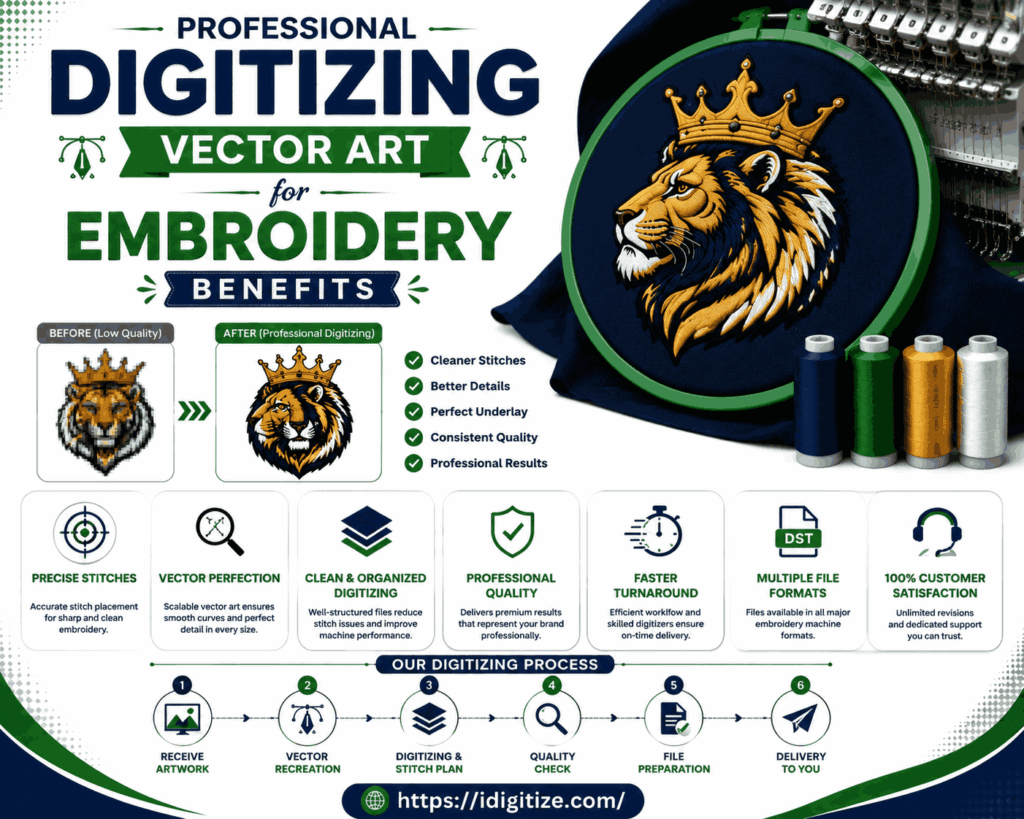
Professional Digitizing Vector Art For Embroidery Benefits
Professional Digitizing Vector Art For Embroidery plays a critical role in achieving high-quality embroidery results. While embroidery machines are capable of producing detailed designs, the final outcome depends heavily on the quality of the digitized file. A professionally digitized design ensures that stitches are placed correctly, design elements remain clear, and embroidery machines operate efficiently throughout production.
Businesses, apparel brands, and embroidery shops rely on accurate digitizing to maintain consistency across products. When artwork is converted properly into stitch instructions, the finished embroidery appears cleaner, more professional, and closer to the original design.
Understanding the Relationship Between Digitizing and Embroidery Quality
Embroidery machines do not interpret artwork on their own. They require a digitized file that contains precise instructions regarding stitch placement, stitch type, stitch direction, density, and sequencing.
When digitizing is performed correctly, every element of the design is optimized for embroidery production. This preparation helps machines create smooth stitching patterns while reducing common embroidery problems.
Professional digitizing serves as the foundation for successful embroidery because it determines how the machine will recreate the design on fabric.
How Professional Digitizing Improves Stitch Quality
Accurate Stitch Placement
One of the biggest advantages of professional digitizing is accurate stitch placement. Skilled digitizers carefully map every section of a design to ensure stitches follow the correct path.
This process helps create sharper edges, cleaner text, and more defined design details. Accurate stitch placement also reduces gaps and overlapping stitches that can negatively affect embroidery quality.
Proper Stitch Density Control
Stitch density refers to how closely stitches are placed together. Excessive density can cause thread breaks, fabric distortion, and bulky embroidery. Insufficient density may result in poor coverage and uneven appearance.
Professional digitizers adjust density settings based on the design and fabric type. This balance creates a cleaner finished product while maintaining durability.
Better Underlay Stitching
Underlay stitches provide a foundation for the top stitches. Proper underlay improves stability, supports design elements, and helps embroidery maintain its shape.
Experienced digitizers select underlay settings that match the design requirements, leading to smoother and more consistent embroidery results.
Why Professional Digitizing Increases Embroidery Accuracy
Preserving Design Details
Small text, intricate logos, and detailed graphics often require special attention during digitizing. Professional digitizers understand how embroidery differs from printed artwork and make adjustments accordingly.
These adjustments help preserve important design features while ensuring the embroidery remains readable and visually appealing.
Compensation for Fabric Movement
During embroidery, fabric can shift, stretch, or pull. If these factors are ignored, designs may become distorted.
Professional digitizing includes pull compensation and other adjustments that account for fabric behavior. This helps maintain the intended proportions of the design after stitching.
Optimized Stitch Direction
Stitch direction affects both appearance and texture. Strategic stitch angles improve design definition and create a more polished look.
By optimizing stitch directions, digitizers can enhance visibility, reduce distortion, and improve overall embroidery performance.
The Role of Vector Artwork in Professional Digitizing
Vector artwork provides a strong starting point for embroidery digitizing because it contains clean lines and scalable design information. Formats such as AI, EPS, SVG, and PDF allow digitizers to work with precise artwork.
Using vector files helps improve accuracy because the design remains clear regardless of size adjustments. This allows digitizers to create stitch files that closely match the original artwork.
As a result, embroidery designs appear more professional and maintain consistency across various applications.
Production Benefits of Professional Digitizing
Beyond visual quality, professional digitizing also improves production efficiency.
Reduced Thread Breaks
Proper stitch sequencing and density settings reduce stress on embroidery machines, leading to fewer interruptions during production.
Faster Machine Operation
Well-structured embroidery files allow machines to run more smoothly, reducing unnecessary trims and movements.
Lower Material Waste
Accurate digitizing minimizes production errors, helping businesses reduce wasted garments, thread, and labor costs.
These advantages contribute to a more efficient embroidery workflow and improved overall productivity.
Common Problems Caused by Poor Digitizing
Poor digitizing can create several issues that affect both quality and efficiency.
Common problems include:
- Uneven stitching
- Distorted logos
- Excessive thread breaks
- Poor text readability
- Fabric puckering
- Inconsistent embroidery results
Many of these issues can be avoided by working with experienced digitizing professionals who understand embroidery production requirements.
Choosing a Professional Digitizing Service
When selecting a digitizing provider, it is important to evaluate their experience, portfolio, turnaround times, and quality control procedures.
A reliable provider should demonstrate a clear understanding of embroidery techniques and provide files that perform well across different fabrics and machine types. Reviewing previous work and customer feedback can help identify services capable of delivering consistent quality.
Conclusion
Professional Digitizing Vector Art For Embroidery significantly improves stitch quality and accuracy by creating optimized embroidery files that guide machines efficiently and precisely. From stitch placement and density control to fabric compensation and design preservation, professional digitizing influences every aspect of embroidery production.
Businesses and embroidery professionals who invest in quality digitizing benefit from cleaner designs, fewer production issues, improved efficiency, and more consistent results. By choosing experienced digitizing services, embroidery projects can achieve a higher level of accuracy and overall quality.
FAQs
What is Professional Digitizing Vector Art For Embroidery?
It is the process of converting vector artwork into embroidery machine files that contain detailed stitch instructions for accurate embroidery production.
How does professional digitizing improve stitch quality?
Professional digitizing optimizes stitch placement, density, underlay, and sequencing, helping create cleaner and more consistent embroidery.
Why is stitch accuracy important in embroidery?
Accurate stitching ensures that logos, text, and design elements appear clear, professional, and consistent across different products.
Can poor digitizing affect embroidery machines?
Yes. Poorly digitized files can cause thread breaks, excessive machine stops, inefficient stitching, and production delays.
Why is vector artwork preferred for embroidery digitizing?
Vector artwork provides clean, scalable design information that helps digitizers create more precise embroidery files.
Is professional digitizing worth the investment?
Yes. Professional digitizing improves embroidery quality, reduces production errors, increases efficiency, and helps maintain consistent branding.