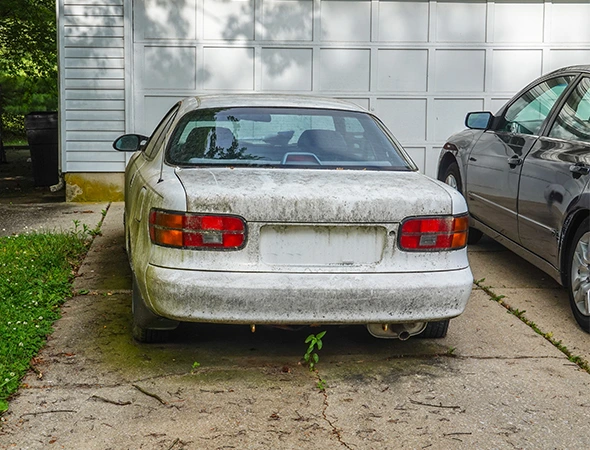
The car in your driveway has not moved in eight months. The tires are flat, the battery is dead, and every time it rains you wonder whether the interior is getting worse. You are ready to get rid of it. Then you open the glove box, dig through the folder of old registrations, and realize the title is not there.
That single missing document is the reason most junk car sales in Miami stall. Not the condition of the vehicle. Not the mileage. The paperwork.
This guide walks through exactly which Florida documents matter when you scrap a vehicle, what to do when the title is lost or held electronically by the state, and how your documentation situation changes both the speed of the sale and the size of the check. If you have been putting off calling anyone about cash for junk cars in Miami, FL because you were not sure your paperwork qualified, this should clear things up.
Why the Title Is the Single Biggest Variable
A junk car is worth money for three reasons: the steel in the frame, the parts that can be resold, and the fluids and components that have to be recycled under state and federal rules. None of that changes based on whether you can find a piece of paper.
What the title changes is risk. A licensed buyer has to prove to the State of Florida that every vehicle they take in was obtained legally. When ownership is documented, that proof takes about five minutes. When it is not, the buyer has to use a different legal pathway, file extra forms, and wait out a mandatory holding period before the car can be dismantled.
That extra work is real, and it is usually reflected in the offer. It is not a penalty, and it is not a lowball tactic. It is the cost of a slower, more paperwork-heavy transaction.
The practical takeaway: if getting your title is cheap and fast, get it. If it is not, you still have legitimate options.
The Three Ownership Documents Florida Recognizes
Most Miami sellers only know about the first one. Knowing all three is what saves you a wasted trip to the tax collector’s office.
1. The Certificate of Title
This is standard proof of ownership. If your name is on it and there is no active lien, you have everything you need.
2. The Duplicate Title (Form HSMV 82101)
If the original was lost, stolen, or destroyed, you apply for a replacement using Form HSMV 82101 at a county tax collector’s office. Depending on the county and whether you want an electronic title or a same-day printed one, expect the fee to land somewhere in the $75 to $86 range. Miami-Dade offers in-person service, and expedited “fast title” processing is available for an added fee if you do not want to wait for mail delivery.
One thing that trips people up: if there is still an active lien on the vehicle, you cannot get a duplicate on your own. The lender has to be involved and the lien has to be satisfied first.
3. The Derelict Motor Vehicle Certificate (Form HSMV 82137)
This is the one almost nobody knows about, and it exists specifically for junk cars.
Florida law allows the owner of a vehicle to sell it to a licensed salvage dealer or registered secondary metals recycler without a title, using a derelict certificate, as long as all of the following are true:
- The vehicle is worth less than $1,000
- It is at least ten model years old
- There are no undisclosed liens against it
- The seller obtained the vehicle lawfully
The trade-off is permanent. A vehicle processed under a derelict certificate can never be titled again and must be dismantled or scrapped. For a car you are already sending to the crusher, that is not a downside. For a vehicle you were secretly hoping someone might restore, it is the end of the road.
There is also a mandatory waiting period built into the process. The certificate prints a destruction date several business days out, and the recycler has to hold the vehicle until then. That is why a no-title sale rarely closes as fast as a title-in-hand sale, even when everything else is in order.
What Happens When Your Florida Title Is Electronic
Here is a scenario that catches a lot of Miami-Dade residents off guard. You go looking for your title, you cannot find it, and you assume it is lost. In reality, it was never printed.
Florida issues most titles electronically. The record lives in the FLHSMV database rather than in your filing cabinet. You are not missing anything, and you do not need a duplicate in the traditional sense.
You have two paths:
- Request a printed copy from a county tax collector’s office so you have a physical document to sign over.
- Handle a secure title reassignment at a motor vehicle service center, which typically involves both parties appearing with photo identification.
Before you spend money on a duplicate application, it is worth checking your title status online or by phone. A five-minute check can save you a fee and a trip.
How to Sell a Car With a Title, Step by Step
If your documentation is in order, the process is short. These are the steps to sell car with title in Miami, FL without creating problems for yourself later.
Step 1 — Confirm the title is clear. Your name spelled correctly, no lienholder listed, no salvage brand you were unaware of.
Step 2 — Get a written offer before pickup. Year, make, model, condition, and location are enough for a real buyer to quote you. Vague quotes that change on arrival are the number one complaint in this industry.
Step 3 — Complete the odometer disclosure. Both parties acknowledge it. Vehicles from model year 2010 and older are exempt after ten years; 2011 and newer models are exempt after twenty.
Step 4 — Sign the title over and get a bill of sale. Keep a copy for your records. FLHSMV recommends having the bill of sale notarized, though it is not required.
Step 5 — Remove your license plate before the truck leaves. In Florida, the plate belongs to you, not the car.
Step 6 — File Form HSMV 82050, the Notice of Sale, within 30 days. This removes your registration from the vehicle and severs your civil liability for anything that happens afterward.
Step 7 — Cancel your insurance after the plate is surrendered or transferred, not before. Canceling insurance while an active registration is still attached can put your driver license at risk.
Step 6 is the one people skip, and it is the one that costs them. Until that notice is on file, toll charges, red-light camera tickets, and liability claims tied to that vehicle can still come back to your name.
Six Factors That Set Your Offer Beyond the Paperwork
Documentation determines whether a sale can happen. These factors determine what it pays.
- Curb weight. Heavier vehicles carry more recyclable steel. A full-size truck or SUV outweighs a compact sedan by a wide margin, and that shows up in the offer.
- Catalytic converter. Still present and unstolen? That single component often accounts for a meaningful share of the total value.
- Parts demand. Common Toyota, Honda, and Ford models have busy parts markets in South Florida. Rare or discontinued models sometimes have less.
- Completeness. A car missing its engine, transmission, wheels, or major body panels is worth less than one that is simply not running.
- Type of damage. Flood and fire damage do not eliminate value, but they narrow the pool of buyers willing to take on the vehicle. This matters after hurricane season, when South Florida sees a wave of water-damaged cars hit the market at once.
- Access and location. A vehicle sitting in an open driveway in Kendall is easier to load than one wedged behind a building in a tight lot. Towing difficulty factors into the math.
Salt air is worth mentioning too. Coastal humidity accelerates frame and undercarriage corrosion, so a Miami car often has more structural rust at the same age than an inland vehicle. Waiting another year rarely helps.
Five Mistakes Miami Sellers Make
- Leaving the license plate on the car. If the vehicle is later used to run tolls or worse, the citations trace back to you.
- Forgetting the SunPass transponder. Remove it and deactivate it, or you will keep paying for someone else’s trips.
- Not searching the vehicle. Registration documents, spare keys, garage remotes, and insurance cards get scrapped along with the car every day.
- Accepting a phone quote with no confirmation. A serious buyer will restate the offer before loading.
- Assuming a lien disappears with time. An old paid-off loan that was never formally released still blocks a clean transfer. Get the lien satisfaction on record first.
What to Expect From a Legitimate Local Buyer
Once you understand the paperwork, evaluating buyers gets easy. A trustworthy operation will do four things:
- Give you a specific offer based on your actual vehicle, not a range designed to be renegotiated in your driveway
- Never charge for towing, and never deduct a tow fee from the agreed price on arrival
- Handle the state paperwork with you, explaining what you are signing rather than pushing forms across a hood
- Pay on the spot, at pickup, in a form you agreed to in advance
Big Cash 4 Junk Cars operates this way across Miami, Hialeah, Kendall, Miami Gardens, Hollywood, Fort Lauderdale, Pembroke Pines, Miramar, Sunrise, and Weston. The team buys running and non-running vehicles, flood and fire-damaged cars, and vehicles with or without a title, and works through the documentation with you before anything gets loaded.
If your title is in hand, the sale can usually be quoted, scheduled, and completed the same day. Homeowners who want to sell car with title in Miami, FL often go from first phone call to cash in hand within a few hours. If the title is missing, the team can walk you through whether a duplicate or a derelict certificate is the faster route for your specific vehicle.
For anyone comparing options on cash for junk cars in Miami, FL, the honest advice is to ask every buyer the same two questions: what exactly will you pay, and what documents do you need from me? The answers tell you everything.
You can reach Big Cash 4 Junk Cars at (786) 420-1848 for a free quote, or read more about the sell car with title process and their flood-damaged vehicle service.
Frequently Asked Questions
Can I junk a car in Florida that is registered to a relative who passed away?
Not with a standard title transfer. Florida has a separate process for surviving spouses and estates, and the tax collector’s office will tell you which form applies based on whether the estate went through probate. Bring the death certificate and any estate documentation you have.
My car has a lien from a lender that went out of business. What now?
You need a lien satisfaction on record. Start with the successor institution that acquired the original lender’s loan portfolio, since the obligation almost always transfers rather than disappears. A tax collector’s office can look up who currently holds the lien in the state record.
Does a salvage or rebuilt title reduce what I get paid?
For a scrapped vehicle, usually very little. Once a car is being dismantled for parts and metal, the brand on the title matters less than weight, components, and condition. The brand matters far more when a car is being resold to drive.
How long does a duplicate title take in Miami-Dade?
In person at a tax collector’s office with expedited service, often the same day. By mail, allow a few weeks. Online applications fall somewhere in between, plus mailing time if you request a printed copy.
Do I need the registration if I have the title?
Generally no, the title is the proof of ownership. Some buyers ask for it as supporting documentation, particularly for vehicles being processed without a title, so bring it if you have it.
Can I sell a junk car that is parked on property I do not own?
Only if you are the legal owner of the vehicle. A landlord or property owner dealing with a car abandoned by someone else has to follow Florida’s abandoned vehicle procedure, which involves notification requirements and a different set of forms.
What if the VIN plate is damaged or missing?
The vehicle will need a VIN verification, typically completed by law enforcement or an authorized inspector on the appropriate FLHSMV form. It adds a step, but it does not make the vehicle unsellable.
The Bottom Line
The value of your junk car is set by weight, parts, and condition. Whether you can actually sell it, and how quickly, is set by paperwork. Those are two separate questions, and confusing them is what keeps dead cars sitting in South Florida driveways for years.
Before you call anyone, spend ten minutes on three things: check whether your title is paper, electronic, or genuinely lost; confirm no lien is still attached; and locate your registration. If the title is missing and the car is over ten model years old and worth under $1,000, a derelict certificate is likely your path. If the title is simply unprinted, a quick request solves it.
Then get a firm quote, remove your plate, file your Notice of Sale within 30 days, and be done with it. Every month that car sits, corrosion takes a little more of what it is worth.
This article is general information about Florida vehicle documentation, not legal advice. Fees and procedures can change, so confirm current requirements with the Florida Department of Highway Safety and Motor Vehicles or your county tax collector before filing.