Choosing between a full tummy tuck and a mini tummy tuck requires an understanding of abdominal anatomy, skin laxity, muscle condition, and individual body-contouring goals. Although both procedures are designed to improve the appearance of the abdomen, they address different concerns and involve different surgical approaches. The most suitable option depends on where excess skin is located, how much correction is needed, and whether changes to the abdominal muscles are part of the treatment plan.
For individuals exploring Best tummy tuck dubai options, understanding these differences can make the initial consultation more productive. Dr. Shahram Sajjadi evaluates the abdomen as a whole, considering the distribution of loose skin, the position of the belly button, the abdominal profile, and the patient’s expectations before discussing a suitable approach.
This guide explains how full and mini tummy tuck procedures compare, which abdominal features influence treatment planning, and what patients can expect from the assessment process.
Understanding the Purpose of a Tummy Tuck
A tummy tuck, medically known as abdominoplasty, is a surgical procedure that addresses selected concerns involving excess abdominal skin and contour. These concerns may develop after pregnancy, substantial weight loss, or natural changes in skin elasticity over time.
When the skin has stretched and no longer conforms closely to the underlying abdominal structure, exercise and dietary changes may not fully resolve the appearance of loose tissue. Some individuals also experience separation of the abdominal muscles, known as diastasis recti, which can contribute to a protruding abdominal profile.
Tummy tuck surgery is not a weight-loss procedure. Instead, it focuses on reshaping the abdominal area according to the patient’s anatomy and treatment goals.
The distinction between a full and mini tummy tuck is important because neither procedure is appropriate for every abdominal concern. A consultation helps determine the extent of correction required and whether the expected results align with the proposed surgical technique.
What Is a Full Tummy Tuck?
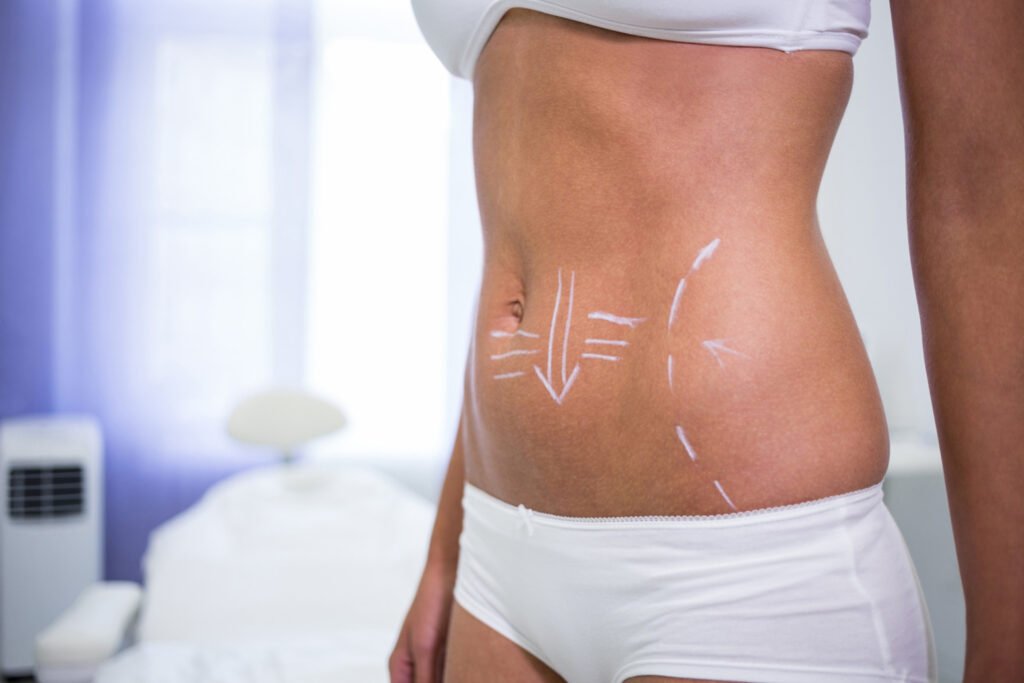
A full tummy tuck is generally considered when excess skin and contour concerns extend across a larger portion of the abdomen, particularly when loose tissue is present both above and below the belly button.
During the procedure, the surgeon typically makes an incision across the lower abdomen. The skin and underlying tissue are lifted to allow the planned correction, and excess skin is removed. The belly button is usually repositioned through an opening in the tightened abdominal skin to maintain a natural-looking position.
Where abdominal muscle separation is present and suitable for correction, the surgeon may also repair the underlying muscle layer. This can help improve abdominal firmness and contour, depending on the patient’s anatomy and the surgical plan.
A full tummy tuck may be considered for individuals who have:
- Loose skin extending above and below the belly button.
- Noticeable skin excess following significant weight loss.
- Abdominal changes after pregnancy.
- Muscle separation contributing to the abdominal profile.
- Contour concerns that cannot be adequately addressed through a smaller lower-abdominal procedure.
The exact technique depends on the amount and distribution of excess tissue, existing scars, skin quality, and the patient’s overall suitability for surgery.
What Is a Mini Tummy Tuck?
A mini tummy tuck is a more limited form of abdominoplasty designed primarily for selected concerns affecting the lower abdomen, particularly the area beneath the belly button.
It may be considered when excess skin is concentrated in this region and the upper abdomen has relatively good skin tone and contour. Compared with a full tummy tuck, the procedure generally involves a smaller incision and a more limited area of tissue adjustment.
The belly button is usually not repositioned in a standard mini tummy tuck. However, the precise technique depends on the patient’s anatomy and the planned extent of correction.
A mini tummy tuck may be discussed when an individual has:
- A small amount of loose skin below the belly button.
- Localised lower-abdominal skin laxity.
- Relatively limited excess tissue.
- An abdominal profile that does not require extensive upper-abdominal skin removal.
- Treatment goals focused on the lower abdomen rather than the entire abdominal area.
It is important to understand that a mini tummy tuck is not simply a smaller version of the full procedure for everyone. If loose skin extends above the belly button or muscle separation requires broader correction, a mini approach may not adequately address the main concern.
Full vs Mini Tummy Tuck: The Main Differences
Although both procedures aim to improve abdominal contour, they differ in the area treated, the extent of skin removal, and the potential need to reposition the belly button.
Area of Skin Excess
The location of loose skin is one of the most important factors in choosing a procedure.
A full tummy tuck may be more appropriate when excess skin extends across the upper and lower abdomen. A mini tummy tuck is generally considered when the concern is confined mainly to the lower abdomen.
During the consultation, the surgeon assesses the skin above and below the belly button, including how the tissue behaves when the patient stands upright and changes position. This helps establish whether a limited correction is likely to achieve the intended contour.
Belly Button Position
The belly button is another distinguishing feature.
A full tummy tuck usually involves repositioning the belly button because the abdominal skin is tightened over a larger area. The surgeon creates an opening in the advanced skin and places the belly button in a position that complements the new abdominal contour.
In a standard mini tummy tuck, repositioning is generally unnecessary because the correction is concentrated below the belly button. If the patient’s anatomy would require substantial repositioning or upper-abdominal adjustment, the surgeon may discuss a different technique.
Abdominal Muscle Condition
Muscle separation can influence the choice between full and mini abdominoplasty. Pregnancy and other changes in abdominal structure may stretch the connective tissue between the rectus abdominis muscles.
A full tummy tuck may allow correction of muscle separation across a broader area when clinically appropriate. A mini tummy tuck may accommodate more limited correction in selected cases, but it does not automatically address every form of muscle separation.
The surgeon examines the abdominal wall and considers the location and extent of any separation before recommending a procedure. Skin removal alone may not achieve the desired profile when underlying muscle changes are also contributing to the abdominal shape.
Incision and Extent of Correction
A full tummy tuck generally requires a longer lower-abdominal incision to address a wider area of skin excess. A mini tummy tuck usually involves a shorter incision and a more restricted treatment area.
However, incision length and placement vary according to anatomy, the amount of tissue requiring removal, previous surgery, and the surgeon’s technique. The smaller incision associated with a mini tummy tuck does not necessarily make it the better choice if the abdominal concerns extend beyond its intended treatment area.
Expected Abdominal Contour
The anticipated outcome should reflect the starting anatomy rather than the name of the procedure.
A full tummy tuck may provide more comprehensive contour improvement when excess skin is widespread. A mini tummy tuck may be suitable for a more localised lower-abdominal concern.
Neither option guarantees a perfectly flat abdomen. Skin quality, body composition, muscle structure, and natural anatomical features all influence the final contour. The consultation should establish realistic goals and identify which aspects of the abdomen each procedure can address.
How Is the Right Procedure Selected During a Consultation?
Selecting the appropriate procedure involves more than estimating how much skin can be removed. Dr. Shahram Sajjadi can assess several anatomical and personal factors to determine which approach may be suitable.
1. Assessing the Distribution of Loose Skin
The first step is identifying where excess skin is concentrated. The surgeon examines the upper abdomen, the area around the belly button, and the lower abdomen to determine whether the concern is localised or widespread.
Skin is also assessed for elasticity and its ability to adapt to changes in abdominal contour. A patient with limited lower-abdominal laxity may be considered for a mini tummy tuck, while more extensive skin excess may require a full procedure.
2. Examining the Abdominal Wall
The abdominal wall is assessed for muscle separation, firmness, and other structural features that may affect the surgical plan. The surgeon may examine the abdomen while the patient changes position or engages the abdominal muscles.
These observations help distinguish concerns caused mainly by loose skin from those involving the underlying abdominal structure. This distinction is essential when deciding whether a limited procedure can meet the patient’s expectations.
3. Reviewing the Belly Button and Abdominal Proportions
The position of the belly button and its relationship to the surrounding skin help determine how much tightening may be appropriate. The surgeon considers the length of the torso, the distribution of tissue, and the overall abdominal proportions.
If a mini tummy tuck would leave substantial loose skin above the belly button, the limitations of that approach should be explained. A full tummy tuck may be discussed if broader correction is needed.
4. Understanding Previous Weight Changes and Pregnancy
Previous pregnancies, substantial weight changes, and earlier abdominal operations can influence skin quality and tissue distribution. The surgeon reviews this history to understand how the abdomen has changed and whether the current contour is likely to remain relatively stable.
Patients planning significant future weight changes or pregnancy may need to discuss the timing of surgery as part of their assessment.
5. Clarifying Individual Goals
Some patients want to improve a small fold of skin below the belly button, while others seek more comprehensive abdominal reshaping. Establishing the main concern helps the surgeon explain the likely scope of each procedure.
The discussion should include the expected incision location, the area of skin addressed, whether muscle repair may be considered, and how the planned technique relates to the patient’s priorities.
How Does Skin Elasticity Influence the Choice?
Skin elasticity affects how the abdominal tissue responds to tightening and how the remaining skin may sit after surgery. Skin that has lost considerable elasticity may not retract sufficiently after a limited adjustment.
When laxity is confined to the lower abdomen, a mini tummy tuck may be an option. When excess skin extends across a broader area, a full tummy tuck may provide a more appropriate way to address it.
The surgeon also considers stretch marks, skin thickness, and the relationship between the skin and underlying tissue. These features help determine the extent of skin removal and the likely position of the resulting incision.
Skin elasticity is only one part of the assessment. It should be considered alongside muscle condition, belly button position, and the distribution of excess tissue.
Comparing Recovery and Treatment Planning
Recovery varies between individuals and depends on the extent of surgery, the surgical technique, and personal healing characteristics.
A mini tummy tuck generally involves a more limited area of surgical adjustment, whereas a full tummy tuck typically involves broader skin repositioning and may include more extensive muscle repair. These differences can influence mobility, follow-up requirements, and the time needed to resume usual activities.
Patients should receive individual guidance about wound care, activity restrictions, support garments where recommended, and follow-up appointments. Recovery should not be judged by incision length alone, because the underlying work performed during surgery also matters.
Before either procedure, the surgeon reviews the patient’s medical history, current medications, previous operations, and general suitability for surgery. Patients should follow the personalised preparation and aftercare instructions provided by their clinical team.
Understanding Tummy Tuck Cost in Dubai
The cost of a tummy tuck in Dubai can vary depending on the type of procedure, the extent of correction, the surgeon’s fees, the facility, anaesthesia, and the care included in the treatment plan.
A mini tummy tuck may involve a more limited surgical approach, while a full tummy tuck may require broader tissue adjustment and potentially muscle repair. Consequently, the two procedures should not be compared on price alone.
Individuals researching Best tummy tuck Cost in dubai should request a personalised quotation after the clinical assessment. The quotation should clearly explain what is included and whether additional appointments or services are charged separately.
Choosing a procedure based on suitability, transparent planning, and an understanding of the intended outcome is more useful than selecting an option solely because it appears less expensive.
Preparing for an Informed Decision
A consultation is an opportunity to understand the differences between full and mini tummy tuck surgery in the context of individual anatomy.
Patients can prepare by listing their main abdominal concerns, explaining any previous pregnancies or significant weight changes, and bringing details of previous abdominal procedures where relevant. It can also be helpful to ask how much of the abdomen the proposed technique will address and whether muscle repair or belly button repositioning is anticipated.
Clear communication allows the surgeon to explain the limitations of each option and establish realistic expectations. The most appropriate procedure is the one that matches the patient’s anatomical needs and goals, rather than the one with the smallest incision or shortest procedure description.
Conclusion
Choosing between a full tummy tuck and a mini tummy tuck depends on the extent of loose skin, abdominal muscle condition, belly button position, and the results an individual hopes to achieve. A mini tummy tuck may be suitable when concerns are limited to the lower abdomen, whereas a full tummy tuck may be considered when excess skin and muscle separation affect a wider area.
For patients exploring Best tummy tuck dubai treatment options, a detailed consultation with Dr. Shahram Sajjadi can help clarify these differences and establish an appropriate treatment plan. Understanding the purpose and limitations of each procedure allows patients to make informed decisions based on their anatomy rather than incision size or general expectations.
A carefully planned approach considers the entire abdominal profile, realistic contour goals, and the patient’s medical history. With an individual assessment, patients can better understand which procedure may address their concerns and what to expect from the treatment and recovery process.
Frequently Asked Questions
1. What is the main difference between a full and mini tummy tuck?
A full tummy tuck addresses excess skin across a larger area of the abdomen, including above and below the belly button. A mini tummy tuck primarily treats loose skin below the belly button and generally involves a smaller area of correction.
2. Who may be suitable for a mini tummy tuck?
A mini tummy tuck may suit individuals with a limited amount of loose skin in the lower abdomen and relatively good skin tone above the belly button. The surgeon must also assess abdominal muscle condition and overall suitability before recommending the procedure.
3. When is a full tummy tuck considered?
A full tummy tuck may be considered when excess skin extends across the upper and lower abdomen or when more extensive abdominal muscle separation needs correction. The final decision depends on the patient’s anatomy and treatment goals.
4. Does a mini tummy tuck involve belly button repositioning?
In a standard mini tummy tuck, the belly button usually remains in its original position. A full tummy tuck generally involves repositioning the belly button because the abdominal skin is tightened over a broader area.
5. Can abdominal muscles be tightened during a mini tummy tuck?
In selected cases, limited tightening of the lower abdominal muscle layer may be performed during a mini tummy tuck. However, the procedure may not adequately address muscle separation extending above the belly button. The surgeon evaluates the location and extent of the separation before planning treatment.
6. Is a full tummy tuck always better than a mini tummy tuck?
No. Neither procedure is universally better. A mini tummy tuck may be appropriate for localised lower-abdominal concerns, while a full tummy tuck may be more suitable for widespread skin laxity or more extensive muscle separation. The appropriate choice depends on individual anatomy.
7. How does skin elasticity affect tummy tuck selection?
Skin elasticity influences how the remaining tissue may sit after excess skin is removed. When laxity is confined to the lower abdomen, a mini tummy tuck may be considered. More extensive laxity may require a full tummy tuck to address the upper and lower abdominal areas.
8. How long does recovery take after a tummy tuck?
Recovery varies according to the procedure, the extent of tissue adjustment, whether muscle repair is performed, and individual healing. A mini tummy tuck may involve a shorter recovery period than a full tummy tuck, but patients should follow their surgeon’s instructions regarding work, exercise, lifting, and other activities.
9. What determines tummy tuck cost in Dubai?
The cost depends on the procedure selected, the extent of correction, surgical and facility fees, anaesthesia, and the care included in the treatment plan. Patients researching Best tummy tuck Cost in dubai should request a personalised quotation following a consultation so they understand the services included.
10. What should I discuss during a tummy tuck consultation?
Patients should discuss their main abdominal concerns, previous pregnancies, weight changes, medical history, previous abdominal procedures, and desired results. It is also helpful to ask about the proposed incision, the area of skin removal, possible muscle repair, belly button positioning, and expected recovery.
11. Is a tummy tuck a weight-loss procedure?
No. A tummy tuck is designed primarily to address excess abdominal skin and improve contour, with muscle repair where appropriate. It is not a substitute for weight management. Patients should discuss their current weight and future goals with the surgeon when considering treatment.
12. How can I decide between a full and mini tummy tuck in Dubai?
The most reliable way is to undergo an individual assessment with a qualified surgeon. The examination considers skin laxity above and below the belly button, abdominal muscle condition, tissue distribution, and personal goals. This helps establish whether a full or mini procedure is more appropriate for the concerns being addressed.