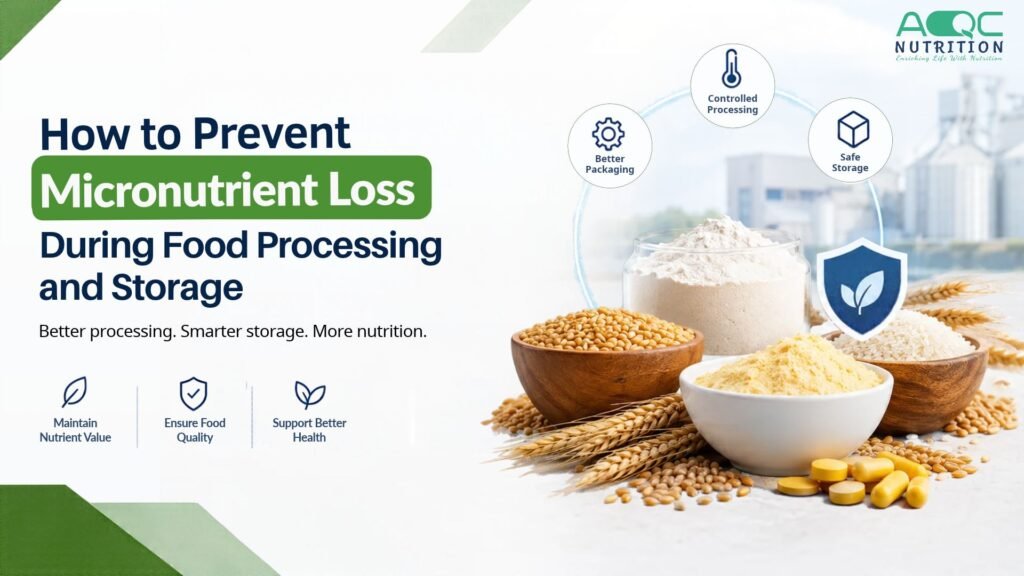
Micronutrients such as vitamins and minerals are essential for maintaining good health. They support immunity, energy production, growth, and many other vital bodily functions. However, some micronutrients can be lost during food processing and storage if conditions aren’t controlled.
For food manufacturers, maintaining nutrient retention is important for delivering consistent food quality and nutritional value. This becomes even more important when producing fortified foods, where specific vitamins and minerals are added to improve the nutritional content of a product.
Why Does Micronutrient Loss Happen?
Micronutrient loss can occur at different stages of food production. Heat, light, oxygen, moisture, processing time, and storage conditions can affect the stability of certain vitamins and minerals.
For example, some vitamins are sensitive to heat, while others can degrade when exposed to oxygen or light for long periods. Excessive processing can therefore reduce the amount of nutrients that remain in the final product.
Understanding these factors helps food manufacturers choose suitable food processing methods and storage conditions.
1. Choose the Right Processing Method
Processing is often necessary to improve food safety, shelf life, texture, and usability. However, excessive heat or prolonged processing may affect certain nutrients.
Manufacturers should select processing conditions based on the type of food and the nutrients involved. Using controlled temperatures and avoiding unnecessary processing time can help improve nutrient retention.
Modern food processing systems can also help manufacturers maintain better control over temperature, moisture, and processing conditions.
2. Control Heat Exposure
Heat is one of the major factors that can affect vitamin stability. Water-soluble vitamins, such as some B vitamins and vitamin C, can be particularly sensitive to processing conditions.
Using optimized heating conditions can help reduce unnecessary nutrient degradation. The goal is not to avoid heat completely, but to use the right temperature and processing time for the product.
This approach can help maintain vitamin stability while still achieving the required food safety and processing standards.
3. Protect Nutrients From Oxygen and Light
Oxygen and light can affect the stability of certain vitamins during processing and storage. This is why packaging plays an important role in maintaining nutritional quality.
Food manufacturers can use suitable packaging materials that provide protection from oxygen, moisture, and light. Proper sealing and controlled packaging conditions can further support micronutrient stability throughout the product’s shelf life.
4. Maintain Proper Storage Conditions
Even when nutrients are retained during processing, poor storage conditions can lead to further losses.
Temperature, humidity, light exposure, and oxygen levels should be monitored according to the requirements of the product. Storing food in a cool, dry, and suitable environment can help maintain its nutritional quality.
For fortified food products, proper storage is particularly important because the stability of added vitamins and minerals can influence the nutritional value delivered to consumers.
5. Use Suitable Fortification Practices
Food fortification is widely used to increase the nutritional value of commonly consumed foods. However, simply adding nutrients is not enough. Manufacturers also need to consider how those nutrients behave during processing and storage.
The choice of micronutrient premix, dosage, processing conditions, and packaging can all influence the final nutrient content.
A suitable premix should be selected based on the food matrix, processing conditions, and expected storage period. This helps manufacturers achieve better nutrient stability and consistent fortification.
6. Monitor Nutrient Levels
Regular testing can help manufacturers understand how much of a nutrient remains after processing and during storage.
Nutritional analysis can be carried out at different stages, including raw materials, finished products, and shelf-life testing. This allows manufacturers to identify possible nutrient losses and make adjustments when required.
Monitoring also helps maintain food quality, nutritional consistency, and regulatory compliance.
7. Improve Packaging and Shelf-Life Management
Packaging is more than a way to protect food from physical damage. It can also help preserve its nutritional value.
Packaging solutions should be selected according to the product’s sensitivity to moisture, oxygen, and light. Manufacturers should also follow appropriate storage and handling practices throughout the supply chain.
Better shelf-life management can reduce the risk of nutrient degradation before the product reaches consumers.
Conclusion
Preventing micronutrient loss during food processing and storage requires attention at every stage of production. Controlled processing, proper temperature management, suitable packaging, appropriate storage conditions, and regular nutrient testing can help maintain nutritional quality.
For fortified foods, selecting the right micronutrient premix and understanding nutrient stability are equally important. By combining suitable food fortification practices with effective processing and storage methods, manufacturers can improve nutrient retention and deliver more consistent nutritional value to consumers.
Looking for reliable food fortification solutions?
AQC Chem offers micronutrient premixes designed to support the nutritional requirements of different food applications.
Visit AQC Chem to learn more, or contact us at +91-99207 79504 for further information.