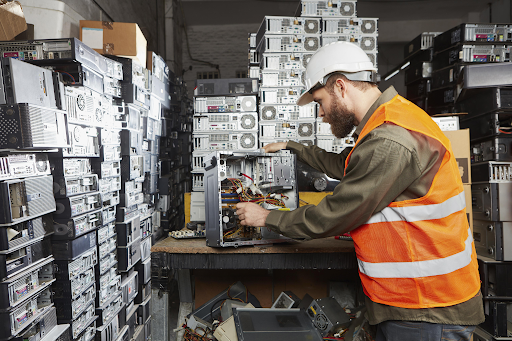
Retiring outdated servers and data centre infrastructure involves more than disconnecting equipment and removing it from a facility. Businesses need a planned process that protects sensitive information, manages valuable hardware, and supports responsible recycling. Professional data center decommissioning services in Dubai help organisations approach infrastructure retirement through secure equipment handling, data destruction, and resource recovery.
As companies upgrade their technology, older servers, storage devices, networking equipment, and other IT assets gradually become unsuitable for continued use. However, these devices may still contain confidential information and recyclable components. Managing their retirement carefully helps businesses reduce data security risks, maintain asset records, and avoid irresponsible electronic waste disposal.
Understanding the IT Asset Retirement Process
IT asset retirement refers to the organised removal and processing of equipment that has reached the end of its operational life. In a data centre, this may involve servers, storage systems, networking devices, cables, and other supporting hardware. Each asset needs to be identified and assessed before it is removed or sent for further processing.
A structured retirement process helps organisations understand which equipment can be reused, which devices require data destruction, and which materials should enter recycling channels. This distinction is important because not every retired device needs to follow the same disposal route. Proper assessment allows businesses to manage their equipment according to its condition, functionality, and data security requirements.
Preparing Equipment for Secure Removal
Before removing infrastructure, businesses should establish an inventory of the equipment scheduled for retirement. Recording asset details and identifying storage devices helps create a clear record of the items involved. Organisations considering disposal of IT assets should also account for equipment condition, transportation requirements, and the appropriate processing method.
A well-organised preparation stage can include the following activities:
- Listing servers, computers, storage devices, and networking equipment.
- Recording serial numbers and relevant asset information.
- Identifying devices containing confidential business data.
- Separating reusable equipment from damaged or obsolete hardware.
- Planning secure collection and transportation.
- Establishing documentation requirements for the retirement process.
These activities help businesses maintain better control over their equipment throughout the removal process. They also make it easier to track assets and determine the appropriate next step for each item.
Secure Data Handling Before Recycling
Data protection is one of the most important considerations when retiring servers and storage infrastructure. Switching off a device or deleting stored files does not necessarily remove information permanently. Storage media may retain business records, customer information, financial details, and other confidential data that should not become accessible after equipment retirement.
Businesses requiring data center decommissioning services in Dubai should ensure that data-bearing equipment receives suitable treatment before entering recycling channels. Depending on the storage medium and its condition, data can be removed through certified wiping, degaussing, or physical destruction. Selecting an appropriate method helps organisations address information security before retired hardware is dismantled or processed.
-
Certified Data Wiping
Data wiping overwrites information stored on a device so that the original data cannot be recovered through ordinary recovery methods. Planet Green Recycling uses Blancco Drive Eraser and Active@ KillDisk for this process. These tools support sanitisation in line with the NIST 800-88 framework and generate verification logs.
-
Degaussing
Degaussing uses a powerful magnetic field to erase information from suitable magnetic storage media. It is particularly relevant for traditional hard disk drives and magnetic backup tapes. Planet Green Recycling uses the DataGauss Max LG Degausser for this purpose.
-
Physical Destruction
Some storage devices require irreversible destruction rather than software-based sanitisation. Industrial shredding reduces hard drives and other selected media into small fragments, preventing their further use as storage devices and eliminating the possibility of recovering information from intact media.
-
Inventory Tracking and Documentation
Recording storage media details supports accountability throughout the destruction process. Planet Green maintains inventory information, including serial numbers and device details, and provides Certificates of Destruction with supporting records. This documentation can help businesses maintain evidence for audits and internal reviews.
Recycling and Recovering Valuable Materials
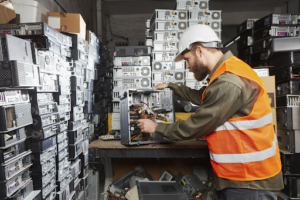
After appropriate data destruction, retired equipment can move into recycling and resource recovery. Servers, computers, networking devices, and other electronic assets contain different materials that need to be separated for suitable processing. Recoverable components may be identified for reuse, while non-reusable equipment can be dismantled and sorted into material categories.
This stage helps businesses manage electronic waste more responsibly. Metals, plastics, glass, circuit boards, and other components can be directed towards appropriate recycling facilities. Separating materials instead of mixing all discarded equipment together supports resource recovery and reduces the amount of electronic waste sent for ordinary disposal.
The condition of each asset plays an important role in determining its next destination. Functional equipment or components may be refurbished or reused where suitable, while damaged and obsolete items can undergo dismantling and material recovery. This approach gives retired technology a more organised end-of-life route and supports better utilisation of available resources.
The Importance of Certification and Records
Documentation is an essential part of responsible IT asset retirement because businesses need evidence of how their equipment has been handled. Collection records, inventory information, destruction certificates, and recycling certificates can help organisations maintain a clearer account of their retired assets. These records also support internal asset management and relevant audit requirements.
Certification provides additional clarity about completed processing activities. Planet Green Recycling provides recycling certificates for processed equipment and documentation for data destruction. Maintaining these records helps businesses understand which assets were collected, what processing was completed, and how the equipment was managed after leaving their premises.
Conclusion
Responsible IT asset retirement requires careful planning, secure data handling, accurate documentation, and appropriate recycling. From server removal to material recovery, every stage contributes to a more organised approach to managing outdated infrastructure. Businesses that follow a structured process can protect sensitive information while supporting resource recovery and responsible electronic waste management.
For organisations seeking reliable disposal of IT assets, Planet Green Recycling (L.L.C) offers support through IT asset collection, secure data destruction, recycling, resource recovery, and certification. Its services help businesses manage retired technology through defined processing stages while keeping data security and responsible disposal in focus.