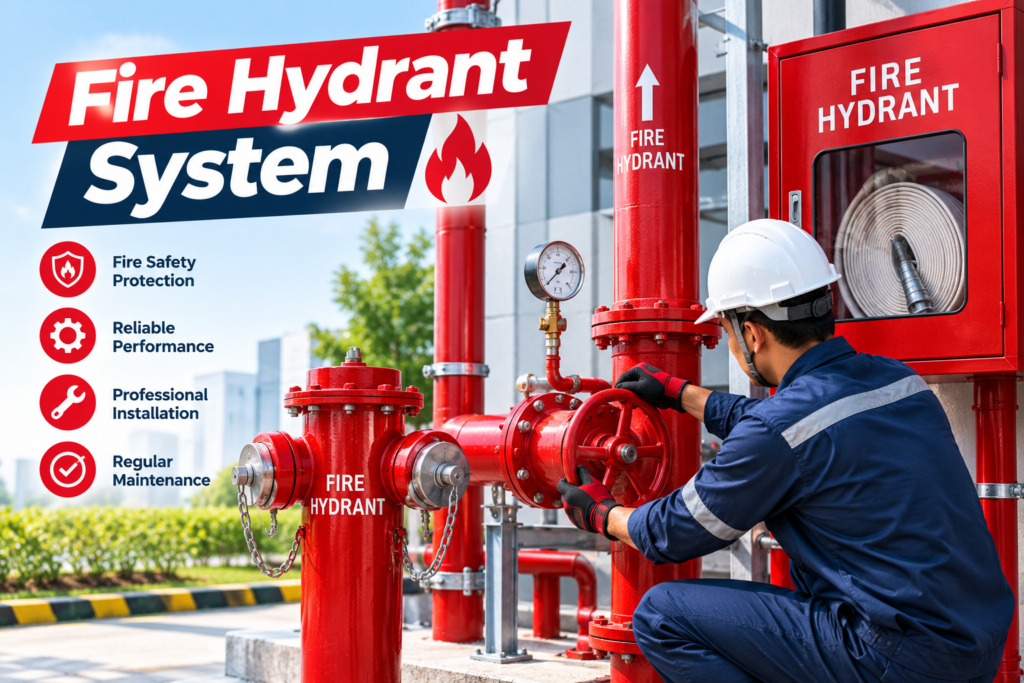
Fire safety is an important part of protecting buildings, workplaces, industrial facilities, commercial properties, and public spaces. A reliable Fire Hydrant System provides an organized way to supply water during a fire emergency, helping trained responders control and manage fires before they spread further. These systems are commonly included in comprehensive fire protection planning because they can provide a dependable water source at strategically selected points throughout a property. safety-first-solutions helps property owners and businesses understand the importance of effective fire protection and the role that properly planned systems can play in emergency preparedness.
What Is a Fire Hydrant System?
A Fire Hydrant System is a fixed fire protection arrangement designed to provide water for firefighting purposes. It generally consists of hydrants, pipes, valves, water storage, pumps, and associated equipment that work together to deliver water when required.
The system is normally designed according to the characteristics of the property, expected fire risks, building layout, water requirements, and applicable fire safety standards. Proper design is important because firefighters or trained emergency personnel need suitable access to water during a fire.
Why Fire Hydrant Systems Are Important
A fire can develop quickly, making immediate access to firefighting resources essential. A well-planned hydrant system can provide a dedicated water supply that supports firefighting activities within or around a protected property.
Unlike portable firefighting equipment, a fixed hydrant arrangement can cover larger areas when appropriately designed. It can therefore form an important part of a property’s overall fire protection strategy.
Main Components of a Fire Hydrant System
A typical Fire Hydrant System includes several interconnected components. Hydrant outlets provide access points for firefighting hoses, while a network of pipes distributes water throughout the protected area.
Water storage tanks may provide the required reserve, while fire pumps help maintain suitable water flow and pressure. Valves, hose arrangements, control equipment, and other accessories can also form part of the system depending on the building and design requirements.
Fire Water Storage
An adequate water supply is an important consideration when planning a hydrant system. Dedicated fire water storage may be provided so that firefighting operations have access to an appropriate reserve during an emergency.
The required storage capacity depends on the type of property, fire risk, system design, applicable standards, and other engineering considerations. Regular inspection can help identify issues such as leaks, contamination, or problems with associated equipment.
Fire Pumps and Water Pressure
Fire pumps help move water through the hydrant network when sufficient pressure cannot be provided by the available water source alone. Different properties may require different pump arrangements depending on their size and fire protection requirements.
Pump performance should be monitored and maintained according to the system’s design and applicable requirements. A pump that does not operate correctly can affect the performance of the overall fire protection system.
Hydrant Valves and Outlets
Hydrant valves provide controlled access to the water contained within the fire protection network. They are positioned at suitable locations so trained personnel can connect firefighting hoses and access the water supply.
The location and accessibility of hydrant outlets are important considerations during system planning. Equipment should remain accessible and should not be blocked by stored materials, vehicles, construction items, or other obstacles.
Fire Hoses and Nozzles
Fire hoses are used to direct water from hydrant outlets toward a fire. Nozzles can help control the direction and characteristics of the water stream.
Hoses, nozzles, and related equipment should be inspected regularly for visible damage, deterioration, incorrect storage, or other problems. Maintaining equipment in usable condition is an important part of fire preparedness.
Where Fire Hydrant Systems Are Used
A Fire Hydrant System may be used in various types of properties where fixed firefighting water infrastructure is required. These can include commercial buildings, warehouses, factories, high-rise structures, educational facilities, healthcare buildings, residential developments, and other large premises.
The specific design differs according to the property’s construction, occupancy, fire hazards, size, and applicable regulations.
Fire Hydrant Systems in Industrial Facilities
Industrial environments can contain machinery, electrical equipment, combustible materials, chemicals, or manufacturing processes that create specific fire risks. A suitable hydrant system can provide firefighting water access across strategically selected areas.
Industrial systems often require careful engineering because the fire hazards and physical layout can be more complex than those found in smaller buildings. Risk assessment is therefore an important part of system planning.
Fire Hydrant Systems for Commercial Buildings
Commercial properties can have large floor areas, multiple occupants, storage spaces, offices, and public areas. A properly designed hydrant network can support emergency firefighting activities throughout the property.
System placement should take accessibility and building layout into account. Clear access to hydrants and associated equipment can help trained responders use the system effectively during an emergency.
Importance of Professional Installation
Installing a Fire Hydrant System requires appropriate technical knowledge and careful planning. Pipe sizes, pump capacity, water storage, pressure requirements, hydrant locations, valves, and other components need to work together as part of a coordinated system.
Professional installation can help reduce the risk of incorrect connections, poor equipment placement, inadequate water flow, and other installation-related problems. The final arrangement should meet applicable safety requirements and the property’s specific fire protection needs.
Inspection and Maintenance
Even a well-designed system requires regular inspection and maintenance. Over time, valves may become difficult to operate, pumps may develop faults, pipes can experience corrosion, and hoses or other equipment can deteriorate.
Routine checks can help identify problems before an emergency occurs. Maintenance schedules should be based on the system design, manufacturer recommendations, applicable standards, and relevant fire safety requirements.
Testing Fire Hydrant Equipment
Testing helps verify whether the system’s major components are functioning as intended. Depending on the system, testing may involve checking pumps, valves, pressure, water flow, alarms, storage arrangements, and other associated components.
Records of inspections and testing can also help property managers track maintenance activities and identify recurring issues.
Fire Safety Planning and Training
A hydrant system is only one part of an effective fire safety strategy. Buildings should also have suitable emergency procedures, evacuation arrangements, fire detection systems, appropriate extinguishers, signage, and trained personnel where required.
People responsible for operating firefighting equipment should receive appropriate training. A system should never be operated by untrained individuals when doing so could create additional danger.
Benefits of a Properly Designed System
A properly planned Fire Hydrant System can provide an organized firefighting water supply, improve emergency preparedness, and support trained responders during fire incidents. It can also complement other fixed and portable fire protection measures.
The effectiveness of any system depends on correct design, suitable installation, regular maintenance, adequate water supply, and compliance with relevant safety requirements.
Choosing a Fire Safety Service Provider
When selecting a company for fire protection work, property owners should consider technical experience, relevant qualifications, quality of equipment, installation practices, inspection procedures, and knowledge of applicable safety requirements.
safety-first-solutions focuses on helping businesses and property owners understand fire protection needs and the importance of maintaining dependable safety systems. A professional approach can help ensure that fire protection equipment is considered as part of a broader emergency preparedness plan.
Conclusion
A Fire Hydrant System is an important component of fire protection for many commercial, industrial, residential, and public properties. By providing access to a dedicated firefighting water supply, it can support trained emergency personnel during fire incidents. However, the effectiveness of a hydrant system depends on appropriate design, professional installation, suitable equipment, regular inspection, testing, and maintenance. Property owners should assess their specific fire risks and ensure that their fire protection arrangements meet applicable standards and regulations. With proper planning and ongoing attention to safety, safety-first-solutions can help businesses take a more organized approach to protecting people, property, and valuable assets from fire-related risks.