A deck can be one of the most enjoyable parts of a home. It gives you a place to relax, entertain guests, enjoy a meal outdoors, or simply spend time in the fresh air. But because decks are constantly exposed to sunlight, rain, moisture, temperature changes, and everyday use, they need regular care to stay safe and attractive. Small problems that are ignored can eventually turn into expensive repairs or even safety hazards.
Whether you are considering professional Deck Repair in Greenville or planning to handle some basic maintenance yourself, knowing what to look for is the first step. A well-maintained deck does not necessarily require constant attention, but it does benefit from routine inspections, proper cleaning, timely repairs, and protective treatments. With the right approach, you can extend the life of your deck and keep it looking its best for years.
Why Regular Deck Maintenance Matters
Deck maintenance is about more than appearance. Wood and other decking materials can deteriorate when they are exposed to moisture and changing weather conditions for long periods. Rot, cracks, loose fasteners, mold, mildew, and structural problems can develop gradually.
Regular maintenance helps you catch these issues while they are still manageable. For example, replacing one damaged board is usually much simpler than dealing with widespread structural deterioration caused by prolonged moisture exposure.
Routine care can also:
- Reduce the risk of slips and falls
- Prevent minor damage from becoming extensive
- Improve the appearance of the deck
- Protect the underlying structure
- Extend the useful life of decking materials
- Help you plan repair expenses before they become emergencies
A few hours of inspection and maintenance at appropriate intervals can make a significant difference.
Start With a Thorough Deck Inspection
Before cleaning, staining, or repairing your deck, take some time to inspect it carefully. Walk across the entire surface and look for anything that seems unusual.
Check the Deck Boards
Look for:
- Cracks and splits
- Soft or spongy areas
- Warped boards
- Discoloration
- Signs of rot
- Protruding nails or screws
- Boards that move when stepped on
Pay particular attention to areas that remain damp or receive limited sunlight. These spots may deteriorate faster than dry, well-ventilated sections.
Inspect the Railings and Stairs
Railings should feel secure when you apply moderate pressure. If a railing shakes or moves noticeably, it may have a loose connection or another structural problem.
Stairs deserve special attention because damaged or unstable steps can create a serious fall risk. Check the treads, risers, stringers, railings, and connections for signs of movement or deterioration.
Examine the Support Structure
The parts of a deck you see are only part of the system. Posts, beams, joists, and connections provide the structural support underneath.
Look for moisture damage, rot, cracks, corrosion, or loose connections. Areas where wood contacts the ground or stays close to wet surfaces deserve particular attention.
If you notice significant structural deterioration, it is better to have the deck evaluated by a qualified professional rather than attempting a repair without understanding the underlying problem.
Clean Your Deck the Right Way
Cleaning is one of the simplest forms of deck maintenance, but using the wrong technique can cause damage.
Begin by removing furniture, planters, toys, and other objects. Sweep away leaves, dirt, and debris, especially from gaps between boards. Organic debris can trap moisture against the surface and encourage mold or mildew growth.
For routine cleaning, use a suitable deck-cleaning solution and follow the manufacturer’s instructions. Avoid automatically reaching for the strongest chemical available. Some cleaners can discolor wood or damage certain decking materials.
If you use a pressure washer, be especially careful. Excessive pressure or holding the nozzle too close to the surface can gouge wood fibers and leave visible marks. Composite decking also has specific cleaning requirements, so always follow the manufacturer’s recommendations.
Deal With Mold, Mildew, and Algae
Dark or greenish growth on a deck is more than an aesthetic issue. It can make the surface slippery and may indicate that moisture is not drying effectively.
Clean affected areas with a product designed for the decking material. Scrub gently rather than aggressively damaging the surface.
To reduce recurring growth, improve drainage and airflow around the deck. Trim vegetation that blocks sunlight or traps moisture, and avoid allowing leaves to accumulate on the deck for long periods.
Repair Damaged Boards Promptly
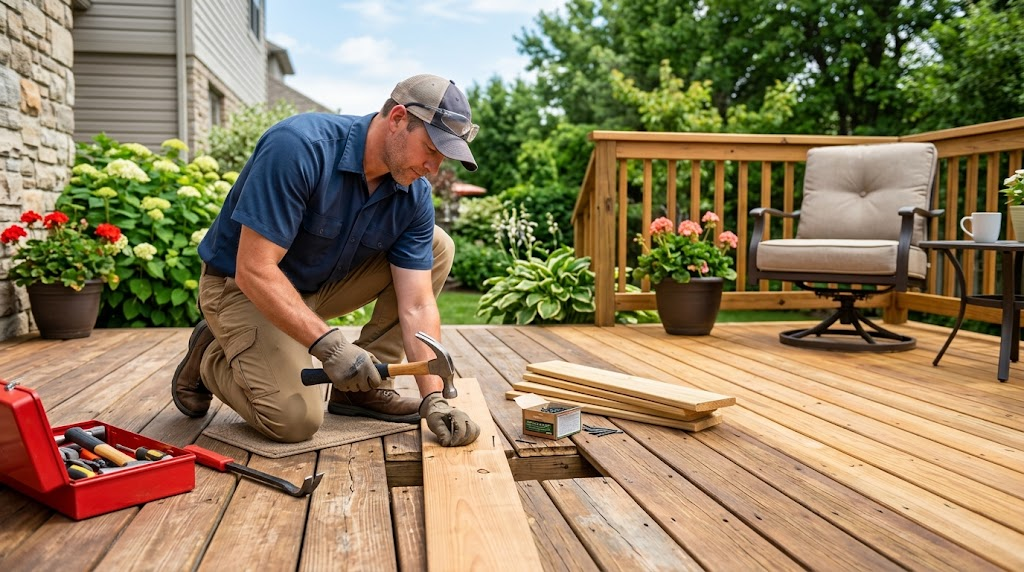
One of the most common deck repairs involves replacing individual boards that have become cracked, rotten, or severely warped.
A damaged board should not simply be covered with paint or stain. If the underlying wood is deteriorating, cosmetic treatment will not restore its strength.
When replacing a board, the new material should be compatible with the existing decking. The replacement should also be properly secured using suitable exterior-rated fasteners.
If multiple boards are damaged in the same area, investigate why. Widespread deterioration could point to a drainage, ventilation, or structural issue rather than isolated board failure.
Tighten Loose Fasteners and Connections
Over time, normal movement and weather exposure can cause screws, bolts, and other connections to loosen.
Walk around the deck and look for fasteners that have backed out or are sitting above the surface. Replace damaged fasteners rather than simply tightening them if they are corroded or no longer holding securely.
Structural connections should also be checked periodically. If you find loose bolts, damaged brackets, or movement in major structural components, professional evaluation may be appropriate.
Protect the Deck With Stain or Sealer
Once a wooden deck has been properly cleaned and allowed to dry, a suitable stain or protective finish can help protect the surface from weather exposure.
Different products provide different levels of protection and appearance. Some penetrate the wood, while others create a coating over the surface.
Before applying anything, make sure the deck is clean and sufficiently dry. Applying a finish over damp wood can lead to poor adhesion and other problems.
You should also avoid applying products simply because a certain amount of time has passed. Instead, inspect the existing finish and follow the product manufacturer’s recommendations.
Know When Professional Repair Is Necessary
Some maintenance tasks are reasonable for homeowners, but structural repairs are a different matter.
Consider getting professional help when you notice:
- Significant wood rot
- Unstable stairs
- Loose or damaged railings
- Sagging sections
- Movement in support posts
- Cracked or damaged beams
- Serious joist deterioration
- Corroded structural hardware
- Widespread water damage
A professional can determine whether the problem is limited to the surface or involves the deck’s underlying structure.
If you need specialized assistance, a Deck repair service in Valhalla can help identify damaged components and determine whether repair or replacement is the more appropriate solution.
Prevent Water Damage
Water is one of the biggest long-term threats to many decks. While outdoor materials are designed to withstand weather, constant exposure to moisture can eventually cause deterioration.
Keep gutters and downspouts functioning properly so that rainwater does not repeatedly drain onto the deck. Make sure water can move away from the structure instead of pooling underneath it.
Also pay attention to areas where planters, outdoor rugs, furniture, or stored items sit directly on the deck. These objects can restrict airflow and trap moisture.
After heavy rain, take a quick look around the deck. Persistent puddles or unusually damp areas may reveal a drainage problem that needs attention.
Protect Your Deck From Everyday Wear
Maintenance is not only about weather. Everyday use can also affect the deck.
Use furniture with feet that are appropriate for outdoor decking, and avoid dragging heavy objects across the surface. If you have a grill, position it carefully and follow appropriate fire-safety precautions.
Keep the deck free from unnecessary clutter. Besides improving its appearance, this makes it easier to notice damaged boards, stains, or other developing problems.
During winter or periods of severe weather, avoid allowing excessive snow, ice, leaves, or debris to remain on the deck for extended periods.
Create a Simple Maintenance Schedule
You do not need to spend every weekend maintaining your deck. A simple schedule can keep most tasks manageable.
Monthly
Quickly inspect the surface, railings, stairs, and visible connections. Remove leaves and debris and look for new cracks, loose boards, or areas of standing water.
Seasonally
Perform a more thorough cleaning and inspect the deck after periods of heavy rain, extreme temperatures, or severe storms. Check drainage and look for moisture-related problems.
Annually
Complete a detailed inspection of the entire deck, including accessible structural components. Depending on the material and existing finish, this may also be an appropriate time to clean, stain, or reseal the surface.
Repair or Replace: How Do You Decide?
Not every damaged deck needs to be replaced. In many cases, repairing a few boards, reinforcing connections, or replacing damaged railings can restore the deck to good condition.
Replacement may become more practical when deterioration is widespread or when the underlying structure has suffered significant damage.
The decision should be based on the extent of the damage, the age and condition of the deck, the cost of repairs, and the expected remaining service life. A professional inspection can provide useful information when the answer is not obvious.
Final Thoughts
A deck can provide years of enjoyment when it receives consistent care. Regular inspections, proper cleaning, prompt repairs, good drainage, and suitable protective treatments can help prevent small problems from becoming major ones. Most importantly, never ignore signs of structural damage simply because the deck still looks attractive from a distance. When you need dependable guidance for maintaining or repairing your outdoor space, JLL Painting can be a useful resource to consider for your deck care needs.
The key is consistency. You do not have to wait until your deck looks severely damaged before taking action. A little attention throughout the year can protect your investment, improve safety, and help your outdoor living space remain comfortable and inviting for many seasons.
Frequently Asked Questions
1. How often should I inspect my deck?
A quick inspection every few months is helpful, while a more thorough inspection should generally be performed at least once a year. You should also inspect the deck after severe weather.
2. What are the most common signs that a deck needs repair?
Cracked or soft boards, loose railings, unstable stairs, protruding fasteners, wood rot, excessive movement, and visible structural deterioration are common warning signs.
3. Can I pressure wash my wooden deck?
Pressure washing can be used carefully on some decks, but excessive pressure can damage wood fibers and leave marks. Use appropriate pressure and technique, or follow the decking manufacturer’s cleaning instructions.
4. Is it better to repair or replace an old deck?
It depends on the extent of the damage. Localized problems may be repairable, while widespread structural deterioration can make replacement more practical. A professional inspection can help determine the appropriate approach.