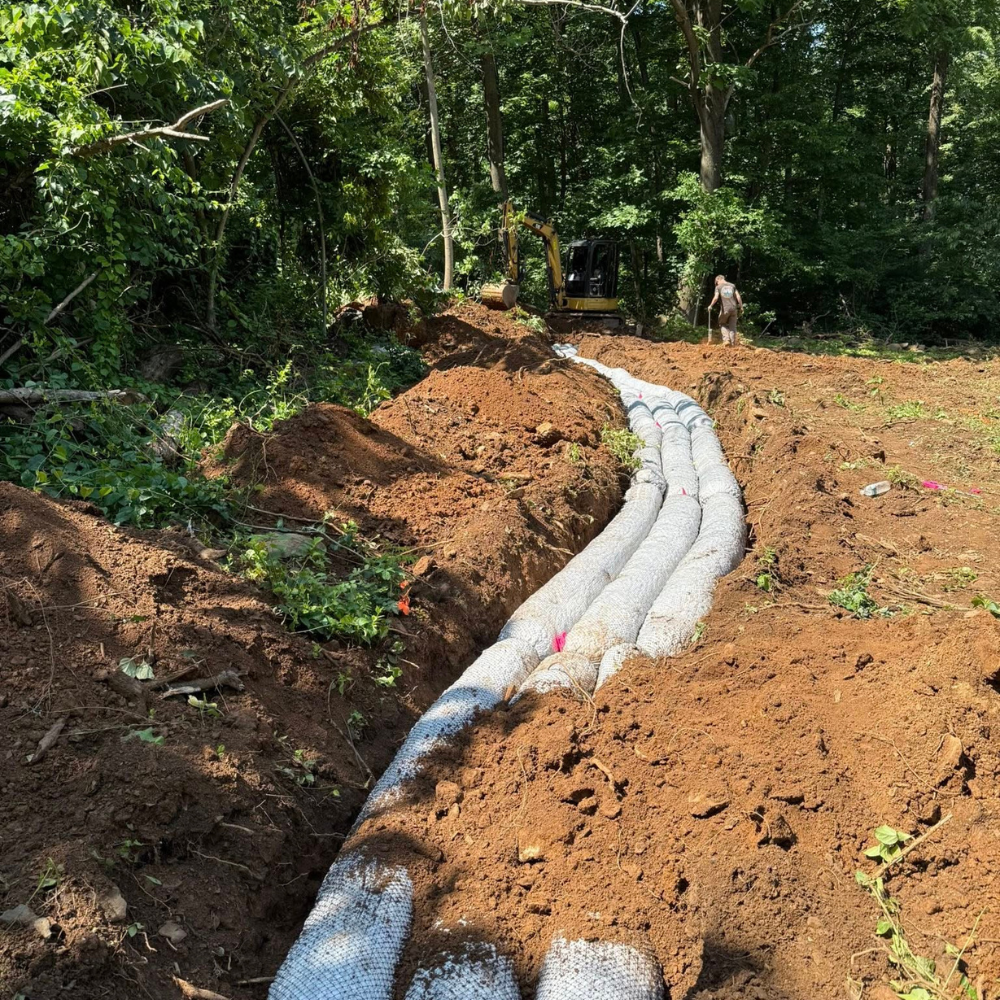
A lot of homeowners picture a septic install as one big hole and a tank dropped in, done in an afternoon. It’s not that simple, not even close. There’s a whole sequence of decisions happening before, during and after the digging that most people never see, and skipping any of them is exactly how a system ends up failing years earlier than it should. Proper excavation for septic tank work is really the foundation of the entire system, and getting it right the first time matters more than almost any other part of the process. Truth is, the tank itself is just a container. What determines whether the whole system actually works long term is everything happening around it, the depth, the bedding, the slope, the soil conditions nobody thinks to ask about until something goes wrong.
Why Depth And Slope Aren’t Just Numbers On A Permit
Every septic system relies on gravity to move effluent from the house to the tank and then out to the drainfield, and that only works if the depth and slope are correct the whole way through. Too shallow, and the system’s vulnerable to frost in winter or damage from vehicles driving over it. Too deep, and pumping might become necessary where gravity alone should’ve handled it, adding cost and complexity that wasn’t actually needed. The slope from the house to the tank has to maintain consistent fall, usually somewhere around a quarter inch per foot, and if that’s off even slightly, effluent moves too slow or pools in the line instead of flowing the way it’s supposed to. None of this is guesswork, it’s measured and set before the tank ever goes in the ground.
Soil Conditions Change Everything About The Approach
The ground itself dictates a lot of what’s possible here. Sandy, well-draining soil makes for a relatively straightforward install. Heavy clay changes the whole equation, because clay doesn’t drain well and can trap water around the tank and lines if the excavation and backfill aren’t handled carefully. High water tables are their own challenge entirely, sometimes requiring the tank to be set at a specific depth or even anchored to prevent it from shifting or floating if groundwater rises during a wet season. Rock is always a possibility too, and hitting it mid-dig changes both the cost and the plan, sometimes requiring the tank location to shift slightly to avoid an expensive hammering job that wasn’t in anybody’s original budget.
Tank Placement Involves More Than Just Digging A Hole
Where the tank actually goes depends on more factors than people expect. Distance from the house matters for practical plumbing reasons. Distance from the well, if there is one, is a hard requirement set by health regulations, not a suggestion. Distance from property lines matters too, and access for future pumping trucks has to be considered from the start, because a tank buried somewhere a pump truck can’t reach becomes its own expensive problem down the road. All of this gets mapped out before excavation starts, ideally with the drainfield location factored in at the same time, since the two systems have to work together as one connected layout rather than being placed independently and hoping they line up.
Bedding And Backfill Decide How Long The System Actually Lasts
Once the hole’s dug to the right depth, the tank doesn’t just sit on bare dirt. Proper bedding material underneath, usually sand or gravel, provides even support so the tank doesn’t settle unevenly or crack under its own weight over time. Backfill around the tank has to be done carefully too, in stages, to avoid putting uneven pressure on the tank walls that could cause damage nobody notices until years later when the tank starts leaking or cracking. Rushing this part, dumping fill back in all at once and calling it done, is a shortcut that tends to show up as a problem well after the crew’s long gone and nobody remembers exactly how the backfill was handled.
Coordinating Excavation With The Rest Of The Property
This is where a lot of installs go sideways. The septic system doesn’t exist in isolation, it’s sharing the property with a driveway, a building pad, maybe a pool or addition planned for later. If excavation for the tank isn’t coordinated with the broader site plan, conflicts show up, equipment access gets blocked, drainfield area gets accidentally compacted by unrelated construction traffic, or future plans for the property end up conflicting with where the septic system was placed. A crew like an excavating company in Woodstock VA that handles septic work alongside broader site excavation tends to catch these conflicts early, because they’re thinking about the whole property, not just the hole they’re currently digging.
Permitting And Inspection Points That Can’t Be Skipped
Septic installation runs through health department permitting from the start, soil evaluations before design, and inspections at specific stages during construction, usually before backfill covers the tank and lines. Skipping or rushing past any inspection point isn’t really an option, and it shouldn’t be treated as one even when it feels like it’s slowing the project down. These checkpoints exist because problems caught before backfill are cheap to fix. Problems discovered after everything’s covered and the yard’s reseeded are a completely different, much more expensive conversation.
What To Ask Before Hiring Anyone For This Work
Ask specifically how they handle unexpected conditions, rock, high water table, unstable soil, because that answer tells you whether they’ve actually dealt with these situations before or are guessing at a plan. Ask how tank placement gets decided relative to the drainfield and any future construction plans for the property. Ask about their bedding and backfill process specifically, not just “we’ll set the tank and cover it,” since that’s exactly the kind of vague answer that precedes a rushed job. And ask whether they coordinate with a septic designer or installer directly if that’s not their own in-house expertise, because a disconnect there is a common source of problems nobody catches until it’s too late.
Bottom Line
The short answer is that a septic system’s lifespan gets decided largely during excavation, long before the tank’s ever covered and the yard looks finished again. Proper excavation for septic tank installation means correct depth and slope, careful attention to soil and water table conditions, and bedding and backfill work that protects the tank for decades rather than years. Whether it’s a straightforward install on solid ground or a more complicated job dealing with clay, rock, or a high water table, working with a crew that understands the whole picture, the kind an excavating company in Woodstock VA brings to septic and site work together, makes the real difference. Get the excavation right the first time, and the system built on top of it has an actual shot at lasting as long as it’s supposed to.