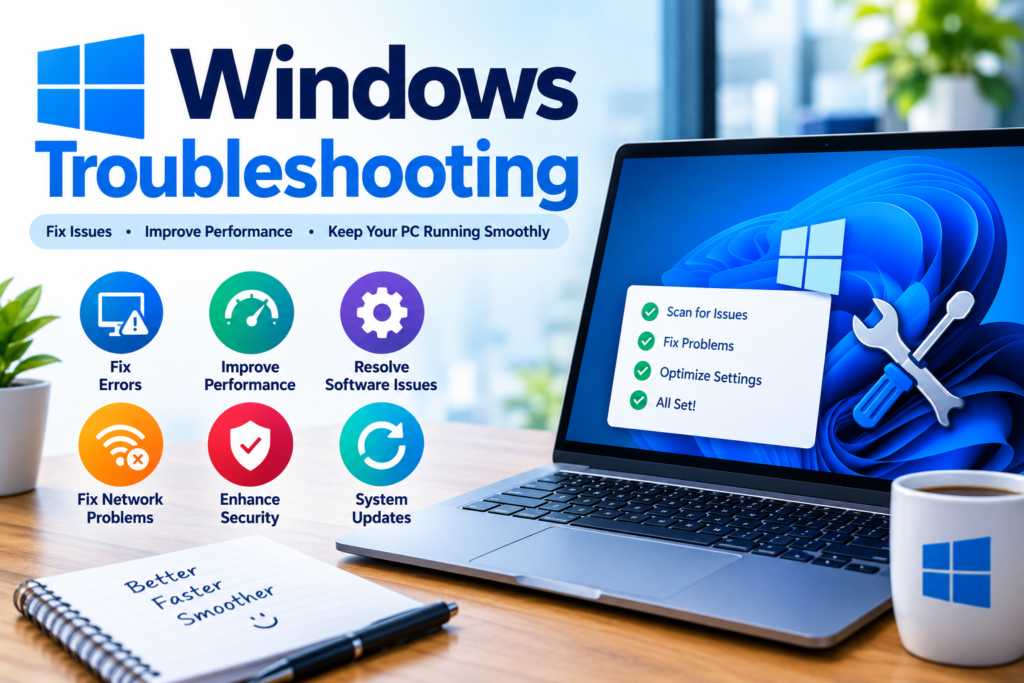
Windows computers are used for work, study, communication, entertainment, and many other daily activities. When a computer suddenly becomes slow, refuses to connect to the internet, displays an error, or fails to start correctly, it can interrupt important tasks. Windows Troubleshooting provides a practical way to identify the cause of these problems and find suitable solutions.
Many Windows issues are caused by simple factors such as outdated software, insufficient storage, problematic applications, incorrect settings, or temporary system errors. Learning a few basic troubleshooting techniques can help users deal with common problems without immediately requiring professional assistance.
What Is Windows Troubleshooting?
Windows Troubleshooting is the process of identifying, diagnosing, and resolving problems affecting a Windows computer. These problems can involve hardware, software, network connections, system settings, drivers, applications, or operating-system files.
Effective troubleshooting usually begins with identifying the symptoms. Understanding what changed before the problem appeared can provide an important clue. For example, an issue that started immediately after installing a new application may have a different cause from a problem that appeared after a Windows update.
Restart the Computer First
Restarting a Windows computer is one of the simplest troubleshooting steps, but it can resolve many temporary problems. Background processes may become stuck, applications can stop responding, or system resources may become temporarily unavailable.
A normal restart allows Windows to close running processes and reload important system components. If a problem disappears after restarting but repeatedly returns later, additional troubleshooting may be necessary.
Check for Windows Updates
Outdated operating-system components can sometimes cause compatibility, performance, and security problems. Windows updates may include bug fixes, driver improvements, security patches, and other system changes.
Users experiencing unexpected problems should check whether pending updates are available. After installing updates, restarting the computer may be required before all changes take effect.
Troubleshooting a Slow Windows Computer
A slow computer is one of the most common Windows problems. Several factors can contribute to poor performance, including too many startup applications, limited storage, background processes, outdated drivers, or demanding software.
Users can review which applications are running and close programs that are not needed. Removing unnecessary applications and keeping sufficient free storage can also support better performance.
If the computer remains slow, checking system resources can help identify whether the processor, memory, or storage is being heavily used.
Fixing Internet Connection Problems
Internet problems can prevent users from accessing websites, online applications, cloud services, and communication tools. The first step is to determine whether the issue affects only one computer or the entire network.
Restarting the router and computer can sometimes resolve temporary connectivity issues. Users should also check Wi-Fi settings, network cables, and adapter status.
If other devices connect normally but one Windows computer does not, the problem may be related to the computer’s network settings or adapter.
Resolving Application Crashes
Applications may occasionally freeze, close unexpectedly, or display error messages. This can happen because of corrupted files, outdated versions, incompatible settings, or insufficient system resources.
Users can start by closing and reopening the application. If the problem continues, checking for an available application update or reinstalling the program may help.
It is also useful to determine whether the problem occurs only with one application or with multiple programs. This distinction can help identify whether the issue is application-specific or related to Windows itself.
Managing Storage Space
Insufficient storage can affect Windows performance and prevent applications or updates from working properly. Large downloads, temporary files, old installers, videos, and unused applications can gradually consume available space.
Regularly reviewing storage usage can help users identify unnecessary files. Removing items that are no longer required and uninstalling unused programs can free up valuable space.
Important personal files should always be backed up before deleting anything that may be needed later.
Checking Drivers
Drivers allow Windows to communicate correctly with hardware components such as graphics cards, printers, network adapters, keyboards, and other devices.
A missing, corrupted, or incompatible driver can cause hardware-related problems. If an issue begins after connecting a new device or installing an update, checking the relevant driver can be a useful troubleshooting step.
Users should obtain drivers from trustworthy sources and make sure they are appropriate for the specific hardware and Windows version.
Dealing With Windows Startup Problems
A computer that takes an unusually long time to start or fails to boot normally may have several possible causes. Startup applications, corrupted system files, storage problems, hardware faults, or recent system changes can all contribute.
If Windows cannot start normally, users can explore the recovery and startup-repair options available within the operating system. Important files should be backed up whenever possible, particularly before performing major recovery actions.
Using Windows Built-In Troubleshooting Tools
Windows includes several tools that can assist with diagnosing system problems. Depending on the issue, users may have access to settings and utilities for network diagnosis, storage management, system recovery, device management, and security checks.
These built-in options can be useful because they are already integrated into the operating system and can provide information about potential problems.
Protecting Windows From Malware
Malware can cause unusual computer behavior, slow performance, unwanted advertisements, application crashes, and other problems. Maintaining active security protection and keeping Windows updated are important parts of system maintenance.
Users should avoid opening suspicious attachments or installing software from unreliable sources. Regular security scans can also help identify potentially unwanted or harmful software.
When Professional Help Is Needed
Basic Windows Troubleshooting can resolve many everyday problems, but not every issue should be handled without assistance. Repeated system crashes, unusual hardware noises, data-loss situations, serious startup failures, or persistent errors may require professional attention.
Trying random fixes without understanding the cause can sometimes make a problem worse. When an issue involves important business data or critical files, professional guidance may be the safer approach.
Preventing Future Windows Problems
Prevention is an important part of maintaining a reliable computer. Keeping Windows and applications updated, maintaining sufficient storage, using reputable security software, and regularly backing up important data can reduce the impact of future problems.
Users should also avoid installing unnecessary programs and should pay attention to system warnings rather than ignoring them repeatedly.
Conclusion
Windows Troubleshooting does not always require complicated technical knowledge. Simple steps such as restarting the computer, checking updates, managing storage, reviewing applications, checking drivers, and examining network settings can resolve many common problems.
When an issue is more serious or continues despite basic troubleshooting, professional assistance can help identify the underlying cause safely. TechTaalk provides useful technology information and practical guidance to help users understand Windows-related problems and manage their computers with greater confidence.