There’s a small jewellery shop near where I used to live that always strikes me as odd. They had beautiful stock and genuinely lovely pieces. But every time I walked past, something about the window display made me want to keep walking rather than step inside. It took me a while to figure out why. The lighting was flat, the cases looked dated and the whole thing felt more like storage than presentation.
That shop closed eventually. I’m not saying the display was the only reason, but I’d have paid more attention to the display counters and cabinets too, as they form an important part of the entire showroom vibe. And, here’s something most retailers don’t think about until it’s too late: customers decide whether to engage with a product within seconds, and a huge part of that decision is shaped by how it’s presented, not just what it is.
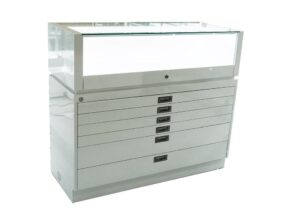
Why Does the Cabinet Matter as Much as the Product Inside It?
This sounds like a strange question on the surface. It is said that the product sells itself, sure. But for anything with genuine value, whether that’s jewellery, watches, trophies, collectibles, or speciality retail items, the case it sits in does a lot of invisible work.
Think about it from a psychological angle for a second. A display case isn’t just a container. It’s in fact more of a signal. It tells the customer, before they’ve even picked anything up, how much care has gone into the business itself. A scratched, poorly lit case with mismatched shelving says one thing. A clean, well-lit, properly framed case says another entirely, even if the products inside are identical.
What Are People Actually Looking for When They Browse a Display Case?
In my experience speaking with shop owners over the years, three things come up again and again, whether they realise it or not.
- They want to see the product clearly, without glare or shadow getting in the way.
- They want to feel like the item is valuable, which means the presentation needs to match the price point.
- They want to trust the retailer, and a tidy, well-built case is part of that trust signal, almost without anyone consciously noticing it.
The Aluminium Stuff: Something that Nobody Really Explains Properly
When you begin researching display cabinets for a shop, you’ll come across a decision point that lacks clear explanations: the choice of frame material. Most serious retail cabinets today use aluminium framing, and there’s a reason for that beyond it simply looking modern.
Aluminium is lightweight but strong, which matters more than people expect when a cabinet needs to be moved, reconfigured, or shipped. It doesn’t rust, which matters if your shop has any humidity at all, particularly in older buildings with less reliable climate control. And it holds glass panels with a precision that other materials, particularly older wooden frames, simply can’t match over time. Wood warps, but aluminium doesn’t.
Aluminium display counters, in particular, tend to outlast almost everything else in a shop fit-out. I’ve heard from more than one retailer that their counter outlived two or three rounds of general shop renovation simply because there was no reason to replace something that was still doing its job perfectly well.
Tall Display Cabinets: The Most Underused Tool in Small Retail Spaces
Here’s something that surprised me when I first started paying attention to shop layouts properly. A huge number of independent retailers default to low, horizontal cases because that’s what they’ve always seen. But for shops with limited floor space, tall display cabinets do something horizontal counters simply can’t: they use vertical space that would otherwise sit empty.
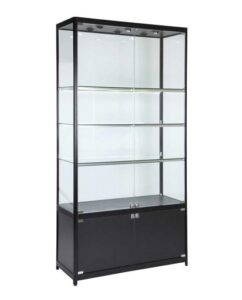
A tall cabinet against a wall draws the eye upward, creates a sense of scale in a small room, and lets you display considerably more stock without expanding your footprint. For shops dealing in collectables, trophies, or layered jewellery collections, this matters enormously.
When Does a Tall Cabinet Actually Make Sense?
It’s worth being honest that tall cabinets aren’t right for everything. If your product needs to be handled frequently, or if customers expect to try things on or pick items up regularly, a tall case can create friction. But for items that are primarily viewed rather than handled, trophies, fine jewellery, high-value collectibles, and antiques, a tall cabinet against a back wall or flanking an entrance can completely change how a space feels.
The Lighting Detail Almost Nobody Gets Right
This is the part of display cabinets that I think gets the least attention, despite mattering the most. Lighting changes everything about how a product is perceived. A diamond under flat, indirect light looks dull. The same diamond under proper directional lighting looks alive.
Most retailers buy a cabinet, get the standard lighting that comes with it, and never think about it again. That’s a mistake, because lighting isn’t a fixed, unchangeable thing. It’s something you can and should maintain and upgrade.
Why Does Nobody Talk About LED Bulb Holders Until Something Breaks?
This detail is so small and practical that almost nobody considers it until a bulb fails during a busy trading week, at which point they realise they have no idea what type of fitting their cabinet uses or where to quickly find a replacement.
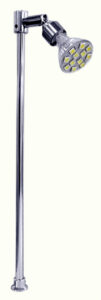
LED bulb holders are one of those unglamorous but genuinely important components. The right holder needs to match your cabinet’s wiring, sit securely without flickering or loosening over time, and allow for quick replacement without needing an electrician every time a bulb dies. If you’re setting up a new display, ask specifically about the bulb holder type and whether spares are easy to source. It will save you a stressful afternoon at some point, guaranteed.
A Simple Way to Think About Choosing the Right Display Setup
|
Display type |
Best suited for |
Key feature to look for |
| Aluminium display counters | Jewellery, watches, small high-value items at till points | Sturdy frame, secure locking, clear unobstructed glass |
| Tall display cabinets | Trophies, collectables, layered stock in compact spaces | Vertical shelving, strong base, even lighting throughout |
| Counter top displays | Small accessories, impulse items near the till | Compact footprint, easy visibility from multiple angles |
| Glass cube cabinets | Standalone feature pieces, single statement items | Clean lines, lighting from above, minimal visual clutter |
If you’re starting from scratch or replacing an old setup, it helps to think about your display needs in terms of what you’re actually trying to achieve, rather than just what looks appealing in a photo. The table below breaks down four common display types, what they tend to work best for, and the one feature worth checking before you commit to any of them.
A Few Honest Suggestions Based on What Actually Works
Having spent time around shop fit-outs and spoken to people who’ve been through this process more than once, a few things consistently come up as worth doing properly rather than rushing.
- Always check the locking mechanism before anything else. A beautiful cabinet with a flimsy lock is a liability, not an asset, particularly for high-value stock.
- Don’t underestimate how much lighting placement matters. A few centimetres of difference in where a light sits can change how a product photographs and how it looks to the human eye as it walks past.
- Think about future flexibility. Display counters and cabinets that can be reconfigured or paired with additional units later save you from a full replacement when your stock range grows.
- Ask about bespoke options if your space is an awkward shape. Many retailers assume bespoke means expensive, but for tricky corners or unusual dimensions, it’s often more cost-effective than trying to force a standard size into a space it wasn’t designed for.
Where This Actually Leads
None of this is complicated once you see it laid out, but it’s the kind of thing that’s easy to overlook when you’re focused on stock, staffing, and everything else that comes with running a shop. The display case is doing more work than most people give it credit for.
If you’re looking into upgrading your retail display setup, it’s worth looking at a specialist supplier rather than an average furniture retailer.
Summing Up
To sum up, the cabinets and lighting play a crucial role in creating an inviting store. That little shop I mentioned at the start never got the chance to fix its display. But plenty of others have, and the difference it makes is far bigger than most people expect until they see it for themselves.