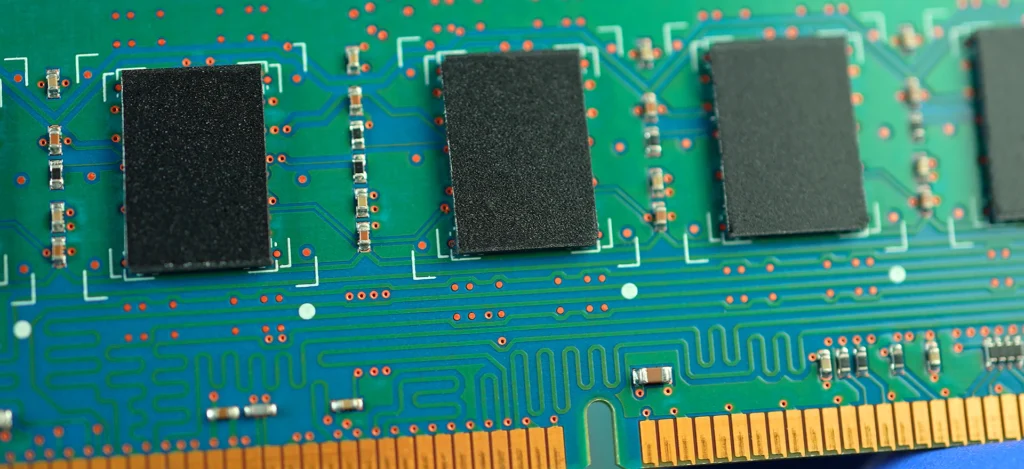
RAM and SSD prices have become a growing concern for PC builders, gamers, laptop buyers and businesses in 2026. Memory components that were once relatively affordable are becoming significantly more expensive as the semiconductor industry faces a new supply-demand imbalance.
The main reason is not simply a shortage of raw materials or a temporary manufacturing problem. The bigger issue is the rapid expansion of artificial intelligence. AI data centers require enormous quantities of advanced memory, including high-bandwidth memory (HBM), server DRAM and enterprise SSDs. At the same time, manufacturers are reallocating production capacity toward these higher-value products, leaving less capacity for conventional RAM and consumer storage.
TrendForce expects conventional DRAM contract prices to rise another 13–18% quarter over quarter in the third quarter of 2026, while NAND Flash prices are projected to increase 10–15%.
This developing global memory chip crunch is already affecting the prices of computers, smartphones, servers and storage products.
AI Is Driving Unprecedented Memory Demand
Artificial intelligence is at the center of the current memory shortage.
Modern AI systems require huge amounts of data to be processed simultaneously. Training and running large AI models requires high-performance processors working alongside substantial amounts of fast memory. AI data centers therefore consume far more memory per system than traditional consumer computers.
One of the most important products is HBM, or High Bandwidth Memory. HBM is designed to provide extremely high data-transfer rates and is increasingly used alongside advanced AI accelerators.
The growth of AI infrastructure has encouraged major semiconductor manufacturers to prioritize HBM and other data-center memory products. IDC says the rapid expansion of AI infrastructure is putting significant pressure on the memory ecosystem and that manufacturers are shifting capacity away from consumer electronics toward AI-focused memory.
This creates a difficult situation for consumers. Even though manufacturers are producing enormous quantities of memory, a larger share of that production is being directed toward AI servers rather than ordinary PCs and laptops.
In simple terms, AI is competing with consumers for memory manufacturing capacity.
Why RAM Prices Are Rising
RAM, or random-access memory, is the short-term working memory used by computers and other electronic devices. It allows processors to quickly access the information required to run applications and perform tasks.
Most consumer computers use DRAM-based memory such as DDR4 or DDR5. Servers use specialized and often higher-capacity versions of DRAM.
The problem is that manufacturers cannot instantly increase DRAM production. Semiconductor fabrication requires expensive equipment, specialized facilities and long planning cycles.
At the same time, demand for server memory has increased rapidly because of AI workloads. This has encouraged manufacturers to prioritize products that offer higher margins and strong demand.
As a result, less conventional DRAM capacity is available for PCs and consumer electronics.
J.P. Morgan estimates that DRAM prices could rise by more than 400% between the beginning of 2024 and the end of 2026.
This does not mean every RAM module will experience exactly the same percentage increase. Retail prices depend on capacity, generation, brand, inventory and regional market conditions. Nevertheless, the broader trend shows how severe the supply imbalance has become.
SSD Prices Are Also Being Affected
The memory crunch is not limited to RAM.
SSDs use NAND Flash memory to store data. Unlike RAM, which temporarily holds active information, NAND retains information even when a device is switched off.
SSDs are widely used in laptops, desktop computers, gaming consoles, smartphones and enterprise servers. The rapid growth of cloud computing and AI data centers has increased demand for enterprise SSDs because AI systems need to store enormous datasets, model files and other information.
TrendForce expects NAND Flash contract prices to increase 10–15% quarter over quarter in the third quarter of 2026.
The enterprise market is particularly important. AI servers need large amounts of high-performance storage, and data-center operators are willing to pay more for components that are critical to their infrastructure.
This puts pressure on the supply available for consumer SSDs.
Manufacturers Are Prioritizing Higher-Margin Products
Another major reason behind rising RAM and SSD prices is how memory manufacturers allocate their production capacity.
Memory companies have limited manufacturing resources. They must decide how much capacity should be dedicated to conventional DRAM, HBM, enterprise SSDs, mobile memory and other products.
AI-related products can generate attractive returns because hyperscalers and data-center operators have significant budgets and urgent requirements.
Consequently, manufacturers are increasingly prioritizing AI and server applications.
Deloitte reports that memory suppliers are reallocating standard DRAM and NAND capacity toward AI data-center products such as HBM and enterprise SSDs. It also says that new capacity being added today may not become available until 2029 or 2030.
That long lead time is particularly important. Even if companies announce new factories and production expansions today, the additional supply cannot immediately reach the market.
Why Supply Cannot Catch Up Quickly
The semiconductor industry is extremely capital-intensive.
Building or expanding a memory fabrication facility can require billions of dollars. Companies must acquire specialized equipment, construct cleanrooms, qualify manufacturing processes and gradually increase production yields.
There is also a risk involved in expanding too aggressively.
The memory industry has historically experienced boom-and-bust cycles. When prices rise, manufacturers tend to increase production. If too much capacity arrives at the same time, prices can subsequently collapse.
Manufacturers therefore have an incentive to expand carefully.
The current AI boom makes the situation even more complicated because demand is growing rapidly and companies are competing for limited production capacity.
TechInsights describes the current market as a structural change in which AI data centers are making memory availability a much more important issue than in previous memory cycles.
Consumer Electronics Are Feeling the Pressure
Higher memory costs eventually move through the technology supply chain.
PC manufacturers purchase RAM and storage from component suppliers. If those components become more expensive, manufacturers face higher production costs.
They have several choices: absorb the additional cost, reduce specifications, negotiate with suppliers or increase retail prices.
For consumers, this can mean more expensive laptops, desktops and other electronics.
TrendForce has already warned that higher-cost memory components are gradually flowing into notebook inventories and could contribute to higher retail notebook prices.
The effect can also influence product specifications.
Instead of increasing RAM from 8GB to 16GB or from 16GB to 32GB, manufacturers may become more cautious about offering higher capacities as standard. Similarly, affordable laptops could continue using smaller SSDs for longer.
Gaming PCs Could Become More Expensive
Gamers are another group affected by the memory shortage.
A modern gaming PC typically requires both system RAM and SSD storage. High-end gaming systems may use 32GB or more of RAM alongside 1TB, 2TB or larger SSDs.
If both components become more expensive simultaneously, the total cost of building a gaming PC can rise considerably.
The situation is particularly challenging for budget-conscious buyers. A graphics card may attract most of the attention when discussing gaming PC costs, but memory and storage can also represent a meaningful portion of the overall system price.
This could encourage some buyers to delay upgrades or choose lower-capacity configurations.
Smartphone Prices Could Also Feel the Impact
The memory crunch extends beyond computers.
Smartphones use DRAM for running applications and NAND-based storage for saving photos, videos, applications and other data.
Flagship smartphones increasingly require larger memory configurations because of advanced cameras, AI features, gaming capabilities and multitasking.
However, smartphone manufacturers operate under intense pricing pressure. Higher component costs can therefore create difficult decisions about specifications and retail pricing.
IDC has warned that the global memory shortage is affecting both PC and smartphone markets because manufacturers are redirecting capacity toward AI-related memory products.
Will RAM and SSD Prices Fall Again?
Eventually, higher prices should encourage additional production and potentially bring the market closer to balance. However, the timing is uncertain.
TrendForce expects AI to remain the primary driver of memory demand into 2027. It forecasts continued tight DRAM supply because of HBM capacity allocation and AI-server demand, although NAND could experience a somewhat different supply situation as new capacity comes online later.
This distinction is important.
RAM and SSD prices do not necessarily have to move together forever. DRAM could remain particularly constrained because HBM production competes for related manufacturing resources, while NAND supply may eventually become more comfortable as new capacity is added.
However, consumers should not expect an immediate return to the unusually low memory prices seen during weaker points of previous semiconductor cycles.
What Does the Memory Crunch Mean for Buyers?
Consumers planning to purchase RAM or an SSD should consider their actual requirements rather than automatically buying the largest capacity available.
For example, someone who needs a basic computer for web browsing and office work may not need an extremely large SSD or excessive RAM. Gamers, creators and professionals working with large datasets may have stronger reasons to purchase higher-capacity components.
It may also be worth comparing complete PC or laptop prices rather than looking only at individual component costs. Manufacturers sometimes have better supply contracts than retail buyers, meaning the price increase for a finished device may not exactly match the increase in individual memory components.
Businesses face a different challenge because data centers require memory at enormous scale. For them, availability may be more important than price.
Conclusion
The current rise in RAM and SSD prices is part of a much larger global memory chip crunch driven primarily by the rapid expansion of artificial intelligence.
AI data centers require huge quantities of HBM, DRAM and enterprise SSDs. Memory manufacturers are responding by allocating more production capacity to these high-demand products, which reduces the amount available for conventional consumer memory.
At the same time, semiconductor manufacturing capacity cannot be expanded overnight. New facilities require years of investment, meaning supply may remain constrained even as manufacturers announce expansion plans.
The result is a challenging environment for PC builders, gamers, smartphone manufacturers and ordinary consumers. TrendForce expects both DRAM and NAND prices to continue increasing in the third quarter of 2026, although the pace of growth may moderate as consumer demand weakens.
The bigger story, however, is that AI is changing the economics of the memory industry. What was once primarily a consumer-electronics component is now one of the critical resources supporting the global AI infrastructure boom.
Until new manufacturing capacity catches up with demand, higher RAM and SSD prices may remain an important part of the technology market.