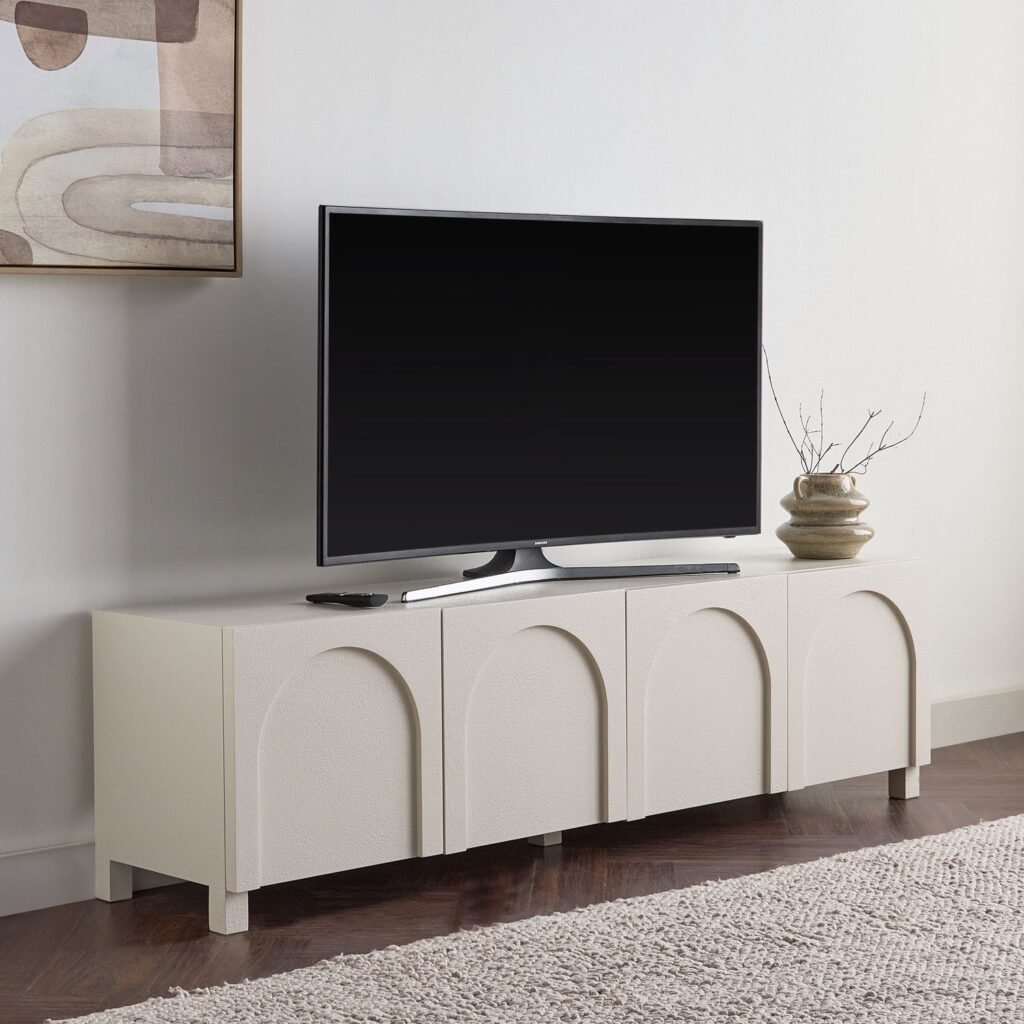
Storage and display furniture do two jobs at once: they keep a room organized, and they carry a large portion of the room’s visual identity. A poorly chosen display unit or TV unit can make a considered room feel like it was furnished piece by piece without any connecting logic. A well-chosen one can make the whole space read with intention. Here is how to approach both decisions.
What a Display Unit Is Actually Doing
A display unit is not just shelving. It is the piece that determines what a room communicates when nobody is looking at the sofa, rug, or dining table. What sits on those shelves- books, objects, art, plants- tells the story, but the structure around them frames it. A cluttered, poorly proportioned unit undermines whatever is displayed on it. A clean, well-built one makes even a few objects look deliberate.
The key decisions for a display unit are height, depth, and the balance between open and closed storage. Open shelving keeps things visible but demands curation. Closed cabinet sections hide what should be hidden. The best display units mix both, giving the room visual breathing room while keeping the everyday clutter out of sight. A microcement display unit Dubai home adds another dimension; the matte surface of the unit itself becomes part of what is on display, giving the structure visual weight that shelf-heavy designs in painted wood rarely achieve.
The TV Unit: Function and Form in Tension
The TV unit is the one piece in a living room where function is genuinely non-negotiable. It has to be the right width for the screen, the right height for comfortable viewing, and it has to manage cable routing cleanly.
Beyond the functional baseline, the TV unit sets the material tone for the living room more than people expect. A stainless steel TV unit in a Dubai home brings a sharp, architectural presence; brushed or polished finishes catch light across the evening and work well in rooms that are otherwise warm and textured. A microcement piece brings mass and calm. A wood unit reads traditional or warm depending on the species.
The unit width should be roughly as wide as the screen above it, or wider, since a unit that is narrower than the TV looks unstable and unresolved. Low-profile units typically look more contemporary. Units with more storage volume look more traditional. Neither is wrong, but each can commit the room to a particular register.
Choosing for the Same Room
Display units and TV units often end up in the same room, which raises the question of whether they should match. A matching set reads very considered but can tip into predictable. A deliberate contrast, a microcement TV unit against a solid wood display unit, for example, works if the two pieces share proportional logic and a consistent base height. What does not work is two pieces that look like they were bought from different places without any conversation between them.
Here is a quick checklist before committing to either piece:
- Depth. Display unit shelves that are too deep swallow objects. TV units need enough depth to house the AV stack comfortably.
- Base. Does the piece sit flush to the floor or on legs? Legs create visual lightness and make cleaning easier. Flush bases read more grounded and architectural.
- Material. Will the piece age well in Dubai’s climate? Microcement and stainless steel handle heat and humidity with less maintenance than lacquered wood.
- Scale. Measure the wall before ordering. Both pieces should feel proportional to the wall they live on, not dwarfed by it.
The Storage Nobody Talks About
The most overlooked detail in display and TV unit design is internal storage configuration. Compartment sizing for AV equipment, cable routing, and the organization of what goes behind closed doors matter as much as the exterior finish. A unit can look impeccable from the front, but forces visible cables and cramped AV storage.
The material you choose also affects how the room reads over time. A microcement display unit in a Dubai home ages well; the surface develops a quiet patina rather than showing wear the way lacquered pieces do. Meanwhile, a stainless steel TV unit Dubai with a brushed finish holds its surface quality for years without refinishing, which is worth factoring in when the piece is in daily view from the main seating area.
Studio Obliq designs and builds display units and TV units in microcement, solid wood, and stainless steel from its Dubai workshop, with each piece finished in-house and sized to the wall and room it will live in.