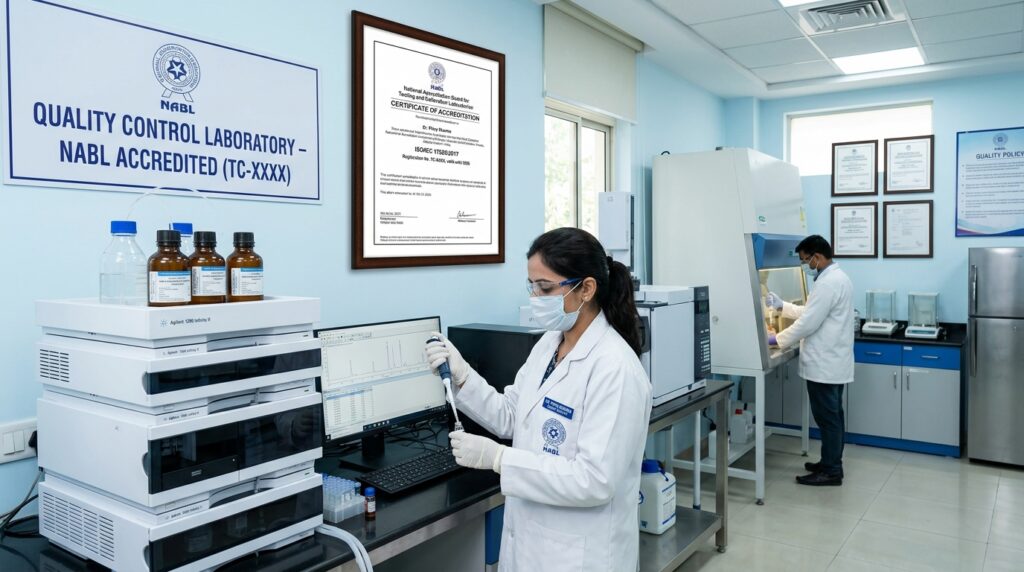
In 2026, the diagnostic landscape in India has undergone a massive transformation. While NABL accreditation was once considered a prestigious differentiator, it has now become the baseline expectation for any laboratory aiming for clinical reliability. With the full implementation of the ISO 15189:2022 standards, laboratories are now mandated to move beyond simple technical competence toward a framework of risk-based thinking, clinical ethics, and digital integration.
However, not all nabl accredited laboratories are created equal. As a patient or a healthcare provider, choosing a lab based solely on the presence of a logo is no longer sufficient. Differences in the specific scope of accreditation, the frequency of external quality assessments, and the level of integration with the Ayushman Bharat Digital Mission (ABDM) can significantly impact the accuracy of your results and the security of your health data.
To ensure you are receiving the highest standard of care, it is essential to look under the hood. Comparing laboratories across several technical and operational dimensions will help you identify which facility truly prioritizes precision over simple compliance.
1. The Specific Scope of Accreditation: Why a Logo Isn’t Enough
The most common misconception in 2026 is that if a laboratory is NABL accredited, every test it offers is covered under that accreditation. In reality, NABL grants accreditation for specific “scopes” or lists of tests. A laboratory might be accredited for routine biochemistry but not for advanced molecular diagnostics or specialized histopathology. When selecting a facility, you must verify if the specific test you require falls within their current accredited scope.
Checking this is more critical now than ever, as the 2026 NABL framework requires labs to clearly distinguish between accredited and non-accredited tests on their reports. You can verify this by looking for the unique certificate number (typically starting with ‘M’ for medical labs) and cross-referencing it on the official NABL India directory. Choosing a lab that performs your specific test under an accredited scope ensures that the reagents, equipment, and methodologies used for that exact analyte have been rigorously audited.
Checklist for Verifying Accreditation Scope
- Certificate Format: Ensure the certificate number follows the updated 2026 format and starts with an ‘M’ prefix.
- Test Category: Verify if the lab is accredited for the specific discipline (e.g., Clinical Biochemistry, Haematology, or Molecular Diagnostics).
- Analyte Specificity: Check if the specific biomarker (like HbA1c or Vitamin D) is listed in the scope document.
- Validity Status: Confirm that the accreditation is “Current” and hasn’t been suspended or voluntarily withdrawn.
- Site Specifics: For large chains, ensure the specific branch or “site” where your sample is processed is the one that holds the accreditation.
2. External Quality Assessment (EQA) and Proficiency Testing Frequency
While Internal Quality Control (IQC) happens daily within the lab to check equipment precision, External Quality Assessment (EQA) is the true test of accuracy. In 2026, NABL has tightened the requirements for Proficiency Testing (PT), requiring labs to participate in these programs at least biannually for every major analyte. EQA involves an independent third party sending “blind” samples to the lab; the lab then tests them and sends results back for benchmarking against hundreds of other facilities.
When comparing nabl accredited laboratories, ask about their EQAS partners. Top-tier laboratories often go beyond national requirements by participating in international programs such as those offered by the College of American Pathologists (CAP) or UK NEQAS. A laboratory that consistently scores high in international EQAS programs demonstrates a level of accuracy that is recognized globally, ensuring that your reports are reliable even if you seek medical treatment abroad.
Comparison of Quality Control Measures
| Feature | Internal Quality Control (IQC) | External Quality Assessment (EQA) |
| :— | :— | :— |
| Primary Purpose | Daily precision and equipment stability | Benchmarking accuracy against other labs |
| Frequency | Every shift or at least once daily | Minimum biannually (per 2026 NABL rules) |
| Sample Source | Known control materials from manufacturers | Blind samples from independent PT providers |
| Evaluation | Immediate internal verification | Periodic external performance reports |
| 2026 Benchmark | AI-driven real-time drift detection | Global benchmarking (CAP/UK NEQAS) |
3. Digital Health Integration and ABDM 2.0 Compliance
By June 2026, the Ayushman Bharat Digital Mission (ABDM) has reached its 2.0 phase, making digital interoperability a key comparison point. Leading nabl accredited laboratories are now fully integrated into the national health ecosystem. This means they can seamlessly link your lab reports to your Ayushman Bharat Health Account (ABHA) ID. This integration allows you to access your entire diagnostic history through any authorized health locker or app, eliminating the need for physical paper trails.
Comparing labs based on their ABDM milestone achievement is a smart way to gauge their technological maturity. Laboratories at Milestone 3 of ABDM compliance support bidirectional data exchange, allowing your doctors to view your longitudinal health data in real-time. This is particularly vital for chronic disease management, where comparing current results with historical data is essential for adjusting treatment protocols.
Key Digital Integration Features to Look For
- ABHA ID Linking: The ability to create or link your ABHA ID during the registration process.
- Digital Health Records (DHR): Automatic uploading of verified reports to the ABDM gateway.
- Interoperable Reporting: Reports that use standardized LOINC (Logical Observation Identifiers Names and Codes) for global readability.
- Unified Health Interface (UHI): Integration with the UHI for easy booking and price transparency across platforms.
- Paperless Workflow: High-maturity labs offer fully digital consent and receipting systems.
4. Sample Logistics and Cold Chain Integrity for Home Collection
With the rise of 30-minute home sample collection in cities like Bangalore, the “pre-analytical” phase has become the biggest source of diagnostic errors. NABL’s 2026 guidelines for Sample Collection Facilities (SCFs) place heavy emphasis on maintaining the “cold chain.” If a blood sample is exposed to high temperatures during transit from your home to the lab, the proteins and enzymes can degrade, leading to false results.
When selecting a lab, compare their logistics infrastructure. Does the lab use IoT-enabled smart carry-boxes that monitor temperature in real-time? Are their phlebotomists (or eMedics) trained specifically in NABL-compliant sample stability protocols? A laboratory that invests in professional logistics—rather than using third-party couriers without temperature control—provides a much higher guarantee of sample integrity.
Standards for High-Quality Home Collection
- Temperature Monitoring: Use of digital data loggers in transit boxes to ensure samples stay between 2°C and 8°C.
- Phlebotomist Certification: Staff should hold degrees in Medical Lab Technology (DMLT/BMLT) and have role-specific competency matrices.
- Single-Prick Technique: Training in advanced venipuncture to minimize hemolysis (the bursting of red blood cells).
- Barcoding at Source: Immediate barcoding of vials at the patient’s bedside to prevent sample mix-ups.
- Stabilization Protocols: Use of specialized additives or immediate centrifugation for time-sensitive tests.
5. Data Privacy and DPDP Act Compliance
In 2026, your diagnostic data is protected under the Digital Personal Data Protection (DPDP) Act of 2023. This law treats health data as “sensitive personal data,” requiring laboratories to have robust consent mechanisms and data protection officers. When comparing nabl accredited laboratories, you should assess how they handle your privacy. Does the lab provide a clear, multilingual consent form? Do they allow you to withdraw consent for the storage of your samples or data after the testing is complete?
A compliant laboratory will have a transparent “Risk Register” and an “Impartiality Policy” as per the ISO 15189:2022 requirements. These documents ensure that your data is not sold to third-party pharmaceutical or insurance companies without your explicit, informed consent. In an age where genomic and molecular data is increasingly common, choosing a lab with high ethical and legal standards for data privacy is non-negotiable.
Privacy and Ethics Comparison Points
- Consent Workflows: Check if the lab uses tiered consent (e.g., separate consent for testing vs. research).
- Data Protection Officer (DPO): Confirm the lab has a designated official for handling data grievances.
- Audit Trails: Ensure their Laboratory Information Management System (LIMS) tracks every person who accesses your records.
- Right to Erasure: The facility should provide a clear process for you to request the deletion of your personal data.
- Cybersecurity Standards: Look for ISO/IEC 27001 certification alongside NABL accreditation for superior data security.
6. Turnaround Time (TAT) and Pathologist Involvement
The final comparison point is the efficiency and expertise of the reporting process. Turnaround Time (TAT) isn’t just about speed; it’s about clinical relevance. For instance, in 2026, the NABL benchmark for a small histopathology biopsy is 2 to 3 working days, while routine blood chemistry should often be available within 4 to 6 hours. However, speed should never come at the cost of accuracy.
Verify the level of pathologist involvement in your reports. According to current NABL guidelines, every report must be verified by a qualified pathologist with the appropriate postgraduate degree. Some high-volume labs use automated “auto-verification” algorithms for normal results, but any abnormal or critical value must be manually reviewed. Comparing how labs handle “Critical Value Notifications”—the process of immediately alerting your doctor if a result is life-threatening—is a vital safety metric.
Benchmark Turnaround Times for 2026
| Test Category | Expected TAT (Routine) | Expected TAT (Urgent/Stat) |
| :— | :— | :— |
| Routine Biochemistry (Glucose, CBC) | 4–6 Hours | 1–2 Hours |
| Specialized Immunology (Hormones) | 12–24 Hours | 4–6 Hours |
| Molecular Diagnostics (PCR/Viral Load) | 24–48 Hours | 8–12 Hours |
| Small Histopathology Biopsy | 2–3 Days | 24 Hours |
| Large Surgical Pathology | 4–5 Days | N/A |
Selecting the right diagnostic partner requires looking beyond the basic accreditation status. By comparing laboratories on their specific scope, quality benchmarks, digital readiness, and logistics, you can ensure that your health decisions are based on the most accurate and secure data available in 2026.