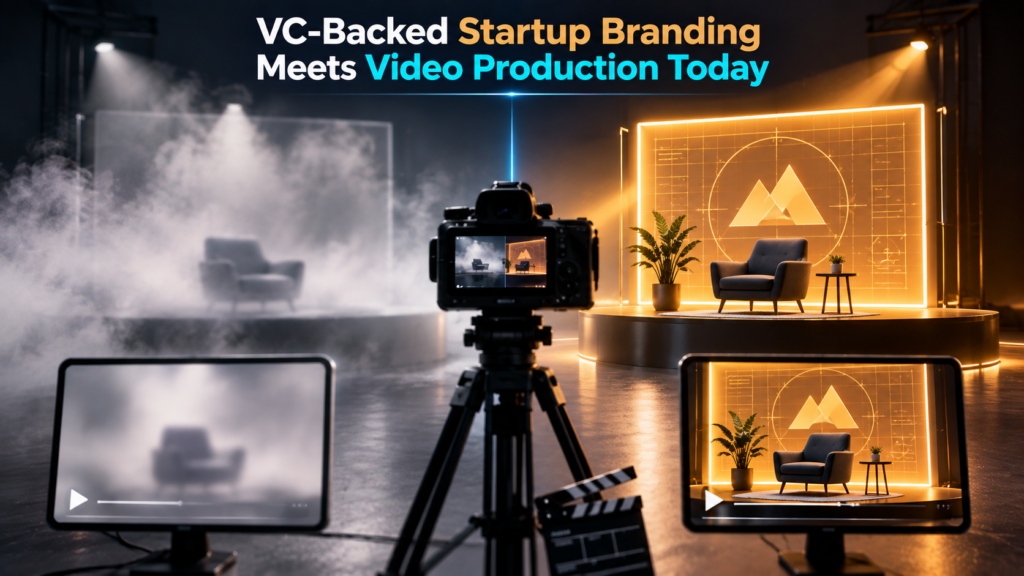
A production crew showed up to film a startup’s first investor video and asked a question nobody on the founding team had a ready answer for. What’s the tone here, confident and bold, or warm and approachable, the kind of thing that should have been settled weeks before anyone booked a studio. The founders looked at each other. Nobody had ever actually decided. They picked one on the spot, mostly to keep the shoot moving, and got a perfectly competent video out of it. Three months later, once the company had done real positioning work, everyone agreed the video felt like it belonged to a slightly different company than the one they’d become.
The expensive guesswork nobody budgets for
Video production without a defined brand underneath it doesn’t fail outright, which is part of why the problem stays invisible for so long. A skilled editor and a good camera operator can produce something watchable regardless of whether anyone upstream made real strategic decisions first, which is exactly why nobody ever traces the disconnect back to its actual source. What gets lost is precision. Every choice on a shoot day, pacing, color grading, whether the voiceover sounds like a peer or an authority, whether the founder comes across as scrappy or polished, gets decided in the moment by whoever’s holding the camera or sitting in the edit bay that afternoon. Sometimes that guess lands. Often it produces something generic enough to work for almost any company in the category, which defeats a good chunk of the point.
Why branding has to come before the camera rolls
Real Branding for VC-Backed Startups answers exactly the questions a production crew ends up asking on set anyway, just weeks or months earlier, when there’s still time to think them through properly instead of guessing under time pressure with the meter running. Who is this company talking to. What does it want that audience to feel. What’s the one thing it wants remembered above everything else. Without those answers settled in advance, a video shoot turns into an improvised branding session with a camera crew standing by on the clock. That’s an expensive way to make decisions that could have been worked out calmly at a fraction of the cost, weeks before anyone booked a studio or hired a crew.
What changes once the strategy exists first
With clear positioning and voice already defined, Startup video production stops being a series of judgment calls made under time pressure and becomes something closer to execution against a brief that already answers the hard questions. The director knows the tone before the first shot. The editor knows how fast to cut based on whether the brand reads as energetic or measured. The voiceover script gets written in language that already exists somewhere in the company’s approved messaging rather than invented fresh for this one asset on the spot. That difference shows up immediately in how footage gets used later too. A video shot without brand guidance in place often can’t be repurposed cleanly, the tone doesn’t match a later campaign, the visual style clashes with an updated website built six months after the fact. A video built on a settled brand foundation becomes an asset the company can pull from for years, re-cutting and recontextualizing it as needed instead of treating it as a one-off spend that ages out quickly.
A pattern that shows up constantly at seed stage
Consider a founder with a product demo scheduled for filming in two weeks because a big investor meeting is coming up and someone decided a video would help close the round. The branding work hasn’t happened yet, there simply wasn’t time, and the video gets treated as more urgent because the meeting has a hard date on the calendar and the brand work doesn’t. The resulting video is fine. It shows the product working, the founder explains the value proposition reasonably well, it does its job for that specific meeting. What it doesn’t do is establish anything durable about how the company sounds or looks going forward, because there was nothing durable to draw from yet. Six months later, once the company nails down its actual positioning, that video already feels slightly off, not wrong exactly, just generic in a way the company itself no longer is.
The sequencing fix that costs almost nothing
None of this requires slowing down a video timeline by months. A focused positioning sprint, even a compressed one, can happen in a week or two if a founder treats it as seriously as the shoot itself and clears the calendar accordingly. What it requires is recognizing that video without brand strategy behind it is building the visible layer on top of nothing, and that gap tends to show up eventually even when the individual video looks perfectly fine on its own in the moment. Founders who get this sequence right once tend to insist on it for every asset afterward, because the difference in how the footage holds up over time becomes obvious pretty quickly once they’ve seen both versions side by side.
Bringing brand and video into the same conversation
Branding and video production get commissioned separately at a lot of companies, sometimes months apart, sometimes by different people entirely who never compare notes on tone or positioning before a shoot gets booked. Treating them as one connected process, with brand strategy settled before a single shot gets planned, means every video a company produces reinforces the same story instead of each one quietly reinventing the company’s voice from scratch. That consistency compounds into something a scattered approach never quite manages, footage that still works two years later instead of aging out the moment the company’s actual positioning catches up to reality.