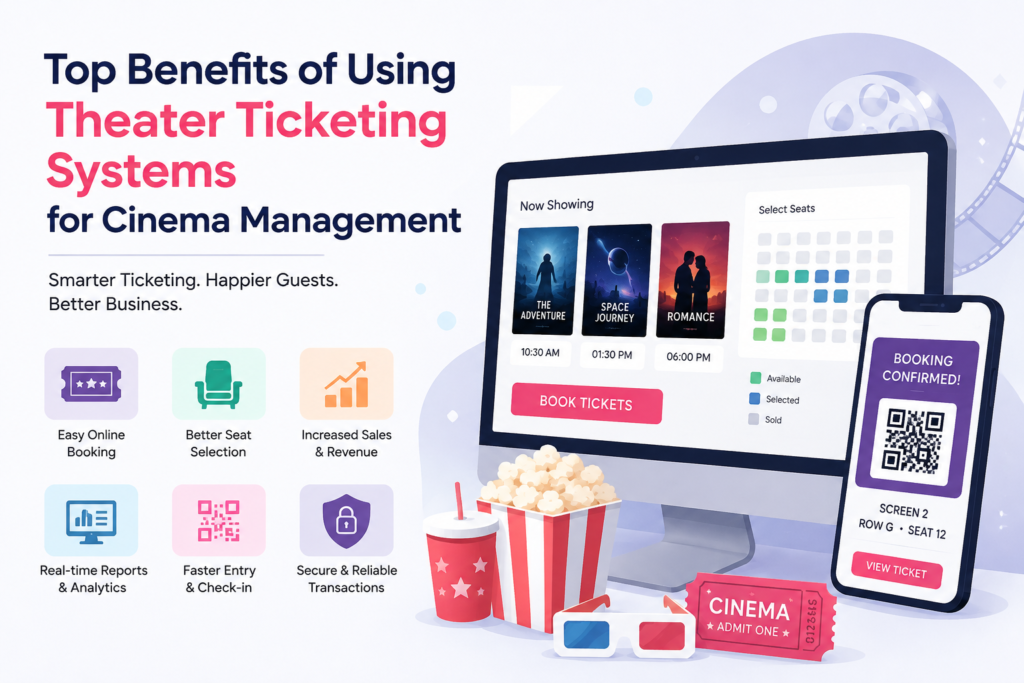
Discover how modern theater ticketing systems simplify cinema operations with online bookings, seat selection, faster entry, and real-time sales tracking.
Running a cinema involves more than screening films. Staff coordinate showtimes, seats, payments, customer questions, and entry. Theater ticketing systems bring these activities into one organized process, making management predictable for teams and moviegoers.
1. More Convenient Ticket Booking
Moviegoers expect to check showtimes and buy admission whenever convenient. Online booking lets customers compare screenings and secure tickets before arriving, reducing dependence on counter hours.
A clear booking journey lets customers review film details, dates, ticket categories, and prices. Confirmation messages and digital tickets provide a reliable purchase record. Online sales can continue outside business hours, capturing demand.
2. Better Seat Selection and Capacity Control
Seat choice matters, especially for families and groups. Interactive seating charts show available and occupied seats, helping customers choose confidently during checkout.
An inventory reduces duplicate bookings and makes capacity easier to monitor. Staff can see remaining seats, while flexible tools support different room layouts, reserved sections, and general admission. For venues that offer premium seats, balconies, accessible areas, or different price bands, visual seat selection can make choices easier to understand. It also gives managers a practical way to configure each auditorium rather than forcing every room into the same arrangement.
3. Faster Box Office Operations
Walk-in customers remain important. A connected box office lets staff sell tickets at the counter while keeping availability aligned with online orders, reducing manual updates during busy periods.
Theater ticketing software can support point-of-sale workflows, varied payments, ticket printing, and order lookups. Well-designed theater ticketing software keeps these functions connected. Fewer separate steps let employees focus on visitors, especially when several counters are operating. A unified sales view is useful when tickets are sold through more than one channel. If a customer buys online while another purchases at the counter, both transactions should update the same inventory. This is particularly important close to showtime, when even a small delay in updating availability can create avoidable problems.
4. Smoother Admission and Entry
Entrance queues can affect a movie outing. Digital tickets with barcodes or QR codes let staff scan admission instead of checking bookings manually. Shared ticket status helps identify valid entries and prevent duplicate use.
Faster entry helps during premieres, weekends, and holidays. Attendance estimates can guide staffing, while scanning procedures help new employees learn admission duties.
5. More Accurate Sales and Attendance Records
Reliable information supports decisions. A centralized platform can organize sales by film, screening, date, ticket category, and channel, showing demand and remaining capacity.
Managers can review attendance before adding screenings or adjusting less popular sessions. Accurate records also simplify transaction reconciliation and daily performance reviews. Reports become more valuable when managers review them regularly rather than only at the end of a month. Comparing weekday and weekend attendance, advance purchases, and performance by title can reveal useful patterns. These patterns are not a substitute for local judgment, but they can help teams test scheduling ideas and evaluate whether a campaign made a measurable difference.
6. Easier Management of Promotions and Repeat Visits
Promotions can encourage customers to try releases, attend quieter screenings, or return. Platforms can support discount codes, ticket categories, and customer mailing lists.
Packages or memberships can reward frequent visitors. Offers should be easy to redeem and measured against sales so discounts increase attendance without unnecessarily reducing revenue. A cinema can also use customer communication to share schedule changes, special screenings, or upcoming releases. Permission-based messaging and clear unsubscribe options help keep communication respectful. When marketing tools are connected to ticketing records, staff may be able to understand which campaigns lead to completed purchases instead of measuring attention alone.
7. A More Consistent Customer Experience
A good visit starts before arrival. Clear film information, booking, payment, and timely ticket delivery help customers find details without contacting the box office. Consistency matters for accessibility too. Booking pages should be readable on smaller screens, explain ticket types plainly, and make fees visible before checkout. Clear instructions for receiving and presenting digital tickets can help customers who are less familiar with online purchases. A cinema should review the process from the audience’s perspective, not just from an administrator’s dashboard.
Connected online and counter sales help staff answer questions confidently. Ticketor is one example of a platform bringing ticket sales, seating, box office activity, and admission tools together. Ticketor also demonstrates why theater ticketing software should fit a venue’s day-to-day needs. The key is matching features to the cinema’s workflow.
8. Greater Flexibility as the Cinema Grows
An independent cinema and a multi-screen venue have different needs. Theater ticketing systems should meet current requirements while allowing new screens, special events, private screenings, or customer programs.
Scalable tools may support multiple events, layouts, sales points, and user permissions. Assess setup, training, support, integrations, reports, and total costs. Usability matters as much as features.
Choosing a Suitable Platform
Before choosing Ticketor, map booking and admission processes. Consider sales channels, refunds, reserved seating, and reporting. Test mobile booking and ask staff to try everyday tasks during a demonstration.
Compare transaction charges, hardware, contract terms, and optional services. Check data handling and website or payment integrations to avoid paying for unused tools.
The right theater ticketing systems do more than process transactions. They connect booking, seating, box office sales, entry, and reporting. The goal is dependable operations that let staff focus on welcoming audiences.
FAQ
What should a cinema look for in a ticketing platform?
Look for simple booking, accurate seat inventory, connected counter sales, secure payment options, scanning, useful reports, and responsive support.
Can customers choose their seats online?
Yes. Platforms with interactive seating charts can let customers view availability and select seats before completing a booking.
Does online ticketing replace the physical box office?
No. Many cinemas benefit from a system that coordinates online purchases with in-person sales, giving customers both options.
How can ticketing tools help reduce entry queues?
Digital tickets and barcode or QR-code scanning can speed up validation and help staff manage admission more efficiently.