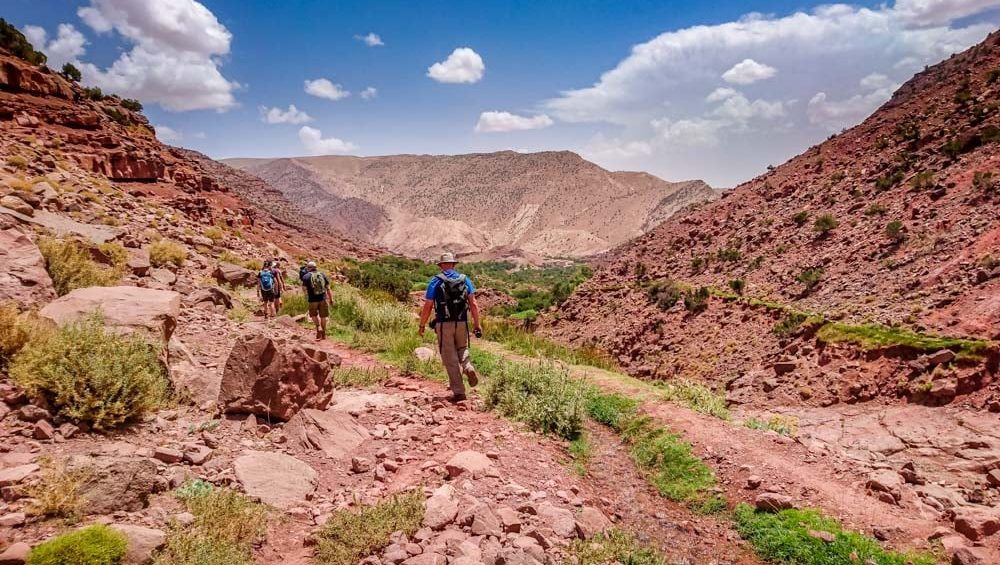
The atlas mountains morocco stretch across North Africa like a vast natural spine, cutting through the heart of Morocco and offering some of the most dramatic landscapes on the continent. From snow-dusted peaks to lush green valleys and deep limestone gorges, this mountain range is a world of contrasts and timeless beauty.
Many travelers first encounter the region through an atlas mountains of Morocco, which reveals just how extensive and varied this system is. But a map can only hint at the reality on the ground; what awaits is far more immersive, where geography blends with culture and centuries-old traditions.
The scenic beauty of the Atlas Mountains through its valleys, gorges, and peaks, reveals why it remains one of the most captivating natural regions in the world.
The Majestic Valleys of the Atlas Mountains
The valleys of the Atlas Mountains are among the most fertile and picturesque in North Africa. Fed by mountain streams and seasonal snowmelt, these valleys support agriculture, orchards, and traditional Berber villages that have existed for centuries.
One of the most famous is the Ourika Valley, where lush greenery contrasts with rugged rocky slopes. Here, terraced fields climb the mountainsides, and walnut trees line riverbanks. Life in these valleys follows the rhythm of nature, with farming and livestock shaping daily routines.
When examining an atlas mountains morocco map, you will notice how these valleys carve pathways between high ridges. However, the map does not capture the scent of wild herbs, the sound of flowing water, or the sight of small villages clinging to steep slopes.
The valleys are not only agricultural hubs but also cultural centers. Traditional Berber homes made of clay and stone blend into the landscape, reflecting harmony between humans and nature. Visitors often find these valleys to be peaceful escapes from the bustling cities of Morocco.
The Dramatic Gorges: Nature’s Sculpted Wonders
Deep within the Atlas Mountains lie breathtaking gorges carved over millions of years by rivers cutting through rock. These natural formations are among the most visually striking features of the region.
The Todra Gorge is perhaps the most famous. Towering limestone cliffs rise dramatically on both sides of a narrow canyon, creating a passage that feels almost otherworldly. Sunlight filters through the high walls, painting shifting colors on the stone throughout the day.
Another remarkable site is the Dades Gorge, known for its winding roads and surreal rock formations. Travelers navigating these roads often feel as if they are moving through a natural sculpture gallery.
On an atlas mountains morocco map, these gorges appear as thin lines or narrow corridors. Yet in reality, they are vast vertical landscapes that dwarf everything within them. Climbers and hikers are especially drawn to these areas, where the rock faces offer both challenge and beauty.
The gorges also serve as important ecosystems, providing habitats for birds, reptiles, and hardy plant species adapted to the harsh conditions. Their dramatic presence adds a sense of grandeur to the entire mountain system.
The Snow-Capped Peaks of the High Atlas
The High Atlas section of the mountains contains some of the tallest peaks in North Africa, including Mount Toubkal, which rises over 4,000 meters. These peaks are often covered in snow during winter, creating a stunning contrast against the warm desert regions nearby.
From a distance, the mountains appear like a natural fortress wall protecting the interior of Morocco. As seasons change, so does the appearance of the peaks—lush green in spring, golden in summer, and snow-covered in winter.
For climbers and trekkers, these peaks represent both challenge and reward. The ascent of Mount Toubkal is one of the most popular trekking experiences in Africa, offering panoramic views that stretch across valleys and desert plains.
While an atlas mountains morocco map can guide travelers to trailheads and routes, it cannot convey the physical effort required to reach the summit or the overwhelming sense of achievement once the top is reached.
Life and Culture in the Atlas Mountains
Beyond natural beauty, the Atlas Mountains are home to a rich cultural heritage. The indigenous Berber communities, also known as Amazigh people, have lived in these mountains for thousands of years.
Their traditions are deeply connected to the land. Farming techniques, architecture, and local crafts all reflect adaptation to the mountainous environment. Villages are often built from local stone and clay, blending seamlessly into the surroundings.
Music, storytelling, and festivals are central to cultural life. Visitors may encounter traditional songs played on handmade instruments, often during celebrations or communal gatherings.
When studying an atlas mountains morocco map, it becomes clear that these communities are scattered across vast and remote areas. Yet despite isolation, they maintain strong cultural identity and hospitality traditions that welcome travelers from around the world.
The Changing Seasons of the Atlas Landscape
One of the most remarkable aspects of the Atlas Mountains is how dramatically the landscape changes with the seasons. In spring, melting snow feeds rivers and transforms valleys into green gardens filled with wildflowers.
Summer brings warm, dry air, making higher altitudes more accessible for trekking. Autumn paints the valleys in golden tones, while winter brings snow to the peaks and cold winds sweeping through passes.
Each season offers a different experience, making the region a year-round destination. Travelers often rely on an atlas mountains morocco map to plan routes depending on seasonal accessibility, especially in higher elevations where weather conditions can change rapidly.
Conclusion
The Atlas Mountains are far more than a geographic feature—they are a living landscape of valleys, gorges, and peaks shaped by time, climate, and culture. From fertile river valleys to towering cliffs and snow-covered summits, every part of the range tells a story of natural wonder.
Whether explored through travel, photography, or even an atlas mountains morocco map, the region continues to inspire awe and curiosity. Yet the true beauty of the mountains can only be fully appreciated by experiencing their vast silence, dramatic scenery, and enduring human presence firsthand.