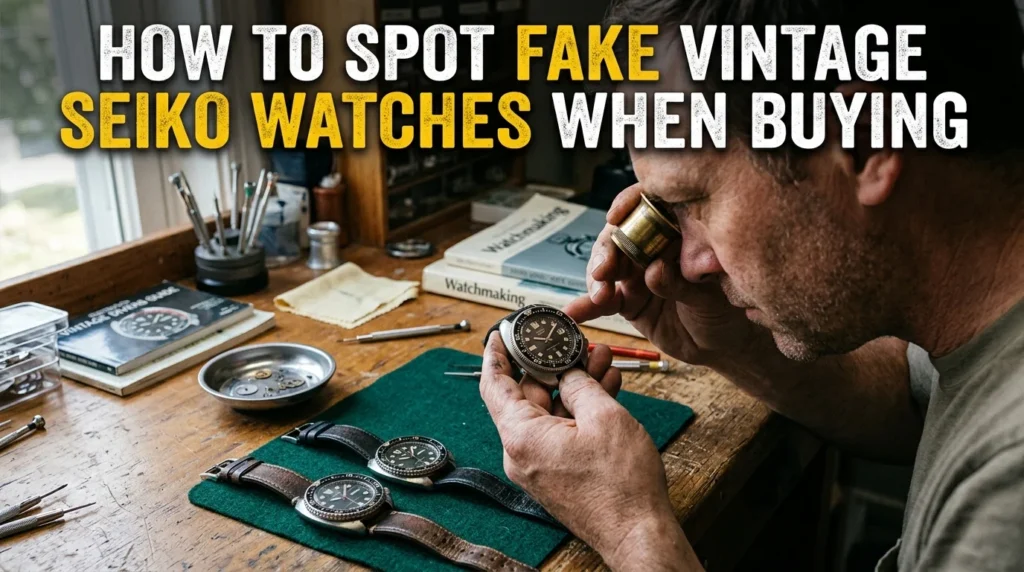
The whole market for vintage Seiko watches kind of blew up over the last few years. Collectors and hobbyists are ready to hand over real cash for classic stuff like the 6139 chronographs, deep water models from the 1960s and ’70s, plus those rare limited releases. But you know how it goes: where there’s demand, there’s also a bunch of fakes. Counterfeit makers have gotten much better at making replicas that look believable enough to trip up even seasoned buyers. So if you’re out there shopping for a vintage Seiko, you really have to know what to spot. Because one slip can turn into hundreds or even thousands of dollars down the drain.
Good news, though? Seiko watches come with certain tells that are not easy to copy perfectly. Once you understand what actually separates authentic pieces from counterfeits, you’ll be shopping with a lot more confidence.
Check the Movement and Caliber Number
The movement is sort of your best friend when you’re authenticating a vintage Seiko, really. Pop open the case back (or just ask the seller for clearer photos), then you should spot a caliber number in there. Seiko basically stamped those numbers on every movement they built.
Now, do a quick search for that caliber number online. Does it line up with the exact model you think you’re looking at? Fake watches can get away with a lot, but the insides often don’t match the case or dial. Sometimes counterfeiters slap cheaper modern movements into older cases, so the whole combo feels… wrong.
Also, look at the finishing, not just the layout. Real Seiko movements usually show clean markings, tidy screws, and jewel settings that look properly fitted. Fakes tend to show sloppy work, uneven surfaces, or materials that look lower quality. The rotor should have a crisp Seiko logo. If the text is blurry or the lettering looks off, that’s a big hint.
Examine the Dial Carefully
The dial tells you more than people think. Vintage Seiko dials have a particular vibe that’s hard to replicate perfectly. Printing should be sharp, clean, and not kinda smudgy or “soft.” Check the Seiko logo, the wordings, and any extra markings. Are the elements aligned the way they should be? Does the font look right for that exact era or year range?
Compare it with verified examples online. Collector forums and reference sites can have thousands of photos, so you can usually find a close match. Even small things, like spacing between characters, font weight, or color tone, can expose a fake pretty fast.
Another thing: watch out for “Frankenwatches. ” These are watches made from parts of different models or mixes of genuine and aftermarket pieces. Like, a dial from one model might end up on a case from another. That can make the watch less valuable and also a bit misleading.
And don’t ignore the lume plots (those luminous markers). Vintage watches often have lume that is aged into cream, tan, or otherwise mellow colors. If you see bright, fresh white lume on a watch that’s supposedly around 50 years old, treat that as a red flag.
Inspect the Case and Case Back for Authentic Vintage Seiko Watches
Seiko cases have their own construction style, and they usually carry specific markings. Turn it over and check the case back. You should find both a serial number and a model number stamped there. The serial number can point to the production date: the first digit is the decade, and the second digit is the year inside that decade.
Cross-check those numbers against the model info. Does the date make sense? For instance, a watch claiming to be from 1968 should generally have a serial starting with 8, not 3. (If it doesn’t, something’s off.)
Look at the case finishing too. Seiko used solid materials and consistent manufacturing. The edges should look clean. Brushing or polishing should be even, not patchy. There shouldn’t be rough spots or obvious tooling marks.
Some fake use cases are a hair too big or too small, or the shape feels “off.” Compare measurements and proportions with known reference pieces. The lugs, the crown position, and overall dimensions should fit the established specs.
Verify the Crown and Pushers
Small details count, more than you’d expect. The crown, the winding knob, should have proper Seiko branding or styling that matches the model and era. Some vintage Seikos had signed crowns, others didn’t, so know which one applies to the specific watch you’re hunting.
On chronographs, the pushers should move smoothly and feel solid. Fake pushers often feel mushy, sticky, or inconsistent. The finishing around them should also match the quality of the case.
For dive watches with screw-down crowns, the threading should go smoothly and the crown should seal properly. If you can, test the action carefully. Rough threading or a crown that feels loose usually suggests replacement parts or a fake case.
Research the Seller and Provenance
The seller matters, honestly, almost as much as the watch. Try to buy from established dealers with decent reputations. Check reviews, ask for references, and look up how long they’ve been operating.
Private sellers can be okay, but you still want questions. Where did they get the watch? Do they have service records or original paperwork? And how much do they seem to actually know about it?
Be extra careful with online marketplaces and auction listings. Scammers like these places because they can target lots of people quickly. If the deal seems too good to be true, it probably is. A rare Seiko selling for half its usual market value should make you pause, not rush.
Ask for detailed photos of everything. Movement shots, the case back, closeups of the dial, and clear images of any imperfections. A legitimate seller usually won’t hesitate. Someone hiding stuff will either dodge the request or send low-quality photos with weird excuses.
Trust Your Instincts
You’ve done the homework. You compared pictures. You checked the details. Now, trust your gut a little. Does something feel off? Does the seller’s explanation have holes? Are there inconsistencies between what they claim and what you’re seeing in the photos?
If you’re not 100% comfortable, step away. There’s always another watch out there. The vintage market isn’t disappearing. Being patient prevents expensive mistakes, basically.
Also, join collector communities and forums. People who’ve handled these watches for years can spot issues you might miss. Post photos and ask for opinions before buying. Most enthusiasts are willing to help newcomers avoid fakes.
Final Thoughts
Buying vintage Seiko watches should feel kind of thrilling, not stressful, or at least it can, if you do it right. Sure, fakes are out there. Sure, you need to stay sharp, but with the correct know-how you can still track down genuine models that give you years of calm enjoyment and daily character. Read the reference materials, focus on the tiny stuff that actually matters, and stick to sellers that you can genuinely trust. Take your time between looks, with every possible find. Check everything thoroughly, ask a lot of questions, and don’t let the fear of missing out push you into a rushed buy. That “perfect” vintage Seiko is somewhere, patiently waiting. Just make sure it’s the real deal and not a clever imitation.