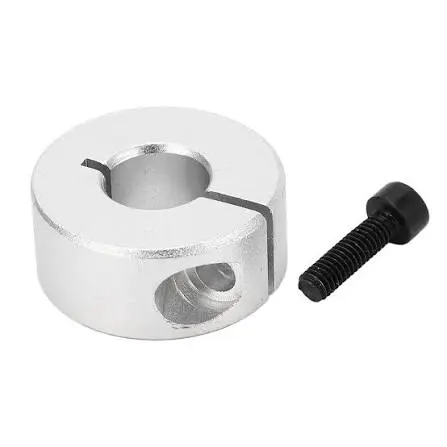
Reliable shaft positioning is essential in machinery where rotating components must remain aligned, secure, and properly spaced. Even a small amount of unwanted movement can affect equipment performance, increase wear, or create maintenance problems. Shaft collars help address these challenges by providing a simple mechanical way to secure components along a shaft and control their axial position.
These compact devices are used across manufacturing, automation, material handling, packaging, and other industrial environments. Although their design may appear straightforward, selecting the right collar requires attention to shaft dimensions, operating loads, material compatibility, and installation requirements. Understanding these factors helps engineers and maintenance teams choose components that perform reliably in their intended applications.
What Are Shaft Collars and How Do They Work?
A shaft collar is a mechanical component fitted around a shaft to hold, position, or limit the movement of other parts. It typically has a circular body with an opening sized to match the shaft diameter. Depending on its design, a collar may use a set screw, clamping mechanism, or another fastening method to remain in position.
Shaft collars are commonly used as mechanical stops, spacers, guides, and mounting points. For example, a collar installed on a conveyor roller shaft can help maintain the position of a bearing or prevent a component from shifting during operation.
Their effectiveness depends on a secure fit and suitable holding force. A collar that is too loose may move under operating conditions, while an incorrectly selected or overtightened collar can damage the shaft or interfere with equipment alignment.
Common Types of Shaft Collars
Different collar designs address different installation conditions and performance requirements. Understanding the main types makes product selection more straightforward.
Set-Screw Shaft Collars
Set-screw collars use one or more threaded screws that press against the shaft surface. They are generally simple, compact, and economical, making them suitable for many standard applications.
They are commonly found in light-duty machinery, small drive assemblies, and equipment where frequent repositioning is not necessary. However, the screw can leave a mark on the shaft, particularly when installed with excessive force.
One-Piece Clamp Collars
One-piece clamp collars have a split in the body that allows the collar to tighten around the shaft when a fastener is secured. Instead of relying on a single point of contact, they distribute clamping pressure around a larger portion of the shaft circumference.
This design provides a firm grip while reducing the likelihood of localized shaft damage. It is useful in applications involving precision positioning, frequent adjustments, or smooth shaft surfaces.
Two-Piece Clamp Collars
Two-piece collars consist of separate halves joined by fasteners. Their split construction allows installation or removal without sliding the collar over the end of a shaft.
This feature is particularly helpful in assembled machinery where bearings, pulleys, or other components prevent access to the shaft ends. Maintenance teams can remove or reposition the collar without dismantling the entire assembly.
Threaded Shaft Collars
Threaded collars are designed for applications requiring a threaded interface or adjustment. They may be used with compatible threaded components to provide positioning or mounting functions.
The correct thread type, pitch, and dimensional compatibility are essential. These collars should be selected according to the mechanical design rather than appearance alone.
Key Features to Consider When Selecting a Shaft Collar
A collar’s design and material influence its performance, service life, and suitability for a particular environment.
- Bore diameter: Must match the shaft diameter and required fit.
- Material: Steel, stainless steel, aluminum, and other materials offer different strength, weight, and corrosion-resistance characteristics.
- Fastening method: Set screws and clamping mechanisms provide different levels of contact and holding performance.
- Width and outside diameter: Affect available mounting space and how the collar interacts with nearby components.
- Surface finish: Can influence contact, corrosion resistance, and suitability for precision equipment.
- Operating environment: Temperature, moisture, chemicals, dust, and vibration can affect material and fastening choices.
For example, stainless steel may be appropriate in equipment exposed to moisture or frequent cleaning. Aluminum can be useful when reducing component weight is important. A steel collar may be preferred where strength and durability are primary requirements.
How to Choose the Right Shaft Collar: A Practical Process
Selecting a collar should begin with the equipment’s mechanical requirements rather than simply choosing the most familiar design.
Step 1: Measure the Shaft Accurately
Measure the shaft diameter using an appropriate measuring tool, such as a micrometer or caliper. Check the measurement at more than one point if the shaft’s condition is uncertain.
Also inspect the surface for wear, scratches, or damage. A collar cannot provide consistent positioning if the shaft dimensions are significantly irregular.
Step 2: Identify the Required Holding Function
Determine whether the collar will act as a stop, spacer, guide, or mounting support. A light-duty positioning task may require a different design from an application involving repeated movement or substantial axial loading.
For example, a collar used to maintain the position of a sensor bracket may have different requirements from one used to locate a component on a rotating conveyor shaft.
Step 3: Select the Appropriate Collar Type
Consider access to the shaft, adjustment frequency, and potential shaft damage. Set-screw collars may suit straightforward installations, while clamp-style designs can be more appropriate when a stronger, more evenly distributed grip is needed.
A two-piece collar is particularly useful when the shaft is already installed and cannot be accessed from either end.
Step 4: Match Material to the Environment
Review exposure to moisture, chemicals, temperature changes, and vibration. Material selection should account for both environmental conditions and the loads expected during normal operation.
Where corrosion is a concern, a suitable corrosion-resistant material can help reduce maintenance requirements.
Step 5: Install and Inspect Properly
Follow the manufacturer’s installation instructions and use the specified fasteners and tightening requirements. After installation, verify that the collar is correctly positioned and does not interfere with adjacent components.
Run the equipment under normal operating conditions and inspect for unwanted movement, vibration, or signs of contact with nearby parts.
Industrial Applications of Shaft Collars
Shaft collars are used in many industries because they offer a practical solution for component positioning.
In manufacturing equipment, they can help locate gears, bearings, pulleys, and other shaft-mounted components. Maintaining their positions supports consistent machine operation.
In conveyor systems, collars may act as stops or spacers that help keep rollers and related components correctly positioned. This is particularly useful in material-handling environments where equipment operates for extended periods.
In automation and robotics, compact collars can support the positioning of sensors, mechanical stops, and moving assemblies. Precision applications often benefit from clamp-style designs that provide a secure grip without concentrated screw pressure.
In packaging machinery, collars can help maintain the alignment of rollers and rotating components. Consistent positioning supports reliable product movement and reduces the risk of interruptions.
They are also used in agricultural machinery, printing equipment, laboratory devices, and other mechanical systems where controlled shaft positioning is necessary.
Common Shaft Collar Selection and Installation Mistakes
Choosing the wrong bore size is a frequent problem. A collar that does not fit correctly may slip or create uneven contact. Accurate measurement should always come before ordering.
Another mistake is selecting a set-screw collar for an application where shaft surface damage is unacceptable. A clamp-style collar may provide a more suitable solution in such cases.
Material compatibility is also important. Using a collar that is poorly suited to moisture, chemicals, or operating temperatures can shorten its service life.
Finally, incorrect tightening can cause problems. Excessive force may damage threads, deform components, or affect the shaft surface. Insufficient tightening can allow movement during operation. Following manufacturer specifications helps avoid both issues.
Practical Tips for Reliable Performance
Inspect collars periodically as part of routine equipment maintenance. Look for loose fasteners, corrosion, visible wear, and signs of movement. In machinery exposed to vibration, inspection intervals may need to be more frequent.
Keep shaft surfaces clean before installation, and avoid using damaged or incorrectly sized components. When replacing an existing collar, check whether the original design still suits the equipment’s current operating conditions.
It is also useful to maintain records of collar dimensions, materials, and replacement details. This makes future maintenance easier and reduces the risk of ordering incompatible parts.
Conclusion
Shaft collars play an important role in maintaining component position and supporting reliable machinery operation. From simple set-screw designs to one-piece and two-piece clamp collars, each type offers different advantages. By checking shaft dimensions, understanding the required holding function, selecting suitable materials, and following proper installation practices, engineers and maintenance teams can choose collars that meet their equipment’s needs and support long-term performance.