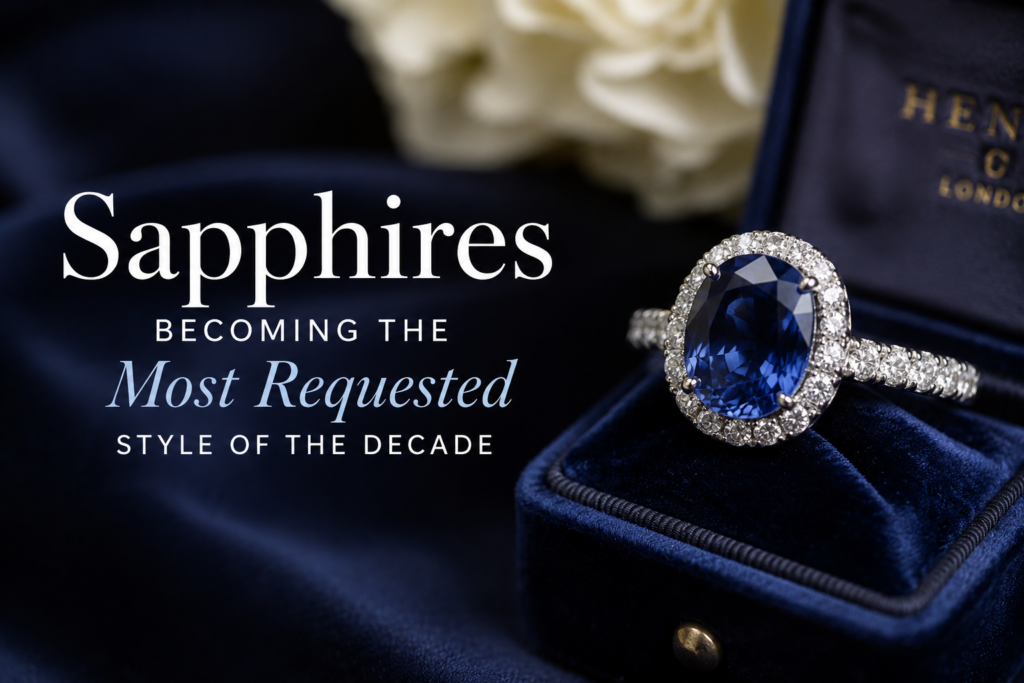
There is something that jewellers across the country have started noticing, deeply. A couple walks in, or lands on a website, and before they’ve even looked at the diamond solitaires, the ones that have dominated engagement ring conversations for the better part of a century; one of them says it. “Actually, we were thinking about a sapphire.”
Ten years ago, that was unusual enough to ask for both Sapphires and lab grown engagement rings. Today it’s one of the most common conversations happening in fine jewellery. And it isn’t a passing trend driven by a single celebrity choice or a viral moment. It’s something more thoughtful than that, and it’s worth understanding properly because the reasons behind it say quite a lot about how people are thinking about commitment, value, and personal expression right now.
Where It Started and Why It Didn’t Stop
Most people trace the modern fascination with blue sapphire engagement rings back to a single piece of jewellery. The oval Ceylon sapphire surrounded by diamonds that Prince Charles gave to Lady Diana Spencer in 1981 became one of the most photographed objects of the twentieth century. When it passed to Prince William and then to Catherine Middleton in 2010, an entirely new generation fell in love with it all over again.
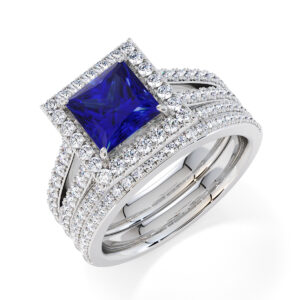
But here’s the thing about trends; they don’t last on sentiment alone. The blue sapphire engagement ring and the blue sapphire necklace has stayed relevant not because of who wore it but because of what it offers and that’s a conversation worth having properly.
What a Blue Sapphire Actually Offers That a Diamond Doesn’t
This isn’t an argument against diamonds. A well-cut diamond is a genuinely extraordinary thing. But for a growing number of couples, the diamond solitaire however beautiful feels like a default rather than a decision. And there’s a real difference between choosing something because it’s conventional and choosing something because it’s right.
A blue sapphire engagement ring offers a few things that a diamond simply can’t.
- Colour:
First of all, real, vivid, saturated colour that changes how a ring looks in different lights extraordinary under evening light, quietly rich in daylight, completely different again in candlelight. A diamond catches and throws light. A sapphire holds it.
- Rarity:
In a different sense; while diamonds are graded on a relatively standardised scale, the colour of a sapphire, its depth, its hue, whether it leans towards violet or teal makes every stone genuinely individual in a way that two stones of the same diamond grade are not.
- Durability:
Something that matches the occasion. Sapphires sit at nine on the Mohs hardness scale, just below diamond at ten. For a ring worn every day for decades, that matters. A sapphire will not scratch easily, will not cloud over time, and will look as striking at the fortieth anniversary as it did on the day it was given.
Why Lab Grown Blue Sapphire Engagement Rings Specifically Are Driving the Shift
Here is where the conversation gets interesting, because the rise of lab grown blue sapphire engagement rings isn’t just a story about sapphires becoming fashionable. It’s a story about access.
A high-quality natural blue sapphire, one with even colour saturation, strong clarity, and that particular velvety depth that makes the best examples so striking, has historically been extraordinarily expensive.
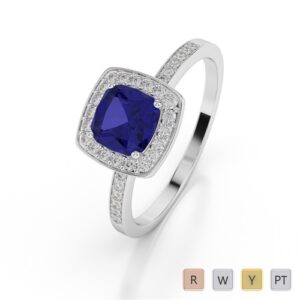
Lab grown sapphires changed that equation entirely. A lab grown blue sapphire is chemically and physically identical to a mined one. The same aluminium oxide crystal structure, the same hardness, the same optical properties that make a fine sapphire so beautiful. The difference is that it was grown in a controlled environment rather than extracted from the earth over millions of years and that difference in origin translates into a very significant difference in price without any difference in the stone itself.
What this means in practice is that a couple who might previously have compromised on size, colour quality, or setting in order to afford a natural sapphire can now access a genuinely beautiful stone well-cut, richly coloured, set exactly as they want it for a fraction of what that same quality would have cost a decade ago.
The Yellow Sapphire: Why It Deserves More Attention Than It Gets
While blue dominates the conversation, lab grown yellow sapphire engagement rings are quietly building their own following and for good reason.
Yellow sapphires have a warmth that white stones and even blue stones don’t quite replicate. They sit beautifully in yellow gold settings, they flatter a wide range of skin tones, and they carry a richness that feels simultaneously vintage and completely current. In Indian jewellery traditions, yellow sapphires carry specific significance and have been considered auspicious stones for centuries. In Western fine jewellery, they’re increasingly being rediscovered by couples who want colour but find blue too expected.
What to Actually Look for When Choosing a Lab Grown Blue Sapphire Engagement Ring
If you’re at the stage of seriously considering this, here are the things worth paying attention to that don’t always come up in the standard buying guides:
-
Colour consistency matters.
The colour consistency is something that matters much more than the depth alone. A sapphire that looks intensely blue in one light and washed out in another hasn’t been well selected. Look for even colour distribution across the stone, not just richness in ideal conditions.
-
The cut affects everything.
Unlike diamonds, where cut is graded on a standardised system, sapphire cuts are more variable. A well-cut sapphire will show its colour evenly across the face of the stone. A poorly cut one will have dark patches or window areas where you can see straight through without any colour return.
-
Setting choice shapes the whole piece.
A blue sapphire in a yellow gold setting reads warm and vintage. The same stone in platinum reads crisp and contemporary. Neither is wrong, but they’re genuinely different rings, and it’s worth seeing both before deciding.
-
Consider the accent stones carefully.
Diamonds around a sapphire centre stone is a classic for good reason and the contrast between the colour and the white brilliance of the surrounding stones is genuinely beautiful. But a sapphire set simply, without accents, has its own quiet authority that’s worth considering too.
Summing Up
To sum up, Sapphires have long had the status of the royal gemstone and in the past decade, it has regained its status. But buying Sapphires comes at a huge expense which have been cut down with the coming up of the lab grown Sapphires.