A restorative yoga routine at home can be a simple and calming way to slow down, release everyday tension, and create a peaceful moment in a busy schedule. Unlike faster forms of yoga, restorative yoga focuses on supported poses, comfortable positioning, relaxed breathing, and longer periods of stillness. You do not need an advanced level of flexibility or complicated equipment to begin. With a quiet space and a few household items, you can create a relaxing practice that fits easily into your day.
YogaPoints encourages beginners and experienced practitioners to explore gentle yoga practices at a comfortable pace. A regular restorative yoga routine at home can become a useful part of a balanced wellness routine.
What Is Restorative Yoga?
Restorative yoga is a gentle style of yoga that emphasizes relaxation and support. Poses are generally held for longer periods, allowing the body to settle into a comfortable position rather than actively working toward intense stretching.
Props such as blankets, cushions, pillows, bolsters, or folded towels can be used to support different parts of the body. The purpose is to create a position where you can remain comfortable while focusing on slow breathing and relaxation.
Preparing Your Home Yoga Space
Before beginning your routine, choose a quiet and comfortable area where you are unlikely to be interrupted. A yoga mat can provide a stable surface, but a carpet or comfortable floor can also work.
Keep a few pillows or folded blankets nearby so you can adjust your support. Comfortable clothing can also make it easier to relax. Dim lighting and a calm environment may help create a peaceful atmosphere, although they are not essential.
Begin With Comfortable Breathing
Start your restorative yoga routine at home by sitting or lying in a comfortable position. Allow your shoulders to relax and notice your natural breathing pattern.
Instead of forcing deep breaths, gradually allow your breathing to become slower and more comfortable. Pay attention to the movement of your abdomen and chest as you breathe. Spending a few minutes simply observing your breath can help you transition away from daily distractions.
Supported Child’s Pose
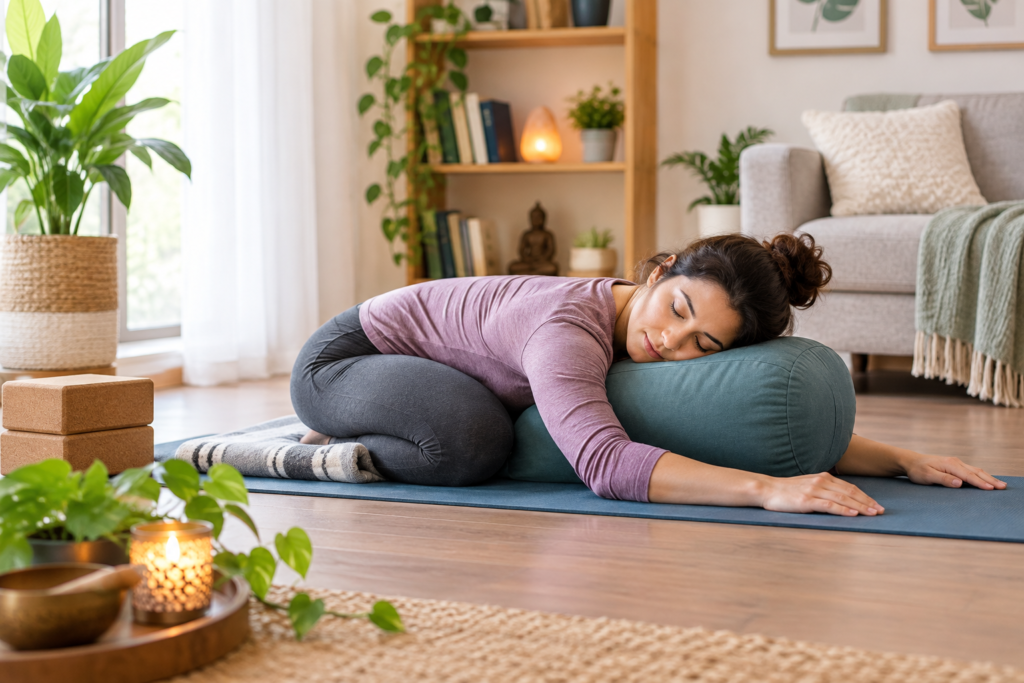
A supported child’s pose can be a gentle way to begin the physical portion of your practice. Kneel comfortably and place a pillow or folded blanket in front of you. Slowly lower your upper body onto the support while keeping your position comfortable.
Allow your arms to rest wherever they feel natural. Stay in the pose for several slow breaths and avoid forcing your body into a deeper position. The focus should remain on comfort and relaxation.
Reclined Bound Angle Pose
For another gentle posture, lie on your back and bring the soles of your feet together while allowing your knees to move outward. Place pillows or folded blankets underneath your knees if additional support feels more comfortable.
Rest your arms beside you and breathe slowly. Remain in this position for several minutes, adjusting the support if you notice discomfort. Restorative yoga is about creating ease rather than pushing the body.
Supported Legs-Up Position
A supported legs-up position can be included toward the middle or end of your routine. Lie on your back and place your lower legs on a chair, sofa, or other stable surface so your body can remain relaxed.
Keep your head and neck comfortable and allow your arms to rest naturally. Breathe slowly while remaining aware of any areas of tension. If the position creates discomfort, come out of it and choose a more comfortable posture.
Finish With Gentle Rest
End your restorative yoga routine at home with a comfortable resting position. Lie on your back with your legs supported if needed, or choose another position that allows your body to relax.
Close your eyes if comfortable and spend several minutes observing your breathing. Let your muscles soften without trying to achieve a particular result. When you are ready to finish, move slowly and give yourself time to return to normal activity.
Creating a Consistent Yoga Practice
Consistency can be more useful than making every session long. A short restorative practice can be incorporated into an evening routine, a quiet morning, or a break during a busy day.
YogaPoints provides helpful yoga information for people interested in developing mindful and accessible practices. By creating a routine that feels comfortable and sustainable, beginners can gradually become more familiar with restorative yoga.
Listen to Your Body
Every person’s body and comfort level are different. Restorative yoga should not involve forcing a stretch or remaining in a position that causes pain. Use additional support whenever necessary and leave a pose if it does not feel comfortable.
People with injuries, medical conditions, or specific physical concerns should consider discussing new exercise practices with an appropriate healthcare professional before beginning.
Conclusion
A restorative yoga routine at home can provide a peaceful opportunity to slow down, practice gentle movement, and focus on comfortable breathing. Supported poses such as child’s pose, reclined bound angle, and supported resting positions can form the foundation of a simple home practice. With patience, suitable props, and regular practice, restorative yoga can become a calming addition to your daily routine. YogaPoints can help you explore gentle yoga concepts and build a practice that suits your personal comfort and lifestyle.