Three years ago, I stood at my manual-stop chop saw at 6:40 a.m., tape measure in hand, recutting a face frame stile for the third time. That morning I decided something had to change. Today I run a RazorGage upcut saw, and I wish I’d made the move sooner. Here’s what I tried, what went wrong, and what finally worked.
The Problem: My Manual Stop Was Costing Me More Than I Thought
My shop was growing, but my cutting process wasn’t. Here’s what kept happening:
- Parts came out a hair long or short because someone bumped the stop.
- Two operators read the same tape differently.
- Scrap bins filled with “almost right” parts.
- One person was stuck at the saw all day, just measuring and feeding.
The worst moment was a full run of face frame parts that ended up 1/16″ off. I only caught it at assembly, and the whole batch went back to the saw.
What I Tried Before Upgrading
I didn’t jump straight to new equipment. I tried the cheaper fixes first:
- Stop blocks and a story stick: These worked for repeat parts and failed on mixed cut lists.
- A digital readout on the manual fence: This was better, but I was still moving the stop by hand.
- Another helper on the saw: Throughput went up, accuracy didn’t, and payroll did.
The lesson was that I was solving a measurement problem with more people.
Why I Chose a RazorGage Upcut Saw
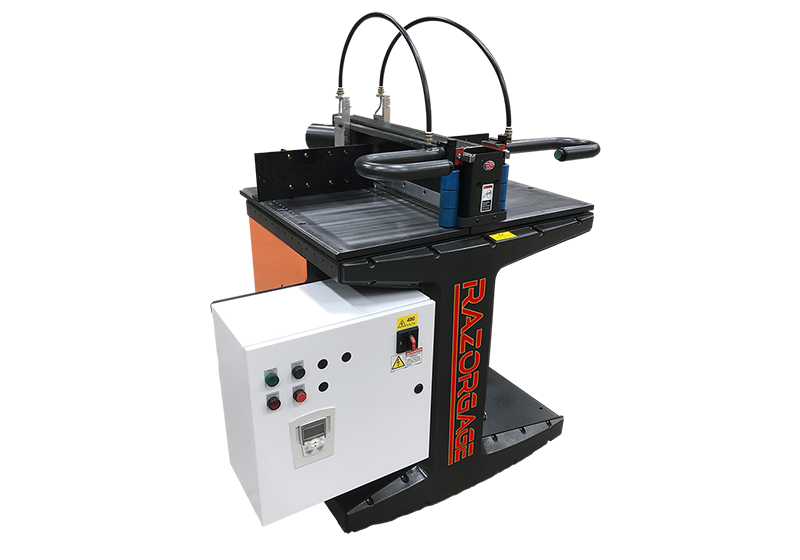
Other shop owners kept mentioning RazorGage, so I looked at the RazorGage Cyclone 600 upcut saw. I wanted automatic positioning on a saw where the blade stays below the table until the cut. With a crew of mixed experience levels, that mattered to me.
Precision Length Control That Ended the Recuts
Once the saw positioned the stop from my cut list, parts came out the same length run after run. I read up on how precision length control helps door and window fabricators. The logic carried straight over to stiles, rails and face frame parts.
Cleaner Angles When I Needed Them
Face frames and moldings sometimes need miters. If that’s your situation, see how shops improve miter cut accuracy. I also tested angle work separately, and I wrote a detailed guide on this here.
Feeding Material Was the Hidden Time Sink
I underestimated how much labor went into handling stock. Before buying, I read about automating material feeding in cutting operations. It changed how I thought about the whole line. I’m now looking at an Auto Pusher system as a next step.
Step-by-Step: How I Set Up My RazorGage Upcut Saw
This is the order I followed. You can learn from my stumbles here.
- Audit your current cut lists. I collected a week of real jobs to see my common lengths and part mix.
- Check the table and fence. A saw can’t fix a crooked setup.
- Calibrate before cutting anything. I skipped this at first. More on that below.
- Run test cuts on scrap. I measured each one with calipers instead of trusting my eye.
- Load a real cut list. I started with short parts, then moved to long ones.
- Train every operator. Not just the “saw person.”
Mistakes I Made (and What I Learned)
I wish I could say it went perfectly. It didn’t.
- I skipped calibration. My first few parts were off, and I blamed the machine. It was my setup.
- I ran a dull blade. Rough cuts made me think accuracy was the problem, but the blade was worn.
- I didn’t stage material. The saw sat waiting while I hunted for stock.
- I trained only one operator. When he was out sick, production slowed.
Each of these was a process mistake, not a machine failure.
Is a RazorGage Upcut Saw Right for Your Shop?
From my experience, a RazorGage upcut saw makes the most sense if you:
- Run a cabinet, face frame, millwork or furniture shop
- Still rely on a manual stop and tape
- Struggle with recuts, scrap or inconsistent part lengths
- Want to expand capacity without adding headcount
- Are a small or growing shop ready to systemize
If you only cut a handful of parts a week, you may not feel the payoff. For production shops, the difference showed up fast.
Frequently Asked Questions
Is a RazorGage upcut saw only for large factories?
No. I started in a small shop, and growing cabinet shops can benefit just as much, especially if recuts are eating margin.
How long did it take to learn the saw?
In my case, basic operation came quickly. Getting calibration and material staging right took longer.
Will it really reduce scrap?
It did for me, mostly because repeatable length control removed the guesswork.
Do I need extra equipment for feeding?
Not to get started. Feeding automation is an add-on you can consider once the saw is running smoothly.
Can I get replacement parts and support later?
Yes. RazorGage lists parts and support on its site, and you can ask the team directly.
Conclusion: My Honest Take
If you’re recutting parts, babysitting a tape measure or watching scrap pile up, it’s worth a hard look at upcut technology. For me, a RazorGage upcut saw turned cutting from a daily headache into a predictable step. You don’t have to take my word for it. Check the reviews on the RazorGage Google Business Profile and decide for yourself.
Contact Us
Have questions about your shop’s setup? Contact the RazorGage team directly:
- Address: 57006 241st Street, Ames, IA 50010
- Phone: 515.232.3188
- Email: sales@RazorGage.com