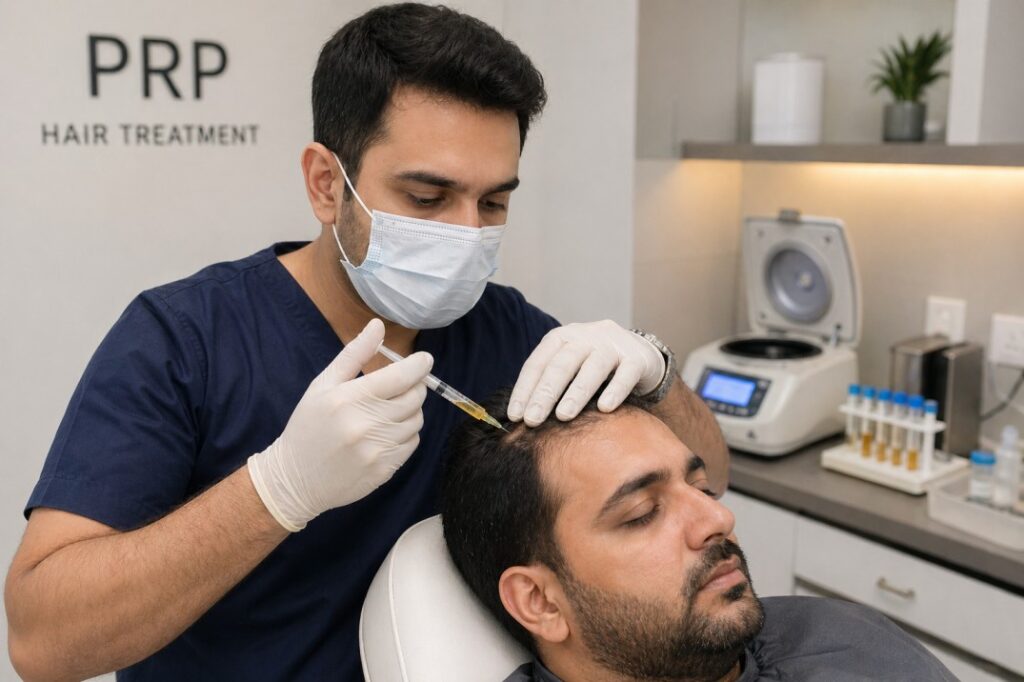
Noticing those first few signs of a widening part line, a receding hairline, or a general loss of volume can be unsettling. For both men and women navigating early-stage hair thinning, the immediate reflex is often to seek out non-surgical solutions that can halt regression and kickstart regrowth without the downtime or commitment of surgery.
Among the array of innovations available today, Platelet-Rich Plasma (PRP) therapy has emerged as a gold standard in regenerative hair care. However, as with any medical aesthetic procedure, one of the most pressing questions on your mind is bound to be financial.
What goes into a PRP hair treatment price, and what are you actually paying for? This comprehensive guide breaks down the science behind the treatment, how it works, and offers a completely transparent look at the factors that influence your overall financial investment.
Understanding PRP: The Science of Self-Healing
Before breaking down the financial commitments, it is crucial to understand what PRP is and why it commands its value. Platelet-Rich Plasma therapy is a safe, minimally invasive, non-surgical procedure that leverages your body’s natural healing mechanisms to stimulate dormant hair follicles.
The biological premise is simple yet highly sophisticated:
-
Step 1: The Blood Draw: A small amount of blood (typically 10 to 20 ml) is drawn from your arm, much like a routine lab test.
-
Step 2: Centrifugation: The blood sample is placed into a specialized, medical-grade machine called a centrifuge. This device spins the blood at rapid speeds to isolate and separate its distinct components: red blood cells, platelet-poor plasma, and platelet-rich plasma.
-
Step 3: The Harvest: The highly concentrated plasma—which contains up to five to ten times the concentration of growth factors found in normal blood—is carefully harvested into syringes.
-
Step 4: Precision Micro-Injections: Using fine needles, this nutrient-dense plasma is meticulously injected directly into the areas of the scalp experiencing thinning and miniaturization.
Once settled into the scalp tissue, these concentrated growth factors signal the surrounding blood vessels to multiply, flooding the hair follicles with oxygen and essential nutrients. This effectively wakes up sluggish or dormant hair follicles, shifts them from the resting phase (telogen) back into the active growth phase (anagen), and increases the physical shaft diameter of your existing hair.
Decoding the Investment: What Determines the PRP Hair Treatment Price?
If you have spent any time researching online, you have likely noticed that the PRP hair treatment price varies substantially from one clinic to another. In India, a single session can range anywhere from ₹3,000 to ₹15,000.
This discrepancy exists because PRP is not a standardized, one-size-fits-all procedure. The overall cost is a direct reflection of several clinical variables:
1. The Technology and Equipment Used
Not all centrifuges and separation kits are created equal. Budget-tier clinics often use standard laboratory centrifuges that produce a lower concentration of viable platelets. Premium, specialized hair restoration centers utilize advanced, closed-system, double-spin centrifuges and specialized tubes that isolate maximum platelet yields while maintaining absolute sterility. Higher quality tech ensures a more potent serum, directly translating to superior results.
2. Clinic Reputation and Medical Expertise
Your scalp is highly vascularized, and the depth and angling of the micro-injections matter immensely. When you choose an elite institution like FUE India, you are paying for the refined clinical skills of board-certified dermatologists and trichologists. A trained specialist knows exactly how to customize the injection depth to reach the root of the hair follicle while minimizing discomfort and maximizing safety.
3. Geographic Location
A clinic’s physical location influences its operational overhead. Establishments located in premium sectors of major metropolitan hubs like Delhi, Mumbai, or Bangalore generally feature a slightly higher pricing structure compared to facilities in tier-2 or tier-3 cities.
4. Custom Boosters and Formulations
Basic PRP uses standard plasma. Advanced variants may include the addition of external growth factor concentrates (GFC), biotin, or specific peptides designed to supercharge the tissue regeneration process. Adding these clinical boosters will adjust the baseline cost per session.
The Realistic Timeline: Why It’s a Multi-Session Commitment
One of the most common misconceptions about non-surgical hair restoration is that it is a one-and-done miracle cure. Biology requires time to repair and rebuild.
When researching non-surgical options, understanding the breakdown of a typical PRP hair treatment cost can help you budget for the multiple sessions required for optimal results.
The Typical Treatment Schedule
| Phase | Timeline | Frequency | What to Expect |
| Initial Phase | Months 1 to 3 | 1 Session every 4 weeks | Stabilization of active hair fall; improvement in scalp health. |
| Evaluation Phase | Months 4 to 6 | 1 Session every 4–6 weeks | Initial sprouting of fine baby hairs; increased density of existing shafts. |
| Maintenance Phase | Ongoing | 1 Session every 6–12 months | Long-term preservation of results and continuous follicle stimulation. |
Because a standard therapeutic blueprint demands a minimum of 3 to 6 initial sessions, booking individual sessions sequentially is rarely the most economical route. Most premium hair restoration clinics offer comprehensive bundled packages. Investing in a multi-session package upfront not only ensures the clinical continuity necessary to see real, tangible density changes, but it also frequently reduces the per-session cost by 15% to 25%.
Is PRP Worth the Cost? Comparing the Alternatives
When evaluating the cost, it helps to put the expenditure into a broader clinical context against other popular modalities:
-
Topical & Oral Medications: While lower in immediate cost, therapies like Minoxidil or Finasteride require strict daily compliance indefinitely. If you stop using them, the hair fall returns. Over several years, the cumulative cost of medications can easily match or exceed a series of PRP treatments.
-
Surgical Hair Transplants (FUE/FUT): A surgical transplant is an exceptional, permanent solution for moderate-to-advanced baldness, but it carries a much higher upfront financial investment (often ranging from ₹40,000 to ₹2,500,000+). For individuals who are only in the early stages of thinning, surgery is often unnecessary. PRP offers a powerful, preventative intermediary step to maintain your native hair volume.
Empowering Your Hair Restoration Journey
Ultimately, treating early-stage hair thinning is an investment in your self-confidence and long-term peace of mind. While price transparency is vital for budgeting, your primary metric should always be the clinical quality, safety protocols, and medical expertise of the team handling your care.
By understanding the structural elements that comprise a professional PRP procedure, you can step away from the anxiety of hair thinning and step into a structured, medically backed strategy tailored uniquely to your scalp’s needs.