The modern world depends heavily on materials that are lightweight, durable, affordable, and easy to shape into different forms. From household items to industrial machinery, these materials are used almost everywhere in daily life and large-scale manufacturing.
Over the years, industries have looked for solutions that can improve product quality while reducing production costs and increasing efficiency. This is where plastic polymers became one of the most important developments in modern manufacturing and engineering.
Today, plastic materials are used in packaging, construction, electronics, healthcare, transportation, agriculture, and many other industries. Their flexibility and wide range of applications make them highly valuable in both small and large industries. Understanding their history and development helps us see how they have transformed the modern world and continue to evolve with new innovations.
Understanding Plastic Polymers
Plastic polymers are large molecules made by joining many smaller units called monomers. These materials can be natural or synthetic, but most plastics used today are synthetic and manufactured through industrial processes.
Plastic polymers are popular because they offer several useful properties, including:
- Lightweight structure
- High durability
- Resistance to moisture and chemicals
- Easy molding and shaping
- Cost-effective production
- Good electrical insulation
- Long-lasting performance
Because of these benefits, plastic polymers have become essential materials in modern manufacturing.
Early History of Plastic Polymers
The history of plastic materials began long before modern industries existed. Early civilizations used naturally occurring polymers such as rubber, shellac, and animal horns for different purposes.
However, the real development of synthetic plastic polymers started during the 19th century.
The Beginning of Synthetic Plastics
In the mid-1800s, scientists started experimenting with chemical materials to create alternatives to expensive natural resources like ivory and tortoiseshell.
One of the earliest successful synthetic plastics was Parkesine, created by Alexander Parkes in 1862. It was made from cellulose and could be molded into different shapes when heated.
Although Parkesine was not commercially successful, it opened the door for future plastic developments.
Development of Bakelite
A major breakthrough came in 1907 when Leo Baekeland invented Bakelite. It became the first fully synthetic plastic polymer.
Bakelite was strong, heat-resistant, and electrically non-conductive, making it useful for:
- Electrical switches
- Telephones
- Radios
- Kitchenware
- Automotive components
This invention marked the beginning of the modern plastics industry.
Growth of the Plastic Industry in the 20th Century
The 20th century saw rapid growth in the production and use of plastic polymers. New types of plastics were introduced for industrial and commercial use.
Rise of Polyethylene
Polyethylene became one of the most widely used plastics during the 1930s. It was lightweight, flexible, and resistant to moisture.
Today, polyethylene is commonly used in:
- Plastic bags
- Packaging films
- Bottles
- Containers
- Pipes
Its versatility made it one of the most important plastic polymers worldwide.
Introduction of PVC
Polyvinyl Chloride, commonly called PVC, became popular due to its durability and chemical resistance.
PVC is widely used in:
- Water pipes
- Electrical cable insulation
- Flooring
- Window frames
- Medical equipment
It remains one of the most commonly used construction materials today.
Development During World War II
World War II increased the demand for strong and lightweight materials. Plastic polymers became essential for military equipment, aircraft components, helmets, and communication devices.
After the war, these materials entered civilian industries and became part of everyday life.
Types of Plastic Polymers
There are many types of plastic polymers available today, each designed for specific uses.
Thermoplastics
Thermoplastics can be heated, melted, and reshaped multiple times without losing their properties.
Common examples include:
- Polyethylene (PE)
- Polypropylene (PP)
- Polyvinyl Chloride (PVC)
- Polystyrene (PS)
These materials are widely used because they are recyclable and easy to process.
Thermosetting Plastics
Thermosetting plastics become permanently hard after heating. They cannot be remelted or reshaped.
Examples include:
- Bakelite
- Epoxy resins
- Melamine
- Phenolic resins
These materials are commonly used in electrical and industrial applications.
Engineering Plastics
Engineering plastics are designed for high-performance applications where strength, heat resistance, and durability are important.
Examples include:
- Nylon
- Polycarbonate
- ABS
- PEEK
These are commonly used in automotive, aerospace, and electronics industries.
Manufacturing Process of Plastic Polymers
The production of plastic polymers involves several important steps.
Polymerization
Polymerization is the process where small monomer molecules combine to form long polymer chains.
There are two main types:
- Addition polymerization
- Condensation polymerization
This process determines the properties and performance of the final material.
Compounding
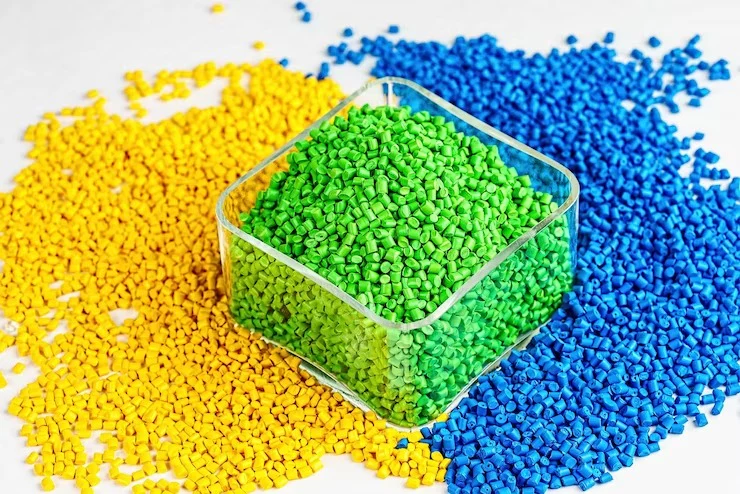
After polymerization, additives are mixed with the plastic material to improve performance.
These additives may include:
- Colorants
- Stabilizers
- Fillers
- Flame retardants
- UV protectors
Compounding helps manufacturers create materials for specific applications.
Molding and Shaping
Plastic polymers can be shaped using several methods, including:
- Injection molding
- Blow molding
- Extrusion
- Rotational molding
- Thermoforming
These processes allow manufacturers to produce products in different sizes and shapes efficiently.
Importance of Plastic Polymers in Modern Industries
Plastic polymers play a major role in many industries because of their flexibility and performance.
Packaging Industry
The packaging industry is one of the largest users of plastic materials.
Plastic packaging helps:
- Protect products from moisture
- Increase shelf life
- Reduce transportation weight
- Improve product safety
Food packaging, beverage bottles, and protective wraps all rely heavily on plastic polymers.
Automotive Industry
Modern vehicles use plastic components to reduce overall weight and improve fuel efficiency.
Common automotive applications include:
- Dashboard panels
- Bumpers
- Fuel tanks
- Interior trims
- Electrical systems
Lighter vehicles consume less fuel and produce fewer emissions.
Healthcare Industry
Plastic polymers are extremely important in healthcare because they help maintain hygiene and safety.
Medical applications include:
- Syringes
- IV bags
- Surgical gloves
- Medical tubing
- Diagnostic equipment
Disposable plastic medical products reduce infection risks and improve patient safety.
Electronics Industry
Electronics require materials that provide insulation and heat resistance.
Plastic polymers are used in:
- Mobile phones
- Computers
- Cables
- Television parts
- Electrical connectors
Their insulating properties make them highly suitable for electrical applications.
Construction Industry
Construction companies use plastic materials because they are durable and resistant to corrosion.
Applications include:
- Pipes
- Roofing sheets
- Wall panels
- Insulation materials
- Flooring
Plastic products help reduce maintenance costs and increase product lifespan.
Environmental Challenges of Plastic Polymers
Although plastic polymers provide many advantages, they also create environmental concerns when not managed properly.
Plastic Waste
Large amounts of plastic waste accumulate in landfills and water bodies. Since many plastics do not decompose quickly, waste management becomes a serious challenge.
Marine Pollution
Plastic waste entering oceans harms marine life and ecosystems. Animals may ingest plastic particles or become trapped in discarded materials.
Recycling Challenges
Not all plastics are easy to recycle. Different polymer types require separate recycling processes, making waste management more complex.
However, industries and governments are working to improve recycling systems and reduce environmental impact.
Modern Innovations in Plastic Polymers
Technology has brought major improvements in plastic manufacturing and sustainability.
Biodegradable Plastics
Biodegradable plastics are designed to break down naturally under certain environmental conditions.
These materials help reduce long-term waste accumulation and are becoming increasingly popular in packaging and agriculture.
Bio-Based Polymers
Bio-based polymers are made from renewable resources such as:
- Corn starch
- Sugarcane
- Vegetable oils
- Cellulose
These materials reduce dependence on fossil fuels and support sustainable manufacturing.
Advanced Recycling Technologies
Modern recycling methods are improving the reuse of plastic materials.
New technologies include:
- Chemical recycling
- Mechanical recycling
- Energy recovery systems
These innovations help convert waste plastics into reusable raw materials.
Smart Plastics
Researchers are developing smart plastic polymers with advanced properties such as:
- Self-healing surfaces
- Temperature sensitivity
- Conductive capabilities
- Shape memory functions
These materials are useful in healthcare, aerospace, and electronics industries.
Lightweight Composite Materials
Plastic polymers are now combined with materials like carbon fiber and glass fiber to create lightweight composites.
These composites are widely used in:
- Aircraft
- Sports equipment
- Electric vehicles
- Wind turbines
They offer high strength while keeping overall weight low.
Future of Plastic Polymers
The future of plastic polymers is focused on sustainability, efficiency, and innovation.
Industries are investing heavily in:
- Eco-friendly materials
- Better recycling systems
- Renewable raw materials
- Energy-efficient production methods
Governments and manufacturers are also promoting circular economy practices where plastic products are reused and recycled instead of discarded.
Researchers continue to explore new ways to improve the environmental performance of plastics while maintaining their practical advantages.
How Industries Benefit from Modern Plastic Solutions
Modern plastic polymers help industries improve both productivity and product quality.
Benefits include:
Cost Efficiency
Plastic materials are often less expensive than metal, glass, or wood alternatives. They also reduce transportation and maintenance costs.
Design Flexibility
Manufacturers can create complex shapes and customized products easily using plastic materials.
Durability
Many plastic polymers resist corrosion, moisture, and chemicals, making them suitable for long-term use.
Improved Safety
Plastics provide electrical insulation and impact resistance, improving safety in many applications.
Reduced Energy Consumption
Lightweight materials help reduce fuel consumption in transportation and lower energy usage during manufacturing.
Choosing the Right Plastic Polymer
Selecting the right plastic material depends on several factors:
- Strength requirements
- Heat resistance
- Chemical exposure
- Flexibility
- Cost
- Environmental conditions
Manufacturers carefully evaluate these factors before choosing a suitable polymer for production.
The Role of Research and Development
Research and development continue to shape the future of plastic polymers.
Scientists and manufacturers are working on:
- Sustainable alternatives
- Improved recyclability
- Stronger materials
- Safer production processes
- Advanced industrial applications
Continuous innovation ensures that plastic materials remain useful while addressing environmental concerns.
Conclusion
Plastic recycled granules have transformed industries and daily life through their versatility, durability, and affordability. From their early development in the 19th century to today’s advanced innovations, these materials continue to play an important role in manufacturing, healthcare, transportation, electronics, and construction.
Modern industries now focus not only on performance but also on sustainability and environmental responsibility. Innovations such as biodegradable plastics, bio-based materials, and advanced recycling technologies are helping create a more sustainable future for plastic manufacturing.
As industries continue to evolve, companies like Duha Industries contribute to the growing demand for high-quality plastic solutions that support modern industrial applications and future development.