A healthy, green lawn can make your home more inviting and create a comfortable space for relaxing, entertaining guests, and enjoying outdoor activities. Zoysia grass is a popular option for homeowners who want a dense lawn that performs well in warm weather. However, successful results depend on choosing the right installation season, preparing the soil, and providing proper care after the sod is laid.
Understanding the best time to install zoysia sod can help you avoid common problems and give your lawn a stronger start. In Texas, weather conditions vary across regions, and summer heat can put extra pressure on newly installed grass. Planning ahead allows you to choose a suitable installation period and prepare for the watering and maintenance your new lawn will need.
If you prefer help with the process, searching for professional sod installation near me can connect you with local contractors who understand lawn preparation, grass selection, and the challenges of establishing new sod.
Why Zoysia Grass Is a Good Choice for Homeowners
Zoysia is a warm season grass that grows most actively during warm weather. It is valued for its dense growth, attractive appearance, and ability to tolerate moderate dry conditions after its roots become established.
A well maintained zoysia lawn can provide a comfortable surface for outdoor activities. Its dense growth may also limit the space available for some weeds, although it does not eliminate the need for regular lawn care.
Can Zoysia Grow Well in Texas?
Zoysia can be suitable for many Texas properties because it generally performs well in warm conditions. However, the state has different soil types, rainfall patterns, and temperatures, so selecting a suitable variety is important.
Sunny locations often provide favorable growing conditions, while some varieties can tolerate partial shade. Areas with deep shade, compacted soil, or poor drainage may need additional preparation before installation.
Consider your property’s sunlight, drainage, and intended lawn use before deciding whether zoysia is the right choice.
What Is the Best Time to Install Zoysia Sod?
Late spring through early summer is generally the best period for installing zoysia sod in Texas. During this time, soil temperatures are usually warm enough to support active root growth, helping the grass establish itself before cooler weather returns.
The ideal date depends on your location, recent weather, and soil conditions. A favorable forecast and suitable soil moisture are more important than following a fixed calendar date.
Late Spring Provides a Good Starting Point
Late spring is often a favorable time to install zoysia sod because the grass is entering its active growing season. Warm soil supports root development, allowing the sod to connect with the ground beneath it.
Installing during this period can also give the grass time to establish before intense summer heat arrives. Make sure the risk of freezing weather has passed and the soil is warm enough to encourage growth.
Early Summer Can Also Work Well
Early summer provides another opportunity to install zoysia sod. Warm temperatures and longer days support growth, provided the lawn receives sufficient moisture.
The main challenge is heat. Fresh sod has a limited root system and can dry out quickly when temperatures rise. Prepare the soil before delivery, arrange watering in advance, and monitor the lawn closely during the first few weeks.
If extreme heat is expected, ask a local lawn professional whether postponing installation would be a better option.
Is Fall or Winter a Good Choice?
Fall installation may work in parts of Texas where warm weather lasts longer. However, as temperatures decline, zoysia grows more slowly and has less time to establish roots before winter.
Winter is generally less suitable in areas that experience cold temperatures. The grass may become dormant, delaying root development and visible growth.
For most homeowners, installing sod during the active growing season offers a better opportunity for successful establishment.
Preparing Your Yard Before Installing Sod
Proper preparation creates a strong foundation for healthy grass. Even good quality sod may struggle if it is installed over uneven, compacted, or poorly drained soil.
Remove Existing Grass and Weeds
Clear the installation area of unwanted grass, weeds, stones, and debris. Removing existing vegetation helps the new sod make direct contact with the soil and reduces competition for water and nutrients.
If your yard has recurring weed problems, address them before installing the new lawn. Covering existing weeds with fresh sod may not prevent them from returning.
Check Soil Quality and Drainage
Healthy soil gives roots access to water, air, and nutrients. Compacted soil can restrict root development, while poorly drained areas may remain too wet and increase the risk of grass damage.
A soil test can help identify nutrient deficiencies or pH concerns. Make adjustments based on the results rather than adding fertilizer or soil amendments without a clear reason.
Level the Ground
Remove high spots and fill low areas to create a smooth surface. Check the grading to ensure water drains away from the home’s foundation instead of collecting near the house.
Complete the preparation before the sod arrives. Fresh sod should be installed promptly after delivery, particularly during hot weather, because prolonged storage can cause moisture loss and damage the grass.
How to Care for Zoysia Sod After Installation
The first few weeks are important because the grass roots are still developing. Regular checks help you identify problems early and adjust your care routine when needed.
Water the New Lawn Properly
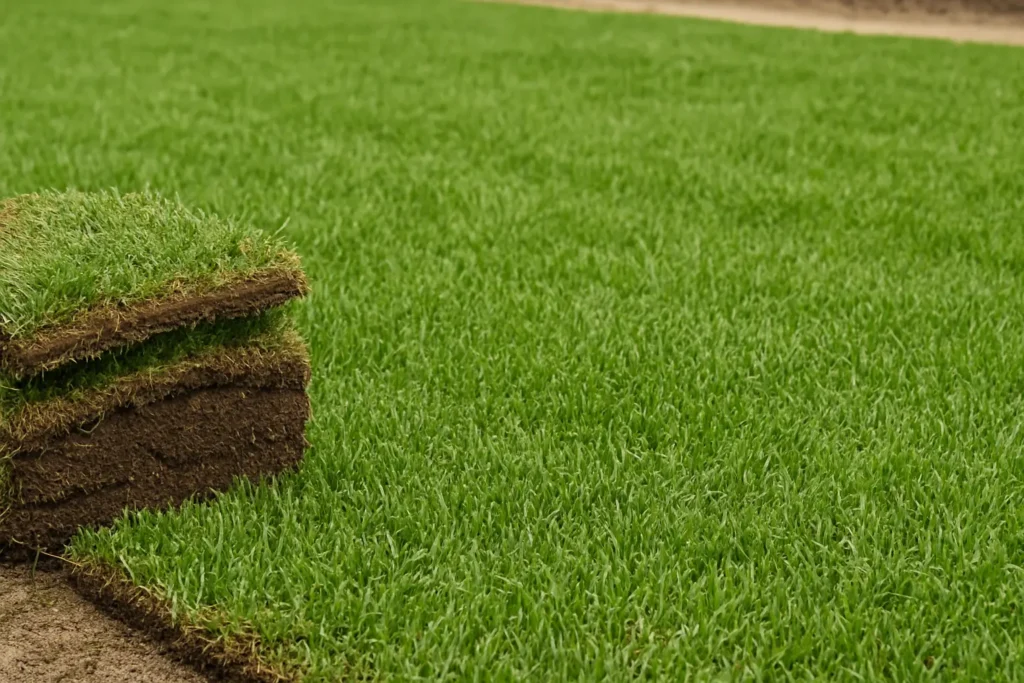
Water the lawn thoroughly immediately after installation. Check beneath several pieces to confirm that moisture reaches the soil instead of remaining only on the grass surface.
During establishment, check soil moisture frequently and adjust watering according to the weather, soil type, and drainage. Hot, dry conditions may require more frequent watering, while rainfall can reduce the amount needed.
As the roots develop, gradually reduce watering frequency and encourage deeper root growth. Avoid keeping the soil constantly saturated because excess moisture can damage roots.
Wait Before Mowing
Do not mow immediately after laying the sod. Wait until the roots have attached firmly to the soil and the grass can withstand mowing without shifting.
Once the lawn is established, follow the recommended cutting height for your zoysia variety. Use sharp mower blades and avoid removing too much grass at one time.
Protect the Grass While It Establishes
Limit heavy foot traffic during the early growing period. Walking on loose sod or moving equipment across wet soil can damage developing roots and create uneven areas.
Check for dry edges, loose pieces, and standing water. Addressing these issues early can help the lawn develop more evenly.
Choosing Professional Sod Installation Near Me
Installing sod yourself may be manageable for a small yard, but larger projects can require more time, equipment, and preparation. Searching for professional sod installation near me can help you find contractors who understand local soil conditions and suitable grass varieties.
An experienced installer can assess your property, prepare the ground, recommend appropriate sod, and explain the maintenance needed after installation.
What to Check Before Hiring a Contractor
Before choosing a sod installation company, consider these factors:
- Experience with zoysia grass and residential lawn projects.
- A written estimate covering materials, labor, grading, and soil preparation.
- Customer reviews and examples of previous installations.
- Clear guidance on watering, mowing, and ongoing maintenance.
- Realistic expectations about establishment time and potential challenges.
Understand the Services Included
Some contractors provide sod delivery only, while others handle removing existing grass, preparing the ground, installing the sod, and cleaning the site.
Ask for a clear breakdown of the work before agreeing to a project. A dependable professional should explain the process, discuss potential drainage concerns, and provide practical aftercare recommendations.
Conclusion
The best time to install zoysia sod is generally late spring through early summer, when warm soil supports active root growth. In Texas, local weather, soil conditions, and the time available before winter should guide your final decision.
Proper soil preparation, prompt installation, consistent watering, and suitable mowing practices all contribute to a healthier lawn. Choosing the right grass variety for your property’s sunlight and drainage conditions can also reduce maintenance challenges.
For homeowners planning a new lawn, Texas Sod Pros is worth considering when exploring sod installation options. Discussing your property’s needs, installation schedule, and maintenance requirements with an experienced professional can help you make an informed decision and create a greener, more attractive outdoor space.