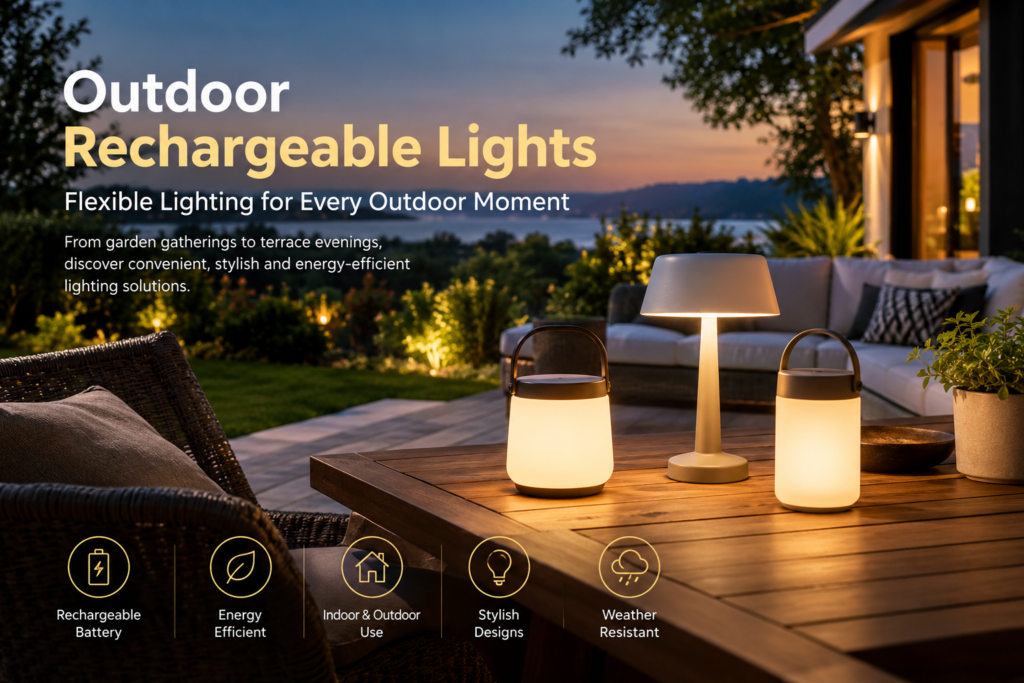
Outdoor spaces have become an important extension of homes, gardens, hospitality venues and commercial properties. Whether it is a residential patio, a landscaped garden, a restaurant terrace or an outdoor event area, suitable lighting can make these spaces more functional and welcoming. However, installing traditional outdoor lighting is not always convenient, particularly in locations where electrical connections are limited. This is where outdoor rechargeable lights offer a practical alternative.
Rechargeable lighting solutions combine portability, convenience and modern design. They allow users to illuminate different areas without depending on permanent wiring or nearby power sockets. With a growing selection of styles, brightness levels and charging options, these lights are becoming a popular choice for people looking to improve their outdoor environments.
Why Rechargeable Lighting Is Becoming Popular
One of the main reasons behind the growing interest in rechargeable lighting is flexibility. Traditional outdoor fixtures usually require fixed installation, electrical connections and careful planning. Rechargeable alternatives provide greater freedom because they can be positioned wherever additional illumination is required.
For example, homeowners can move portable lights between garden seating areas, balconies and outdoor dining spaces. Businesses can use them to create comfortable environments on terraces, patios and temporary event setups.
Another advantage is that rechargeable models can reduce reliance on disposable batteries. Depending on the product and charging system, users can recharge the integrated battery and continue using the light over multiple cycles. This makes them a convenient option for regular outdoor use.
Different Ways to Use Rechargeable Outdoor Lighting
Rechargeable lighting is suitable for a wide range of residential and commercial applications. Choosing the right style depends on the intended location, lighting requirements and overall appearance of the space.
1. Garden and Patio Lighting
Gardens and patios often require lighting that provides visibility without creating an overly bright environment. Portable rechargeable lamps can be placed beside outdoor furniture, near pathways or around decorative features.
They are particularly useful for evening gatherings, outdoor dining and relaxing in garden seating areas. Their movable design also makes it easier to adjust the lighting arrangement whenever the outdoor layout changes.
2. Balcony and Terrace Lighting
Balconies and terraces can have limited access to electrical outlets, making permanently installed lighting less convenient. Portable LED outdoor lamps offer an alternative that does not require complicated installation.
Tabletop lamps can provide focused illumination for reading or dining, while decorative models can introduce a softer atmosphere. Compact designs are especially useful in smaller spaces where larger fixtures may look out of place.
3. Hospitality and Restaurant Settings
Restaurants, cafés, hotels and bars increasingly pay attention to the appearance and comfort of their outdoor seating areas. Lighting plays an important role in creating an inviting atmosphere for customers.
Rechargeable table lamps can be positioned on dining tables, counters and lounge furniture. Staff can easily move them when tables are rearranged, while charging facilities can help maintain a regular lighting routine.
4. Outdoor Events and Gatherings
Temporary events often take place in locations where permanent lighting installations are unavailable. Portable rechargeable fixtures provide a convenient way to introduce additional illumination.
They can be used at garden parties, outdoor celebrations, exhibitions and temporary hospitality setups. Their portability allows event organisers to change the lighting arrangement according to the layout and requirements.
Important Features to Consider Before Buying
Not all rechargeable lighting products offer the same performance. Understanding a few important features can help buyers select a suitable option.
Battery Life: Battery capacity and operating time are important considerations. Buyers should check how many hours a light can operate after a full charge and whether its runtime changes at different brightness settings.
Charging Method: Many modern portable LED lamps use USB charging, while other models may feature alternative charging arrangements. Choosing a convenient charging method can make everyday use easier.
Brightness and Light Output: The required brightness depends on the application. A decorative table lamp may need softer illumination, whereas a light intended for practical outdoor tasks may require a higher lumen output.
Weather Resistance: Outdoor products should be selected according to their intended environment. Check the IP rating and manufacturer’s guidance to understand whether a fixture is suitable for sheltered outdoor use or exposure to rain and moisture.
Design and Portability: Weight, dimensions, materials and overall appearance can influence how easily a light fits into an outdoor setting. Compact and lightweight products are often easier to reposition and store.
The Role of LED Technology
LED technology has contributed significantly to the development of portable lighting. Compared with many traditional lighting technologies, LEDs generally consume less electricity and offer long operating lifespans.
This makes rechargeable LED outdoor lamps a practical choice for applications where efficient illumination and battery performance are important. LED technology also supports different colour temperatures, allowing users to choose between warm, neutral and cooler lighting depending on the setting.
Warm white illumination is often preferred for dining areas and relaxing spaces because it creates a comfortable atmosphere. Neutral white lighting may be more appropriate for practical applications where clearer visibility is required.
How to Maintain Rechargeable Outdoor Lights
Proper maintenance can help preserve the performance and lifespan of rechargeable lighting products. Although individual care requirements vary, a few general practices can make a difference.
- Follow the manufacturer’s charging instructions and use compatible charging equipment.
- Avoid exposing products to water beyond their stated weather-resistance rating.
- Clean the exterior regularly using a soft, dry or slightly damp cloth where permitted.
- Store portable lights in a suitable location when they are not being used for extended periods.
- Check the battery condition and charging performance periodically.
- Avoid leaving products in extreme temperatures unless the manufacturer confirms that they are suitable.
These simple steps can help keep rechargeable fixtures in good working condition.
Choosing the Right Lighting Supplier
Selecting a suitable supplier is another important part of the buying process. Buyers should consider product specifications, available designs, construction quality and the level of information provided before making a purchase.
A reliable lighting retailer should offer clear details about battery capacity, charging time, brightness, dimensions and suitability for different environments. This information makes it easier to compare products and identify options that match specific requirements.
Retailers such as Redsticklights provide a range of lighting products for different indoor and outdoor applications. Exploring specialist lighting collections can help buyers understand the available styles and identify fixtures that complement their intended spaces.
The Future of Portable Outdoor Lighting
As outdoor living and flexible commercial spaces continue to develop, demand for adaptable lighting solutions is likely to remain strong. Improvements in battery technology, LED efficiency and product design are creating more opportunities for portable lighting across different environments.
Modern outdoor rechargeable lights offer a combination of mobility, convenience and design flexibility. They can support everyday residential use as well as the changing requirements of hospitality businesses and event organisers.
For buyers, the key is to look beyond appearance and consider practical specifications such as battery runtime, brightness, charging options and weather protection. With the right selection, rechargeable lighting can provide dependable illumination while making outdoor spaces more versatile.
Frequently Asked Questions (FAQs)
1. What are outdoor rechargeable lights?
These are portable lighting products powered by rechargeable batteries. They provide illumination without requiring a permanent electrical connection and are available in different designs for gardens, patios, terraces and other outdoor settings.
2. How long do rechargeable outdoor lamps last?
Operating time depends on battery capacity, brightness settings and product design. Some models operate for several hours, while others may provide longer runtimes. Always check the manufacturer’s specifications before purchasing.
3. Can rechargeable LED lights be used in rainy conditions?
Some models are designed to withstand outdoor weather conditions, but not all are waterproof. Buyers should check the product’s IP rating and follow the manufacturer’s instructions regarding exposure to rain and moisture.
4. Are rechargeable outdoor lamps suitable for restaurants?
Yes. They can be used on dining tables, terraces and outdoor seating areas. Their portable design makes it easier for restaurant staff to rearrange lighting when the seating layout changes.
5. What should buyers check before purchasing rechargeable outdoor lighting?
Important factors include battery life, charging time, brightness, LED efficiency, weather resistance, product dimensions and design. Comparing these specifications helps buyers choose lighting that meets their requirements.