Muriatic Acid Pool Balancing Guide Safe Handling & Proper Dosage

High pH and alkalinity can turn your beautiful pool into a cloudy, chlorine-wasting mess. When your pH creeps above 7.8, chlorine loses effectiveness, scale forms on surfaces, and swimmers notice the difference . That’s where muriatic acid comes in.
Using muriatic acid pool properly is the most effective way to lower pH and total alkalinity. But it’s a strong acid—31.45% hydrochloric acid—and handling it requires care and precision .
What Muriatic Acid Does for Your Pool
Muriatic acid serves two main purposes in pool maintenance:
-
Lowers pH: When your pH is too high (above 7.8), muriatic acid brings it back into the ideal range of 7.2–7.6
-
Reduces total alkalinity: High alkalinity (above 120–140 ppm) makes pH adjustments difficult and can lead to scale formation
Maintaining proper pH is crucial because chlorine loses effectiveness at higher pH levels, leading to cloudy water and potential algae blooms .
Proper Dosage for Muriatic Acid
Getting the dosage right is essential. Here are the key measurements:
-
Never add more than 16 oz per 10,000 gallons of water at one time
-
2 cups (16 oz) will lower total alkalinity by 10 ppm in 10,000 gallons of water
-
1 quart per 20,000 gallons will reduce pH, with 24-hour intervals between treatments
-
Lower alkalinity by no more than 20 ppm per dose to avoid pH crashes
The exact amount depends on your pool’s current pH and alkalinity readings. Always use a reliable test kit before adding any acid .
Two Methods for Adding Muriatic Acid
Method 1: Diluted Acid for pH Adjustment (Recommended)
For routine pH reduction, the diluted method is safer and more effective :
-
Fill a clean bucket with 3–4 gallons of pool water
-
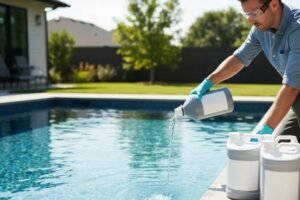
Slowly add the measured amount of muriatic acid to the water (never add water to acid)
-
Mix carefully with a plastic or wooden utensil
-
With the pump running, pour the diluted solution around the perimeter of the pool, avoiding shallow areas and fixtures
Method 2: Localized Column Pour for Alkalinity Reduction
For lowering alkalinity specifically:
-
Turn off circulation and let water become still
-
Slowly pour full-strength acid in a localized spot in the deep end
-
Acid is heavier than water and will sink, forming a cloud
-
Let stand for an hour, then turn circulation back on
-
Important: Never add more than 1–2 pints at a time
The Right vs. Wrong Way to Add Acid
The wrong way: Column pouring or “slugging” undiluted acid. This sinks to the bottom and can damage plaster .
The right way: Dose, measure, dilute, pour.
-
Dilute acid at least 10:1 with water (more is better—50:1 is ideal)
-
Pour diluted acid around the pool perimeter
-
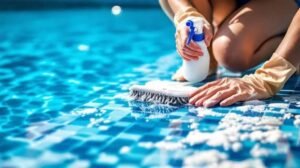
Brush thoroughly after application
This method allows acid to slowly neutralize alkalinity without causing pH crashes or surface damage .
Safety Precautions
Muriatic acid is a strong acid that requires careful handling:
-
Always wear PPE: Gloves, goggles, and acid-resistant footwear
-
Work in ventilated areas: Acid fumes can be harmful
-
Keep a water hose nearby to rinse spills immediately
-
Never add water to acid—always add acid to water
-
Avoid application in direct sunlight as heat accelerates evaporation
-
For a milder alternative: Use sodium bisulfate (dry acid) as a safer option
Acid Washing: When to Call a Professional
Acid washing is a different process—a deep cleaning for plaster pools with stubborn stains and buildup. This should only be done by trained professionals .
Key points about professional acid washing:
-
Uses a water-hydrochloric acid mixture to remove stains and algae
-
Requires pre-wetting plaster to prevent acid from penetrating too deeply
-
Must be neutralized with baking soda solution before disposal
-
Professional guidance prevents permanent surface damage
When Not to Use Muriatic Acid
Muriatic acid is not recommended for:
-
Fiberglass pools: Can damage the gel coat
-
Vinyl liner pools: Can cause discoloration and damage
-
Painted pools: Can strip paint
For these surfaces, use sodium bisulfate (dry acid) instead.
Conclusion
Proper muriatic acid pool use keeps your pH and alkalinity balanced, ensuring effective chlorine performance and protecting your pool surfaces. Always test your water first, dilute the acid properly, and never exceed 16 oz per 10,000 gallons at a time. [Internal Link: Compare pool maintenance products and costs]. For safe application, follow the “dose, measure, dilute, pour” method and keep the pump running for at least an hour after adding. [Internal Link: Learn more about protecting your pool equipment and surfaces]. For independent guidance, the National Plasterers Council (NPC) website offers professional resources on pool surface care and chemical handling.
Test your water today. Balance your pool chemistry with confidence and enjoy clear, safe water all season long.