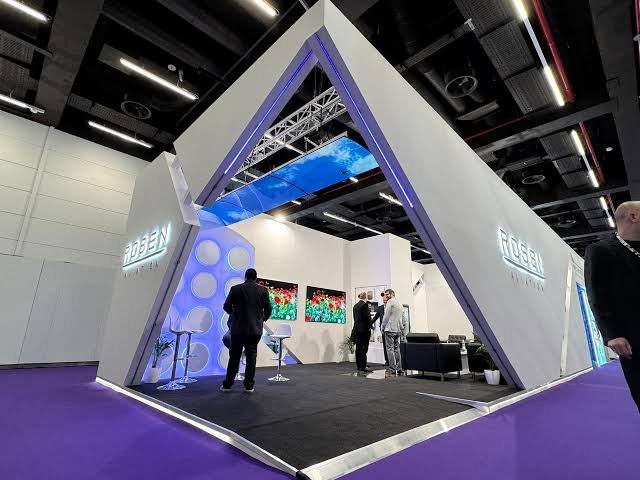
A 30×40 booth is one of the largest commitments an exhibitor can make on a US show floor. At 1,200 square feet, it is closer to a small building than a stand. It can host product theatres, meeting rooms, demo areas, hospitality and a strong brand architecture all at once.
It can also quietly drain a marketing budget.
Many exhibitors discover that the biggest recurring expense is not the floor space. It is the cost of designing, engineering and building a brand-new structure for each show, because the previous layout does not fit the new footprint, the new venue’s rules or the new campaign. Months of design work, a fresh set of drawings, new fabrication and new graphics are paid for again and again, often for a booth that looks only slightly different from last time.
This guide explains how a modular approach to 30×40 trade show booth rental can break that cycle. It covers where design costs come from, how reusable systems work, what to ask providers, and how to plan a multi-show strategy that saves money without making your presence look repetitive. Costs, rules and availability vary by show, city and supplier, so use the examples here as planning guidance, not quotes.
Why Large Booths Get Expensive Every Time
Before looking at solutions, it helps to see where repeat costs come from. For a 30X40 trade show booth, the main culprits tend to be:
- Fresh design for every show. Concept development, 3D renders, revisions and technical drawings can take weeks and carry significant fees.
- Engineering and approvals. Large structures often need engineering review, and some venues and organisers require drawings for rigging, hanging signs or double-deck elements.
- Custom fabrication. One-off structures need new materials, new labor and often new tooling.
- Graphics at scale. Large printed walls, towers and hanging signs cost far more than small-booth graphics, and they are often reprinted for each design.
- Freight and installation. Heavy, bespoke builds mean more crates, more handling and more labour.
- Dismantle and disposal. Single-use builds may be thrown away or stored at a cost.
When each show demands a new design, every one of these costs resets. A modular system aims to carry most of them forward.
What “Modular” Really Means
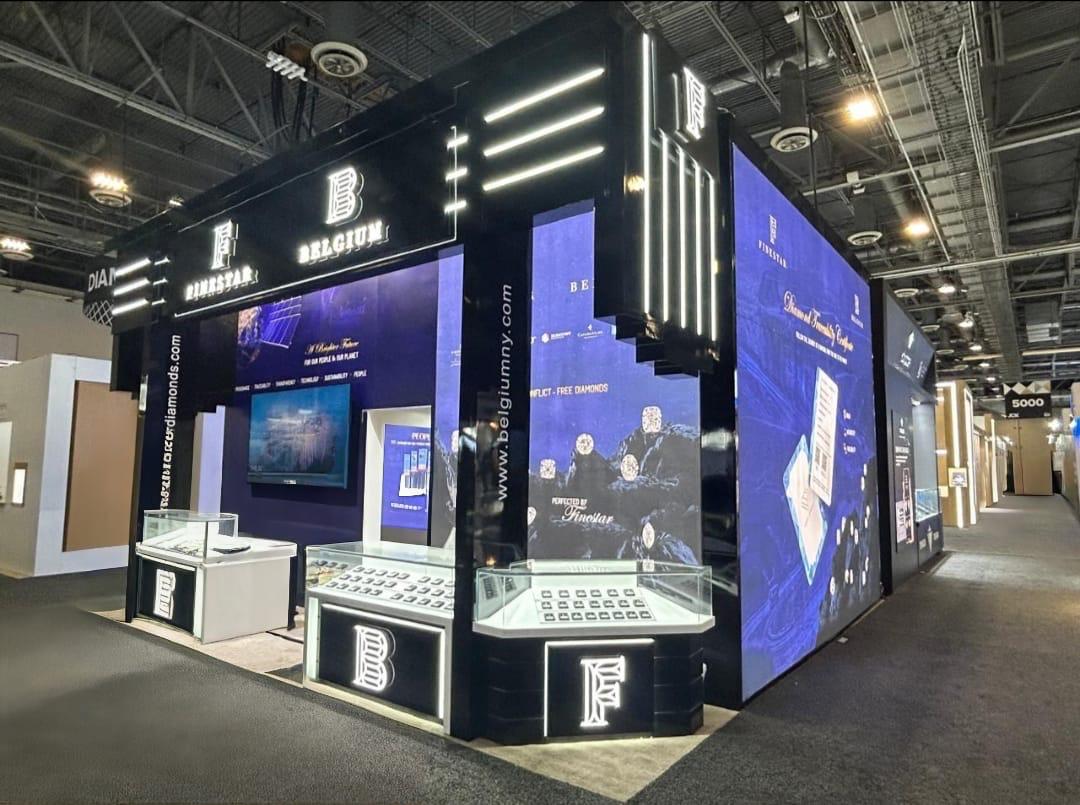
A modular display is built from standardised, interchangeable components such as frames, walls, towers, counters, floor systems, lighting and signage that can be combined in many ways. The same parts can be arranged into different layouts for different booth sizes and shapes.
In practice, that means a modular 30×40 booth design might be:
- Assembled as a full 30×40 island for a flagship show
- Reduced to a 20×30 or 20×20 for a smaller event
- Reconfigured into a different layout for a venue with different sightlines or aisle conditions
- Refreshed through new graphics while the structure stays the same
Modular does not have to mean plain. Well-planned systems can include curved walls, hanging structures, enclosed meeting rooms, tiered platforms and integrated screens, while still being reusable.
How Modular Rentals Save Money
The savings come from several places, and they compound over multiple shows.
-
Design is paid for once, then adapted
The initial design investment is spread across many uses. Later shows usually need layout adjustments and graphic updates rather than a full redesign, which lowers design hours considerably.
-
Engineering and drawings can be reused
Once a system has been engineered and approved, later configurations built from the same components often need only limited updates. This can reduce both cost and lead time, although each show and venue may still require its own approvals.
-
Fabrication costs drop
Because parts already exist, the provider does not need to build everything from scratch. Costs shift toward refurbishment, cleaning and any new elements.
-
Graphics can be partially or fully reused
Well-planned graphic systems use replaceable panels or fabric tension walls. Exhibitors may reprint only the panels that need new messaging, rather than every surface.
-
Shipping and installation become more predictable
Standardised crates, known weights and familiar assembly processes help providers estimate accurately. Experienced crews can also install a known system faster than an unfamiliar custom build.
-
Rental avoids ownership overhead
With a rental, the provider typically handles storage, repairs and refurbishment between shows, which spares you warehouse fees and maintenance responsibility.
Individually, each saving may seem modest. Over several shows they can add up to a significant portion of your large-format budget.
Rental, Purchase or Hybrid for Large Modular Systems
Modular systems can be rented, bought or combined. Which route suits you depends on how often you exhibit and how stable your brand is.
| Approach | Strengths | Watch-outs |
| Modular rental | Low upfront cost, no storage, provider maintains the system | Costs recur each show; availability and terms matter |
| Modular purchase | Lower cost per show with frequent use; full control | Capital outlay, storage, shipping and update costs |
| Hybrid | Own core elements, rent extras or expansion | Requires more coordination; ownership terms must be clear |
For exhibitors who attend one or two major shows a year, or whose booth sizes vary, 30×40 trade show booth rental with a modular system often delivers the best mix of flexibility and cost control. Those exhibiting frequently with a stable brand may find ownership or a hybrid structure more economical over time.
Designing a 30×40 System for Reuse
The best savings are designed in from the start. If you are planning a modular 30×40 booth design, consider the following principles.
- Start with the multi-show plan. List the shows, expected booth sizes and likely layouts for the next two to three years before design begins.
- Build from a core kit. Choose a base structure that works at several sizes, such as 20×20, 20×30 and 30×40, then add extension modules.
- Separate structure from graphics. Use frames and walls that accept interchangeable graphic panels or fabric.
- Standardise dimensions. Consistent module sizes make reconfiguration easier and reduce cutting or custom parts.
- Limit one-off custom elements. Reserve unique, high-cost features for areas where they matter most, such as a hero entrance or product theatre.
- Plan for hanging structures carefully. Rigging rules and costs differ across venues, so design options with and without overhead elements.
- Use lightweight materials. They reduce freight and handling costs and can speed installation.
- Integrate infrastructure. Lighting tracks, cable routes and screen mounts built into the system reduce on-site improvisation.
- Think about storage and transport. Efficient crating and logical packing reduce handling time and damage risk.
- Create variations, not new designs. Use colour, lighting, graphics and furniture to change the look between shows.
Keeping the Booth Fresh Without Starting Over
One common concern is that visitors will notice the same booth every year. With thoughtful planning, a modular system can look new while the costs stay controlled.
- Change the graphics. New campaigns, product launches and imagery can transform the feel of the space.
- Rearrange the layout. Move product zones, meeting areas and entrances to create a different visitor journey.
- Swap lighting and colour. Lighting is one of the lowest-cost ways to alter atmosphere.
- Update furniture and flooring. Different seating, counters and floor finishes change the character of a booth.
- Add a seasonal or show-specific feature. A new hero element, such as a digital wall or product display, can provide novelty without redesigning everything.
- Adjust the messaging hierarchy. Different shows may highlight different products or audiences.
These refreshes typically cost far less than a complete redesign and rebuild.
What to Ask a Provider Before You Commit
Not all modular offerings are equal. Before signing, ask clear questions and request answers in writing.
- Is the system truly reconfigurable? Ask for examples of the same components used in different layouts and booth sizes.
- What is included in the rental price? Design, structure, graphics, flooring, furniture, lighting, installation and dismantle should be itemised.
- What will I pay for at later shows? Ask which costs repeat and which, such as base design, carry forward.
- How are graphics handled? Clarify which panels can be reused and what reprints cost.
- Who owns the design files and drawings? This matters if you later want to buy, switch providers or reproduce parts of the system.
- What are the lead times for reconfiguration? Know when to start planning each show.
- How does the provider manage refurbishment and condition? Ask about inspection, repair and replacement of worn parts.
- Are there limits on how often the system can be used? Some contracts restrict the number of shows or times of year.
- What are the shipping, labor and storage arrangements? Understand who handles each and how it is billed.
- Can you provide references or examples at US venues like mine? Experience with local rules and venue conditions reduces risk.
A reliable partner will answer these questions with specifics, not general reassurance.
Hidden Costs Even Modular Rentals Can Carry
Modular systems reduce repeat costs, but they do not remove them. Watch for:
- Freight and drayage, which are usually billed per show and scale with weight
- Installation and dismantle labor, subject to venue and union rules in some cities
- Electrical, internet and rigging services ordered through the show contractors
- Graphic reprints when messaging changes substantially
- Furniture and AV hire for meeting areas and demos
- Reconfiguration fees when layouts change significantly
- Damage charges for repairs beyond normal wear
- Insurance requirements based on the display’s value
- Rush charges for late orders or short timelines
A full budget includes all of these, with a contingency for surprises.
A Sample Multi-Show Strategy
The following is a hypothetical illustration of how a modular approach might be applied across a year. It is not a quote, and real costs will differ.
- Show 1: Flagship national show, 30×40 island. Full modular build with a central product theatre, two meeting rooms and a hanging sign. Most of the design investment occurs here.
- Show 2: Regional show, 20×30. The same system is reconfigured into a smaller footprint, dropping the hanging sign and one meeting room. Design work is limited to layout adjustments and graphic updates.
- Show 3: Industry conference, 20×20. A compact configuration highlights a single product line with a refreshed graphic set.
- Show 4: Return to a 30×40. The system is rebuilt in a new layout, with a new hero feature and updated graphics.
In this pattern, the structure and engineering carry across all four shows, while each appearance looks distinct through layout and graphics. Compared with commissioning four separate custom builds, the savings in design, engineering and fabrication can be substantial, although the precise figure depends on your providers and requirements.
A Cost-Saving Checklist for US Exhibitors
- Map your show calendar and booth sizes for the next 24 to 36 months
- Choose a modular system that scales across those sizes
- Request itemised quotes that separate one-time and recurring costs
- Negotiate multi-show agreements or rate commitments where possible
- Order show services before advance deadlines
- Reuse graphic frameworks and update only what is needed
- Choose lightweight, efficiently crated components
- Keep design files and documentation organised
- Review each show’s cost and results to refine the next plan
- Reserve a contingency, often 10 to 15 percent, for unexpected charges
Common Mistakes to Avoid
- Designing for one show only and discovering the layout cannot adapt later
- Over-customising with features that cannot be reused or scaled down
- Ignoring venue rules, such as height limits, rigging regulations and sightline requirements, which vary between shows
- Assuming all costs carry forward, when freight, labor and services recur
- Skipping contract detail on ownership, usage limits and refurbishment
- Leaving graphics until the last minute, which can lead to rush fees
- Not reviewing results, making it hard to judge whether the size and investment are justified
Frequently Asked Questions
Is a modular 30×40 cheaper than a custom build? Often, especially over multiple shows, because design, engineering and fabrication costs are shared across uses. For a single show with a highly specific concept, a custom build may be competitive.
Can a modular system still look premium? Yes. Quality depends on materials, finishes, lighting and design, not on whether the structure is modular. Many large exhibitors use modular architecture for high-end spaces.
How many shows does it take to see savings? There is no fixed number. Savings usually become clearer from the second or third use, as the initial design cost is spread over more shows.
Can I use the same system at smaller booth sizes? Many modular systems are designed for this. Ask your provider to show how the components scale to 20×20, 20×30 and other footprints.
What about hanging signs and rigging? These are usually subject to venue and organiser rules and are ordered separately. A well-planned system includes both hanging and non-hanging options.
Who owns the design if I rent? That depends on the contract. Clarify ownership and licence terms in writing before signing.
How early should I start planning? For large booths, many exhibitors begin six to nine months ahead, and earlier for complex or multi-show strategies.
Final Thoughts
A 30X40 trade show booth is too large an investment to redesign from scratch at every show. Exhibitors who treat the booth as a reusable platform, rather than a one-time project, can redirect money from repeated design and fabrication into the things that generate results: staffing, pre-show marketing, product demonstrations and lead follow-up.
A modular approach to 30×40 trade show booth rental is not about looking the same at every show. It is about keeping the structural and engineering work constant while letting graphics, layout, lighting and features change. With clear contracts, a realistic multi-show plan and a provider who understands US venues, 30×40 trade show displays can deliver a fresh presence at each event without a fresh bill for a new design.