Landscape design colleyville tx is a phrase a lot of local homeowners end up searching for the hard way usually after a DIY planting project has already failed once. Drive through Colleyville long enough and you’ll notice something: the yards that actually hold up year after year usually weren’t planted on a whim. They were planned around the dirt underneath them, not just the plants on top. That distinction matters more here than almost anywhere else in North Texas, because between the clay soil, the wild swings in rainfall, and summers that just don’t quit, a yard that looks great in April can be falling apart by August.
This isn’t a generic “top 10 landscaping tips” list. It’s what the crew at Buzzcutters Landscaping actually sees on Colleyville properties week after week — what works, what fails, and why.
The Clay Soil Problem Nobody Warns You About
Most of Colleyville sits on expansive clay part of the blackland belt that stretches across a good chunk of North Central Texas. This stuff swells up like a sponge when it rains and then shrinks and cracks when it dries out. Not exactly a stable foundation for a garden bed, and it’s honestly not great for your house’s actual foundation either.
Clay soil drainage is usually the hidden culprit behind those soggy spots that never seem to dry near the house, or the standing water that shows up two days after a storm. Water just doesn’t move through clay the way it moves through sandy or loamy soil it sits there. Over time, that trapped moisture creeps toward the foundation and contributes to the slab movement so many older North Texas homes deal with.
A landscape design colleyville tx plan that’s actually worth the money accounts for this before anything gets planted. That means grading the yard so water has somewhere to go, adding French drains or a dry creek bed in the low spots, and picking plants that can survive both a gully-washer in May and three weeks without rain in July. Skip this part and you’ll be redoing the same flower bed in eighteen months the team at Buzzcutters Landscaping has seen it happen more times than they can count.
Why Soil Testing Should Come First
Before anything goes in the ground, it’s worth actually knowing what’s in that ground. A basic soil test tells you the pH, how compacted things are, and where the nutrients are lacking. Colleyville soil tends to run alkaline, and that alone rules out a lot of the plants people try to grow here without checking first. Most of the time when someone says “I have a black thumb,” what they really have is soil they never tested.
Designing for North Texas Weather Extremes
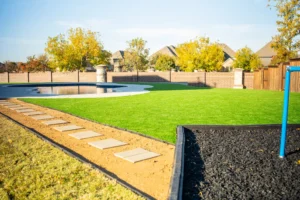
North Texas weather doesn’t really do “mild.” Summers sit above 100 degrees for weeks straight, and then winter throws a hard freeze at you with barely any warning. A yard designed without that in mind might look good for one season and then fall apart the next which is exactly why landscape design colleyville tx projects have to plan for extremes, not averages.
Drought-tolerant landscaping isn’t really optional anymore it’s just practical. Texas sage, yaupon holly, Mexican feather grass, these are staples in well-planned Colleyville yards for a reason: they shrug off the heat and don’t fall apart if you miss a watering. Pair that with a properly zoned irrigation system instead of dragging a hose around or running one sprinkler setting for the whole yard, and you cut water waste by a lot. That matters for your water bill, sure, but it also matters when the city puts watering restrictions in place during the worst of summer, which happens more often than people expect.
Balancing Shade and Sun Exposure
A lot of Colleyville properties have full-sun front yards and shady backyards, thanks to all the mature oaks and pecans around here. One planting plan for the whole property almost never works. Put a sun loving perennial under a shaded patio and it sulks. Put a shade groundcover like liriope or ferns in a west-facing bed with no cover, and it’s toast by July. Walking the property and actually tracking where the sun hits and when before buying a single plant saves a lot of wasted money.
What Good Landscape Design Actually Involves
Landscaping and landscape design aren’t the same thing, even though people use the words interchangeably. Landscaping is the physical labor — mowing, mulching, planting. Design is the thinking that happens before any of that, the part that decides whether the finished yard actually works together or just looks like a bunch of separate projects stitched next to each other.
A real landscape design colleyville tx process usually covers:
- A site assessment drainage, sun exposure, soil, and whatever’s already there (patio, fence, pool)
- Zoning the yard by function entertaining space, play space, garden beds, the utility stuff nobody wants to look at
- Plant choices that actually fit the climate zone Colleyville is Zone 8a, which narrows the list of what survives our winters
- Hardscaping that works with the slope of the land instead of against it
- A maintenance plan that’s realistic, not just what looked good on the initial sketch
Skip the design step and jump straight to planting, and you’ll likely be redoing sections of the yard within a few years — usually because nobody thought about drainage, or how big that shrub gets in five years, or how the space actually gets used day to day.
Hardscaping That Solves Drainage Problems
Retaining walls, dry-stacked stone edging, permeable paver patios around here these aren’t just for looks. They’re doing real work. A retaining wall on a sloped lot can redirect runoff away from the foundation. Permeable pavers let water filter through instead of pooling on top. When clay soil is already fighting you on drainage, these hardscape decisions carry more weight than they would in, say, a sandy-soil market.
Native and Adapted Plants Worth Considering
Sticking with plants native to Texas, or at least well-adapted to North Texas, cuts down on both water use and future maintenance headaches. A few that consistently do well here:
- Texas Sage (Cenizo) — tough as nails, blooms right after a rain
- Yaupon Holly — evergreen, handles clay soil fine, makes a solid privacy screen
- Black-Eyed Susan — full sun, doesn’t mind poor soil
- Bur Oak — a shade tree that actually tolerates our alkaline clay
- Turk’s Cap — fine in partial shade, keeps blooming right through the worst of summer heat
The Texas A&M AgriLife Extension has pointed out that matching plants to regional soil and climate conditions makes a real difference in how long a landscape lasts before needing replacement.
Planning a Design That Lasts
Every successful landscape design colleyville tx project shares one thing: it was planned around what the land actually does, not around a photo from a magazine. Clay soil behavior, rainfall swings, tree shade, watering restrictions all of it gets factored in before a single plant gets purchased.
Most homeowners start small. A redesigned front bed, maybe a new patio. Then once they see how it holds up through a full year of Texas weather, they come back ready to do the rest of the property. This is usually where Buzzcutters Landscaping gets the call homeowners who tried the smaller project themselves, liked the result, and want the rest of the yard planned properly.
Key Takeaways
A yard that actually lasts in Colleyville needs more than curb appeal on day one. It needs a plan built around clay soil drainage, plants that can handle real heat, and hardscaping that manages water instead of fighting it. Skipping the planning step is the number one reason yards need expensive rework a couple years in.
If you’re ready to stop guessing and get a plan built for what your property actually needs, Buzzcutters Landscaping offers straightforward, no-pressure estimates for homeowners across Colleyville. A quick conversation can tell you what’s realistic, what it’ll run you, and how long it’ll take before the next round of Texas weather has a chance to test it.