Introduction
Unexpected disruptions such as cyberattacks, natural disasters, equipment failures, and supply chain problems can affect business operations. Organizations need effective strategies to prepare for these challenges and maintain essential services. The ISO 22301 Lead Auditor Course helps professionals develop the knowledge and skills required to audit Business Continuity Management Systems (BCMS) and evaluate an organization’s readiness to manage disruptions.
ISO 22301 is an international standard that specifies requirements for a Business Continuity Management System. Lead auditor training is suitable for professionals who want to understand auditing principles, assess business continuity arrangements, and support organizations in improving resilience.
What Is an ISO 22301 Lead Auditor Course?
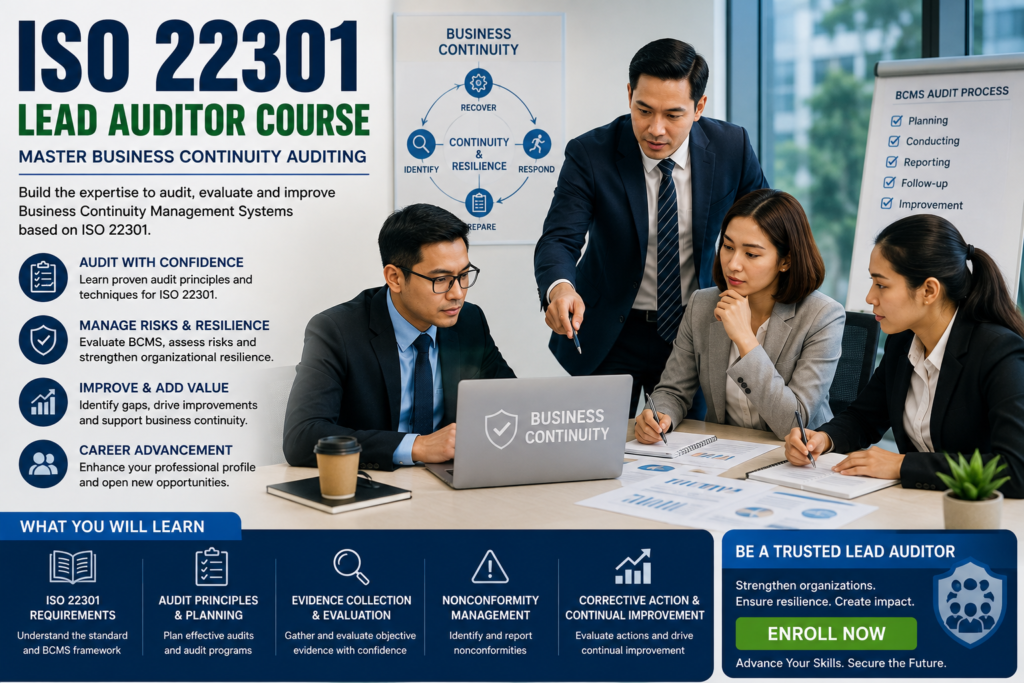
An ISO 22301 Lead Auditor Course provides comprehensive training on the standard’s requirements and the auditing process. Participants learn how to plan, conduct, report, and follow up on management system audits.
The course typically covers audit principles, risk assessment, business impact analysis, business continuity strategies, emergency response arrangements, and continual improvement. It also introduces participants to audit evidence collection, interview techniques, nonconformity reporting, and corrective action verification.
Practical exercises and case studies help learners apply their knowledge to realistic business continuity scenarios.
Who Should Attend ISO 22301 Lead Auditor Training?
This course is suitable for professionals responsible for business continuity, risk management, auditing, and organizational resilience. Participants may include:
- Business continuity managers and coordinators
- Internal and external auditors
- Risk management professionals
- Quality and compliance managers
- Information security professionals
- Consultants and management system specialists
- Emergency preparedness and disaster recovery professionals
Prior knowledge of ISO 22301 or management systems can be helpful, although entry requirements vary by training provider and certification scheme.
Key Topics Covered in the Course
1. Understanding ISO 22301 Requirements
Participants learn about the structure and requirements of a BCMS, including organizational context, leadership, planning, support, operational controls, performance evaluation, and improvement.
2. Business Impact Analysis and Risk Assessment
The course explains how organizations identify critical activities, assess the consequences of disruption, and evaluate risks that may affect business continuity. These activities help determine recovery priorities and appropriate continuity arrangements.
3. Audit Planning and Preparation
Learners discover how to establish audit objectives, define scope and criteria, prepare audit plans, review documentation, and allocate responsibilities within an audit team.
4. Conducting the Audit
Participants develop skills in interviewing personnel, examining records, observing processes, gathering objective evidence, and evaluating whether the BCMS meets applicable requirements.
5. Audit Reporting and Corrective Actions
The training explains how to document audit findings, report nonconformities, communicate conclusions, and verify whether corrective actions adequately address identified problems.
Benefits of ISO 22301 Lead Auditor Certification
Completing suitable lead auditor training can support professional development in business continuity and management system auditing. Participants can improve their auditing knowledge, understand continuity risks, and help organizations identify weaknesses in their preparedness arrangements.
The course may also support career opportunities in auditing, consulting, risk management, and business continuity planning. However, completing a course does not automatically authorize someone to conduct third-party certification audits. Additional experience, assessments, and scheme-specific requirements may apply.
Organizations can also benefit when trained professionals conduct effective internal audits, evaluate continuity procedures, and identify opportunities to strengthen resilience.
How to Choose the Right Training Provider
Before enrolling, compare the course syllabus, trainer qualifications, practical exercises, assessment methods, duration, and fees. Check whether the training is delivered online, in a classroom, or through an in-house programme.
If you need a recognized lead auditor qualification, verify the provider’s accreditation or approval status and confirm whether the course meets the requirements of your intended certification scheme.
Conclusion
The ISO 22301 Lead Auditor Course helps professionals develop essential skills for evaluating Business Continuity Management Systems and identifying opportunities for improvement. By learning audit planning, evidence collection, reporting, and corrective action verification, participants can contribute to stronger business continuity practices. Choosing appropriate training and applying the knowledge gained can help professionals support organizational resilience and preparedness for unexpected disruptions.