Security scanning equipment must inspect baggage, parcels, cargo, and vehicles without slowing essential movement. Airports, border checkpoints, and transport hubs need imaging systems that balance detection, throughput, safety, and dependable operation. The source is central because it determines how X-rays are generated and delivered.
For developers comparing compact high voltage X ray source makers, understanding integrated design can help shape practical systems for demanding inspection environments across varied security environments.
Understanding Compact X-Ray Sources
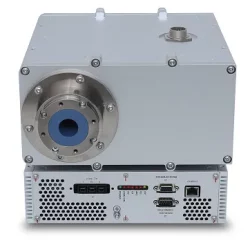
An X-ray source produces radiation that passes through an object and reaches a detector. Differences in how materials absorb the radiation create an image that trained operators or automated software can assess. A compact integrated source brings several components together, commonly including the X-ray tube, high-voltage power supply, and control electronics. Some designs also incorporate shielding and thermal management features.
Combining these elements can reduce separate modules and simplify electrical and mechanical arrangements. Engineers can plan around a consolidated source with defined mounting, power, and interface requirements.
Making Better Use of Space
Security equipment varies in configuration, but every design must allocate space for the source, detector, object handling system, shielding, controls and service access.
A smaller source gives designers more freedom when arranging components. It may reduce enclosure dimensions, improve equipment layout, or leave room for imaging and control hardware. In portable systems, compact construction can also help manage weight and transport requirements. The benefit is using available space efficiently without compromising the scanner’s engineering needs.
Simplifying OEM Integration
Original Equipment Manufacturers need components that can be incorporated into a larger product with predictable interfaces and performance. When the tube, high-voltage supply, and control electronics are integrated, fewer individual assemblies may need to be sourced, positioned, and connected. This can reduce design complexity and make installation planning more straightforward.
Developers must confirm electrical input, output voltage and current, communication, mounting, cooling and duty cycle. They also need to assess compatibility with the detector, image-processing software, and safety interlocks. Early coordination can identify interface issues before costly prototype changes.
Supporting Different Security Applications
Baggage and Parcel Inspection
Baggage and parcel scanners examine items moving through airports, postal centers, logistics facilities, and public venues. Their source must provide suitable output for the materials and object sizes being inspected. A compact integrated unit can help manufacturers build scanning equipment around the required conveyor width, detector arrangement, and available installation space. Consistent operation is important because image quality must remain useful across repeated scans and busy periods.
Cargo and Vehicle Scanning
Cargo and vehicle inspection often involves larger or denser objects than ordinary baggage screening. These systems may require higher penetration, multiple viewing angles, or computed tomography arrangements, depending on the application. Source selection must therefore consider voltage, power, cooling, and the imaging architecture rather than size alone. Compact construction can support practical subsystem placement, but the complete design must still meet the penetration and coverage requirements established for the inspection task.
Portable and Mobile Inspection
Portable security inspection equipment is used in locations where fixed screening infrastructure may not be practical. Examples include border operations, explosive ordnance disposal activities, and inspections at temporary security sites. A compact source can contribute to manageable equipment dimensions and easier deployment. Designers must also consider ruggedness, power availability, thermal behavior, radiation shielding, and safe operating procedures in the intended field environment.
People Screening and Backscatter Systems
People screening and mobile backscatter systems use different imaging arrangements and must be designed around their specific operational and safety requirements. In backscatter inspection, the source and detector are positioned on the same side of the object, while other systems use transmission imaging. Beam characteristics and shielding must match the method. Developers should assess the screening context, regulations, and privacy safeguards before finalizing a design.
Why Output Stability Matters
A compact enclosure is valuable only when the source also delivers performance suited to the application. Variations in output can affect image consistency and complicate image interpretation. Stable high-voltage operation helps maintain repeatable exposure conditions, while appropriate control electronics allow the system to manage operating parameters.
Review source specifications alongside detector sensitivity, scan speed, object density, and image targets. Understand continuous and peak power ratings, warm-up requirements, and duty-cycle limits to determine whether the source can support expected inspection volumes.
Managing Heat and Radiation Safety
High-voltage X-ray equipment generates heat and requires engineered thermal management. Cooling must suit source output, enclosure design, and operating cycle. Integrated products may include cooling features, but designers must provide the airflow, water connections or clearances specified by the manufacturer.
Radiation protection is equally important. Shielding, interlocks, warning indicators, access controls, and installation procedures must be considered as part of the complete scanner. A source with local shielding may simplify some aspects of equipment design, but it does not remove the need for a full radiation safety assessment. System manufacturers must verify compliance with applicable standards and regulations in every market where the equipment will operate.
Choosing a Source for a Specific Design
Selection should begin with the inspection task, not a preferred product size. Define the objects to be scanned, material density, required penetration, throughput, image resolution, and operating environment. Then compare voltage and power ranges, focal spot, beam geometry, cooling method, shielding, dimensions, weight, and control interfaces.
Review service access, maintenance, documentation, and technical support. Confirm mounting, connections, controls and customization options. Prototype testing with representative objects can show whether the source, detector and software meet detection goals. A balanced evaluation helps prevent oversizing, underperformance, and redesign.
Conclusion
Compact X-ray sources play an important role in developing efficient security scanning equipment. Their integrated construction, stable output, thermal management, and flexible installation support baggage, cargo, vehicle, and portable inspection systems. Careful source selection helps manufacturers balance imaging performance, equipment dimensions, and radiation safety. Working with experienced compact high voltage X ray source makers supports reliable integration and application-specific security scanning designs.
Designed to support equipment manufacturers with advanced engineering and reliable component integration, VJ X-Ray develops integrated X-ray sources and high-voltage generators for security, industrial, medical, electronics, and analytical applications. Their IXS range combines the X-ray tube, high-voltage supply, and control electronics in compact assemblies, while HVL/HVG generators offer varied voltage and current outputs. Explore VJ X-Ray OEM solutions for application-focused integration, customization, and dependable component performance across demanding security system designs.