Modern products are expected to work smoothly, safely, and reliably from the first use. Behind many successful products is a carefully planned process that turns an initial idea into a practical working system. Every component must be designed with attention to its function, performance, durability, and compatibility with other parts. A reliable mechanism development design service can support this process by exploring movement, force, materials, and operating conditions before a design moves into production. Through careful planning, engineering analysis, and design improvements, businesses can develop mechanisms that meet functional requirements, reduce potential issues, and deliver consistent performance in real-world applications.
Turning an Idea into a Working Mechanism
A mechanism is a group of connected parts designed to create or control movement. Developing one requires more than drawing individual components. Designers must understand how the parts interact and what the complete system needs to achieve.
The early stage usually begins with a discussion about the product and its purpose. The team identifies the problem, intended users, working environment, and expected performance. This information becomes the foundation for design decisions.
Important questions include:
- What movement or action should the mechanism perform?
- How much load, pressure, or force will it experience?
- How often will it be used, and under what conditions?
- Are there limits on size, weight, cost, or available materials?
- What safety requirements and maintenance needs should be considered?
Clear answers help prevent avoidable changes later. They also give engineers measurable goals against which different concepts can be assessed.
Why Detailed Development Matters
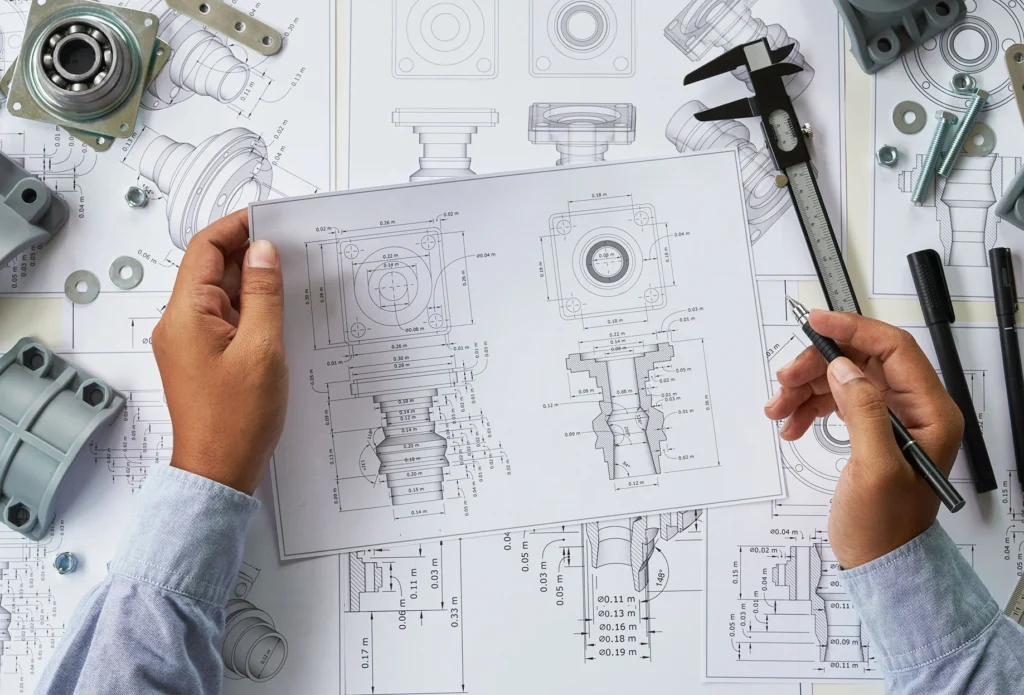
A mechanism may look effective on paper but fail when real forces, friction, wear, or user behaviour are considered. Detailed development helps uncover these issues before they become expensive manufacturing problems. Engineers study the motion path, identify possible interference between components, and consider how tolerances affect assembly. A structured mechanism development design service can bring these activities together, from initial concepts to refined engineering details. The work may include sketches, computer-aided design models, motion studies, material selection, and design reviews.
Common areas of evaluation include:
- Movement: Checking that parts travel through the required range without obstruction.
- Strength: Reviewing whether components can withstand expected loads.
- Durability: Considering repeated use, friction, fatigue, and wear.
- Usability: Making sure the mechanism is comfortable and straightforward to operate.
- Manufacturing: Selecting forms and tolerances that can be produced consistently.
Considering these factors together creates a more complete design.
The Role of Prototypes in Product Design
Once a concept has been developed, it is useful to see how it behaves outside a computer model. A physical or digital prototype gives the project team a way to examine the design, test assumptions, and gather feedback. It can reveal issues that are difficult to predict through drawings alone, including awkward handling, unexpected vibration, poor access, or interference between moving parts. A well-planned prototype design service helps translate design intent into a model that can be evaluated. The prototype may represent the full product or focus on one important feature.
Prototype testing can help teams:
- Confirm whether the concept performs its intended function.
- Check dimensions, fit, clearances, and assembly steps.
- Compare different materials or component arrangements.
- Gather feedback from users and technical reviewers.
- Identify design changes before tooling or mass production begins.
The right prototype depends on the questions a team needs to answer. A visual model may be enough to review appearance and proportions, while a functional prototype is more suitable for testing movement, strength, or operation.
From Testing to Design Improvement
Prototyping is not simply a final demonstration. It is part of an ongoing learning process. After testing, the team records what worked, what did not, and what needs to change. Engineers can then update the model, adjust dimensions, choose different components, or revise the mechanism itself.
Testing should follow objectives. If the main concern is load capacity, the team should define the expected load and observe how the prototype responds. If ease of use is important, reviewers can assess the effort needed to operate the product and note any confusing steps.
A practical development cycle often follows these steps:
- Define the product requirements and performance targets.
- Explore concepts and select a suitable mechanism.
- Create detailed models and review component interactions.
- Build a prototype that addresses the key design questions.
- Test, document findings, and make improvements.
- Prepare the refined design for manufacturing review.
Repeating this cycle where necessary can improve reliability and reduce the risk of costly late-stage changes.
Choosing the Right Design Support
Every project has different technical needs. Some require a simple mechanism refinement, while others involve several linked assemblies, compact spaces, or demanding operating conditions. Before selecting a design partner, businesses should understand the scope of support available and how the work will be managed.
Useful points to discuss include:
- Relevant experience with similar products or mechanisms.
- The design tools and engineering methods used.
- How requirements, revisions, and project milestones are documented.
- Whether prototype planning and testing are included.
- How manufacturing considerations are addressed during development.
Communication is just as important as technical capability. A design process gives clients opportunities to review progress, ask questions, and make informed decisions. It should also make assumptions and limitations clear rather than leaving important details unresolved.
Conclusion
Good engineering connects creativity with practical execution. When mechanisms are developed carefully and prototypes are tested against objectives, teams gain a better understanding of how a product will perform. This can support safer operation, easier assembly, improved durability, and more confident manufacturing decisions. A considered prototype design service can also help organisations communicate an idea to stakeholders, investors, suppliers, or users. Even when a prototype is not production-ready, it can provide valuable evidence for the next stage of development.
The goal is not to create complexity for its own sake. It is to develop a solution that performs its intended function, fits its environment, and can be manufactured and maintained in a practical way. Early collaboration between designers, engineers, and production teams helps keep these priorities aligned. Studio 701 can be presented as a design partner for businesses looking to move from early concepts toward considered product solutions. Its approach can be highlighted around creative thinking, practical design development, and support that reflects each project’s requirements.