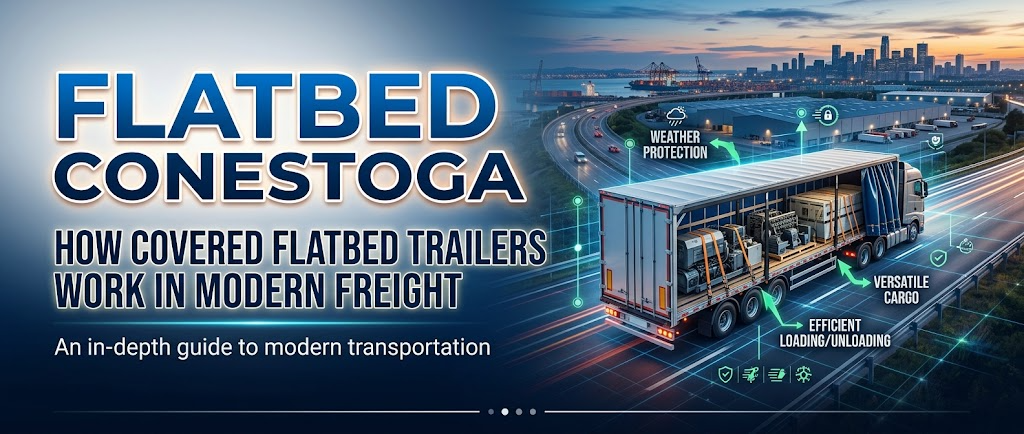
Moving oversized, weather-sensitive, or difficult-to-load freight requires more than choosing a standard trailer. A flatbed conestoga combines the accessibility of a flatbed trailer with a sliding, retractable covering system that helps protect cargo from weather and road conditions. This design has become useful for shippers transporting building materials, machinery, steel products, manufactured components, and other freight that may not fit conveniently inside an enclosed trailer.
Unlike a conventional dry van, a Conestoga can usually be loaded from the side, rear, or top when the curtain system is opened. That flexibility can reduce handling challenges while still providing a level of cargo protection that an uncovered flatbed cannot offer.
For U.S. freight operations, understanding how these trailers work can help shippers, carriers, and logistics professionals determine when this equipment is appropriate.
What Is a Conestoga Truck?
A Conestoga truck is a tractor-trailer equipped with a specialized sliding tarp or curtain system mounted over a flatbed-style trailer. The covering can generally be moved along rails, allowing the trailer to be opened for loading and then closed to protect the freight.
The concept addresses a common problem in flatbed transportation. Traditional flatbeds provide excellent loading flexibility, but the cargo is exposed to rain, snow, dust, and other environmental conditions. Tarps can provide protection, but securing them manually can require considerable time and labor.
A Conestoga system combines these two approaches. When the trailer is open, crews have access to the cargo from multiple directions. Once loading is complete, the cover can be positioned over the freight without requiring the same manual tarping process used on conventional flatbeds.
This makes the equipment particularly useful for freight that needs protection but cannot easily be loaded through the rear doors of a standard enclosed trailer.
How a Flatbed Conestoga Differs From a Traditional Flatbed
The primary difference between a conventional flatbed and a Conestoga flatbed is the covering mechanism.
A standard flatbed has an open deck with no permanent roof or side walls. Cargo is normally secured using equipment such as chains, straps, binders, edge protectors, and tarps when weather protection is necessary.
A Conestoga flatbed, by comparison, has a retractable covering system. The cover moves along a rail structure and can be opened or closed depending on the loading requirements.
Consider a manufacturer shipping finished metal components. The pieces may need to be loaded from the side using a forklift or crane. A dry van could make that process difficult because of its enclosed structure. A traditional flatbed would provide the necessary access but leave the cargo exposed during transportation.
A Conestoga offers a middle ground. The manufacturer can load the freight using the available access points, secure it appropriately, and then close the covering system before the truck leaves the facility.
There are also operational differences. A Conestoga trailer can require more attention to its specialized equipment, including the rails, rollers, frame, and curtain. Carriers must ensure that the system is functioning properly and that the freight remains securely restrained underneath the cover.
When Conestoga Trucking Makes Sense
Not every shipment requires a specialized trailer. Conestoga trucking is generally most useful when freight has characteristics that make both weather protection and flexible loading important.
Common examples include:
- Steel and metal products
- Construction materials
- Industrial machinery
- Manufacturing components
- Aluminum products
- Lumber and building supplies
- Large fabricated parts
- Equipment that requires side or top loading
Imagine a machine shop shipping a large fabricated component to another state. The item may be too large or awkward for a conventional enclosed trailer, while leaving it completely exposed on a flatbed could create unnecessary weather concerns. A Conestoga can provide access for loading equipment while allowing the shipment to remain covered during transit.
Another consideration is the condition of the freight at delivery. Some materials may not be highly fragile but still need to remain dry and clean. In those situations, a covered flatbed can reduce exposure to rain, road spray, dust, and debris.
However, a Conestoga is not automatically the right solution for every oversized shipment. Cargo dimensions, weight, loading equipment, route restrictions, and trailer availability all need to be considered before selecting equipment.
What to Consider When Choosing Conestoga Trucking Companies
Shippers comparing conestoga trucking companies should look beyond whether a carrier simply has access to the equipment. The details of the shipment should match the carrier’s capabilities and operating practices.
Cargo dimensions are an important starting point. The shipper should know the freight’s length, width, height, and weight before requesting equipment. Unusual dimensions can affect whether the shipment can be covered while maintaining proper clearance.
Loading requirements matter as well. Some facilities use overhead cranes, forklifts, loading docks, or specialized equipment. The carrier and shipper should establish how the freight will be loaded before the truck arrives.
Securement is another important consideration. A retractable cover protects freight from the elements, but it does not replace proper cargo securement. Chains, straps, blocking, bracing, and other appropriate methods may still be required depending on the cargo.
Route planning can also influence equipment selection. A shipment traveling across several states may encounter different weather conditions, road restrictions, construction zones, and delivery requirements. Experienced logistics teams generally account for these factors before dispatching equipment.
For example, EverMark Dispatchers may encounter a shipment where the shipper needs flatbed-style access but wants additional weather protection. In that situation, identifying the cargo’s loading method and dimensions first can help determine whether a Conestoga is suitable rather than assuming every flatbed shipment needs the same equipment.
Flatbed Conestoga and Cargo Protection
One of the biggest practical advantages of a Conestoga is the ability to combine open loading access with a protective covering.
Traditional tarping can be physically demanding. Large tarps may weigh significantly more than they appear to, and positioning them over irregular freight can require careful handling. Wind can make the process more difficult, while improperly secured tarps can create safety and cargo-protection concerns.
A Conestoga’s mechanical covering system reduces some of this manual work. The curtain can generally be moved into position along the trailer, creating a covered space around the cargo.
That does not mean the freight is automatically protected from every risk. Water resistance, curtain condition, loading configuration, and the type of cargo all matter. The system should be inspected, and the freight should still be secured according to applicable requirements.
For weather-sensitive cargo, the distinction between “covered” and “fully enclosed” is also important. A Conestoga is not the same as a sealed dry van. Its design provides weather protection while retaining many of the loading advantages associated with an open trailer.
The Role of Conestoga Equipment in U.S. Freight
The U.S. freight market includes a wide variety of cargo that does not fit neatly into the traditional dry van or standard flatbed categories. Specialized equipment exists because different commodities have different transportation requirements.
A flatbed Conestoga can be particularly useful when a shipment needs open-deck loading flexibility but also benefits from protection during transit. It can reduce the need for manual tarping in certain situations while maintaining access for loading equipment.
For shippers, the most important step is matching the trailer to the actual characteristics of the freight. Weight, dimensions, loading method, weather sensitivity, securement requirements, route, and delivery conditions should all be considered together.
Conclusion
Conestoga trucking provides a practical transportation option for freight that needs the accessibility of a flatbed and the added protection of a retractable covering system. The equipment can be useful for industrial materials, machinery, construction products, and other loads that are difficult to handle with conventional enclosed trailers.
Understanding the difference between a standard flatbed, a covered trailer, and a flatbed conestoga helps shippers make more informed equipment decisions. The right choice ultimately depends on the cargo, loading process, route, and protection requirements rather than the trailer name alone.
As specialized freight continues to move across the United States, Conestoga equipment remains one of the options available for balancing loading flexibility with practical cargo protection.