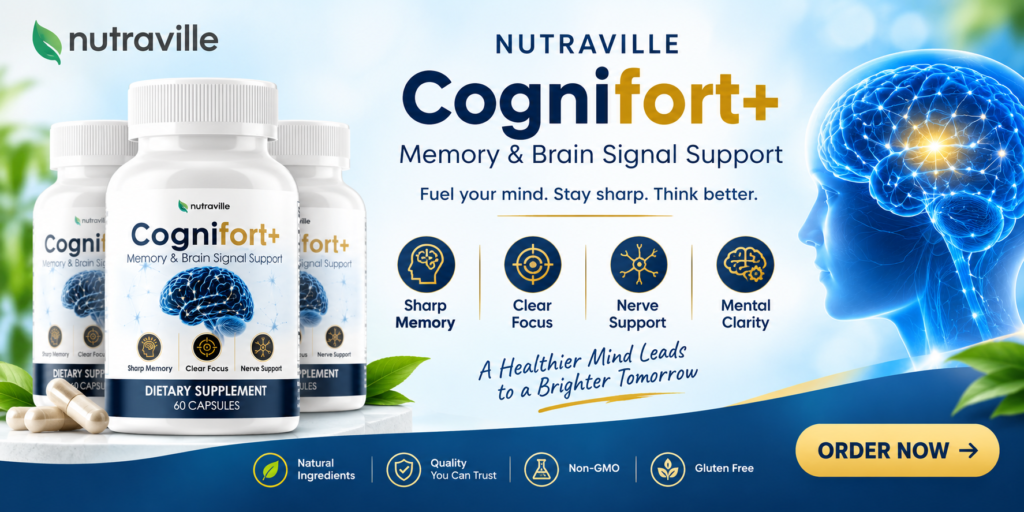
CogniFort+
In today’s busy world, staying focused, remembering important details, and keeping your mind clear can sometimes feel challenging. Between work, family responsibilities, and constant digital distractions, it’s easy to feel mentally tired by the end of the day. That’s why many people are paying more attention to brain wellness and the daily habits that support it.
CogniFort+ is a dietary supplement marketed for cognitive wellness, with a focus on memory, concentration, and mental clarity. Its formula features botanical ingredients that have attracted interest in brain health research. However, everyone’s experience is different, and no supplement can replace proper sleep, balanced nutrition, or a healthy lifestyle. In this article, we’ll take a closer look at CogniFort+, explore its ingredients, discuss potential benefits, and explain what to consider before adding it to your daily routine.
Why Brain Wellness Matters in Everyday Life
Think about a typical weekday. You wake up, check your phone, prepare for work, respond to messages, remember appointments, and try to finish several tasks before the day ends. Even before lunchtime, your mind may have processed hundreds of small decisions. By evening, concentrating on one simple activity can feel surprisingly difficult.
This experience is familiar to many adults. Modern life demands constant attention, quick decisions, and the ability to switch between different responsibilities. Students need to absorb new information, professionals must manage deadlines, and parents often balance work with family commitments. Retirees, meanwhile, may want to stay mentally active and continue enjoying their favorite hobbies.
Brain wellness plays an important role in all these activities. Memory helps us retain information and recognize familiar experiences. Attention allows us to focus on what matters, while learning helps us adapt when circumstances change. Mental clarity makes it easier to organize thoughts and approach everyday challenges with confidence.
However, cognitive performance is influenced by more than age or natural ability. Sleep, nutrition, physical activity, stress, social interaction, and general health can all affect how we feel and think throughout the day.
For this reason, people are increasingly interested in practical ways to support their cognitive well-being. Alongside healthy routines, some adults explore nutritional supplements formulated for memory, focus, and mental clarity.
CogniFort+ is one product marketed in the brain wellness category. Its botanical formula is designed to complement everyday cognitive wellness goals. Understanding what the supplement contains, how its ingredients are researched, and what realistic expectations look like can help consumers decide whether it deserves a place in their personal wellness routine.
What Is CogniFort+?
CogniFort+ is a dietary supplement marketed for cognitive wellness, with an emphasis on memory support, concentration, focus, and mental clarity. It is intended for adults interested in maintaining an active mind while managing the demands of everyday life.
The product’s advertised formula features five botanical ingredients: Bacopa monnieri, Lion’s Mane mushroom, Ginkgo biloba, Rhodiola rosea, and Panax ginseng. These plants have different traditional backgrounds and have been investigated for various aspects of human health.
Rather than treating cognitive wellness as a single process, this combination reflects interest in several related areas, including memory, attention, stress resilience, and normal cognitive function.
That said, it is important to distinguish between research on individual ingredients and clinical evidence about a finished supplement. A botanical may show promising results in a particular study without producing the same outcome when combined with other ingredients. Extract quality, dosage, study duration, and individual health characteristics can all influence the findings.
Anyone considering CogniFort+ should check the current product label for ingredient quantities, recommended use, warnings, and other relevant details. Marketing statements alone cannot establish that the supplement will improve memory or concentration for a particular person.
A thoughtful approach begins with understanding the product’s intended role: nutritional support that may complement healthy habits, rather than a replacement for them.
Understanding Memory, Focus, and Mental Clarity
These three terms often appear together in brain wellness discussions, but they describe different abilities.
Memory and Recall
Memory allows people to retain information, learn from experience, and recognize details from the past. It is involved in everyday activities such as remembering a shopping list, following instructions, learning a new skill, or recalling the name of someone you recently met.
Memory is not a single ability. Different processes help us register new information, store it, and retrieve it when needed. Attention also matters because information that receives little attention in the first place may be harder to remember later.
Occasional forgetfulness is common. Walking into a room and briefly forgetting why you went there, misplacing your keys, or struggling to recall a name can happen when the mind is occupied or tired.
However, persistent or worsening memory problems should not automatically be attributed to a busy schedule or normal aging. Sleep disorders, medication effects, nutritional deficiencies, and other medical conditions can affect memory. Significant changes deserve professional evaluation.
Focus and Concentration
Focus is the ability to direct attention toward a task. Concentration involves maintaining that attention long enough to make meaningful progress.
Both can become challenging when notifications, background noise, stress, and unfinished responsibilities compete for attention. Even a person who understands a task well may struggle to complete it when interruptions occur every few minutes.
Building better concentration often begins with simple environmental changes. Turning off unnecessary notifications, working in shorter sessions, and completing one task before starting another can make demanding activities easier to manage.
Supplements marketed for cognitive wellness may appeal to people seeking additional support, but they should not be expected to overcome every source of distraction or replace practical attention-management strategies.
Mental Clarity
Mental clarity describes the feeling of being able to organize thoughts and approach information without excessive confusion or sluggishness.
People sometimes use the phrase “brain fog” to describe difficulty concentrating, feeling mentally tired, or struggling to find the right words. It is a general description rather than a medical diagnosis.
Poor sleep, stress, illness, medication effects, and other factors can contribute to these experiences. If mental fog persists, interferes with daily activities, or appears suddenly, it is worth discussing with a healthcare professional.
Understanding these differences helps consumers assess products such as CogniFort+ without assuming that one supplement can address every possible cause of cognitive difficulty.
Exploring the Ingredients in CogniFort+
The advertised CogniFort+ formula contains five botanical ingredients. Each has attracted interest in different areas of wellness research, although the amount and quality of evidence vary.
Bacopa Monnieri
Bacopa monnieri is a traditional Ayurvedic herb that has received attention for its potential relationship with memory and learning.
Researchers have studied Bacopa extracts in human trials involving selected cognitive tasks. Some findings suggest possible benefits in particular areas of memory or information processing after consistent use over several weeks. However, results are not uniform, and differences between extracts and study designs make broad conclusions difficult.
The herb contains compounds known as bacosides, which are often discussed in relation to its biological activity. The concentration of these compounds can vary between preparations.
Bacopa is one reason botanical cognitive formulas attract people who are interested in memory support. Nevertheless, the evidence does not establish that every Bacopa-containing supplement improves memory, nor does it prove that CogniFort+ produces a specific outcome.
Some people may experience digestive discomfort when using Bacopa. Anyone taking medication or managing a medical condition should review its suitability with a qualified healthcare professional.
Lion’s Mane Mushroom
Lion’s Mane, scientifically known as Hericium erinaceus, is an edible mushroom used in traditional food and wellness practices. It has attracted scientific interest because certain compounds found in the mushroom have been investigated for their relationship with nerve cells.
Laboratory research has explored compounds associated with nerve growth factor pathways and other biological processes. A limited number of human studies have also examined Lion’s Mane in relation to selected cognitive outcomes.
Although these findings are interesting, early research should not be interpreted as proof of a reliable improvement in memory, attention, or long-term brain health. Larger and better-designed human studies are needed to establish its effects more clearly.
The type of mushroom preparation matters as well. Different extracts may contain different concentrations of relevant compounds, so research on one preparation cannot automatically be applied to another.
For consumers, Lion’s Mane is best understood as a botanical ingredient under investigation rather than a proven solution for memory loss or other neurological conditions.
People with mushroom allergies should avoid products containing Lion’s Mane unless advised otherwise by an appropriate healthcare professional.
Ginkgo Biloba
Ginkgo biloba is a tree with a long history of use in traditional wellness practices. Its leaves contain compounds that have been investigated for antioxidant activity and effects on circulation.
Because normal brain function depends on several interacting systems, researchers have examined whether Ginkgo extracts influence cognitive performance in different populations.
However, findings from clinical research have been mixed. Ginkgo has not been established as a reliable way to improve memory in all healthy adults or prevent age-related cognitive disorders. Results from studies involving specific standardized extracts also may not apply to a supplement containing a different preparation.
Ginkgo is particularly important to review for safety. It can interact with medicines that affect blood clotting, including certain anticoagulants and antiplatelet drugs. People with seizure disorders or those preparing for surgery should also seek medical advice before using it.
Its inclusion in a cognitive wellness formula does not mean that every consumer will benefit from it.
Rhodiola Rosea
Rhodiola rosea is a plant traditionally used in regions of Europe and Asia. It is often described as an adaptogenic herb, a term used for substances studied for their possible relationship with the body’s response to stress.
Some research has explored Rhodiola in relation to fatigue, perceived stress, and mental performance during demanding circumstances. Nevertheless, studies vary in size and quality, and the evidence remains limited for many proposed benefits.
Stress and mental fatigue can influence concentration. When a person is overwhelmed, it may become harder to focus on a conversation, organize priorities, or complete complex work.
This connection helps explain why Rhodiola appears in certain wellness formulations. It does not establish that the ingredient will eliminate mental fatigue or improve cognitive performance for everyone.
Rhodiola may also be unsuitable for some individuals, particularly when medications or underlying health conditions are involved. Professional advice is appropriate before combining herbal products with prescription treatments.
Panax Ginseng
Panax ginseng, sometimes called Asian ginseng, is another traditional botanical that has been studied for several health-related outcomes.
Researchers have investigated ginseng for its possible relationship with fatigue, physical performance, and selected aspects of cognition. Some studies have reported effects on particular measures, but results vary and do not establish a universal benefit.
Ginseng products can differ substantially in their preparation and concentration. Consequently, research on a specific extract should not be treated as direct proof of the effectiveness of every supplement containing ginseng.
The ingredient may also interact with certain medicines, including some treatments that affect blood glucose or blood clotting. It can cause side effects in some people, including sleep disturbances.
For this reason, consumers should consider both the proposed purpose of the ingredient and its safety profile before deciding whether a multi-ingredient supplement is appropriate.
What Can People Realistically Expect From CogniFort+?
When researching a cognitive wellness supplement, it is natural to look for clear answers about memory, focus, and everyday performance. The important question is whether the available evidence supports the expectations created by product marketing.
CogniFort+ is positioned as a supplement for cognitive wellness. Its advertised ingredients have different research backgrounds, but evidence about the finished product should take priority when assessing its effectiveness.
Memory support: Bacopa and other botanicals have been investigated for selected aspects of cognition. However, research findings do not guarantee improved recall for every user.
Focus and concentration: Concentration depends on sleep, stress, motivation, health, and the environment. A supplement cannot be assumed to resolve distractions caused by a demanding schedule or an underlying condition.
Mental energy: Some ingredients have been studied in relation to fatigue or stress. Even so, persistent tiredness may have a medical cause that requires attention rather than supplementation alone.
Everyday cognitive wellness: Healthy routines support general well-being and may help people maintain their usual cognitive abilities. A supplement may be considered as an optional part of that routine, provided its ingredients are appropriate for the individual.
It is equally important to recognize what a dietary supplement should not be expected to do. CogniFort+ should not be regarded as a treatment for Alzheimer’s disease, dementia, attention disorders, or other medical conditions. Nor should it be assumed to prevent cognitive decline.
There is also no reliable universal timeline for noticing an effect. Results can vary, and marketing promises of dramatic changes within a few days should be treated cautiously.
A sensible decision is based on the available evidence, the product label, individual safety considerations, and realistic expectations.
Everyday Habits That Support Brain Wellness
Regardless of whether someone chooses to explore CogniFort+, daily habits remain central to overall cognitive health.
Prioritize Consistent Sleep
Sleep supports several processes involved in attention, learning, memory, and emotional regulation. Adults generally benefit from seven to nine hours of sleep per night, although individual needs vary.
Going to bed and waking up at consistent times can help establish a stable routine. Keeping the bedroom comfortable, reducing late-night screen use, and limiting caffeine late in the day may also improve sleep habits.
If someone regularly wakes feeling exhausted despite allowing enough time for sleep, it may be worth discussing the problem with a healthcare professional.
Eat a Varied, Balanced Diet
The brain requires energy and nutrients to function normally. A balanced eating pattern can include vegetables, fruit, whole grains, legumes, nuts, fish, and other suitable sources of protein.
No single food guarantees sharper memory. Instead, the overall quality and variety of the diet matter.
People with restrictive diets or suspected nutrient deficiencies may benefit from professional guidance. Testing and targeted treatment, when appropriate, are more useful than taking high doses of nutrients without understanding whether they are needed.
Stay Physically Active
Regular physical activity supports cardiovascular health, sleep, mood, and general well-being. These factors are relevant to cognitive wellness as well.
Walking, swimming, cycling, dancing, and other enjoyable activities can make movement easier to maintain over time. Adults can generally work toward at least 150 minutes of moderate-intensity aerobic activity each week, along with muscle-strengthening activities on two or more days.
Those who have been inactive can begin gradually and adjust their routine according to their abilities and health circumstances.
Manage Stress More Effectively
Stress can make it difficult to direct attention and remember details. When several demands compete for attention, the mind may remain occupied even during periods intended for rest.
Practical strategies include planning the day, taking short breaks, spending time outdoors, maintaining social connections, and using relaxation exercises.
Some people also benefit from speaking with a counsellor or mental health professional, especially when anxiety or ongoing stress begins to interfere with everyday activities.
Keep Learning
Mental engagement provides opportunities to practise different cognitive skills. Reading, learning a language, playing a musical instrument, solving puzzles, cooking unfamiliar recipes, or taking up a new hobby can all offer enjoyable challenges.
There is no need to turn every activity into a test of intelligence. The aim is to remain curious, engaged, and willing to learn.
Social interaction matters, too. Meaningful conversations, group activities, and shared interests can contribute to emotional well-being and an active lifestyle.
Reduce Unnecessary Distractions
Digital interruptions can make it harder to sustain attention. Checking messages repeatedly or switching between tasks may leave less time for focused work.
A practical alternative is to set aside specific periods for email and messaging, silence nonessential notifications, and work on one important task at a time.
These changes are inexpensive, easy to test, and useful even for people who are interested in cognitive supplements.
How to Evaluate a Brain Health Supplement
The growing interest in cognitive wellness has created a crowded market. Products may use similar terminology while differing in ingredients, quantities, quality controls, and supporting evidence.
A few checks can help consumers make better decisions.
First, review the complete ingredient list. Look for the amount of each ingredient per serving, rather than relying only on a list of impressive botanical names. If individual amounts are not disclosed, evaluating the formula becomes more difficult.
Second, distinguish ingredient research from product-specific evidence. A study on Bacopa monnieri or Ginkgo biloba does not establish that CogniFort+ has been tested in the same way or produces the same results.
Third, examine manufacturing and quality information. Clear details about the manufacturer, production standards, and independent testing may help consumers assess product transparency. Avoid interpreting a facility registration or manufacturing certification as proof that a supplement is approved to treat a medical condition.
Fourth, read the directions and warnings. More is not necessarily better, particularly when a product contains multiple botanical extracts. Do not exceed the recommended serving.
Finally, consider the price, shipping arrangements, and refund terms before purchasing. Check the conditions carefully rather than assuming that an advertised guarantee applies without restrictions.
These steps provide a practical way to assess CogniFort+ alongside other products in the same category.
Safety Considerations Before Using CogniFort+
A supplement’s botanical ingredients may still cause side effects or interact with medication. This is especially important when a formula combines several active extracts.
The ingredients advertised in CogniFort+ warrant careful consideration by people taking prescription medication. Ginkgo and Panax ginseng, for example, may interact with treatments that affect blood clotting or blood glucose. Rhodiola and other herbal ingredients may also be unsuitable for some individuals.
People with existing medical conditions, those preparing for surgery, and anyone taking several medications should consult a qualified healthcare professional before starting the supplement. Anyone who is pregnant or breastfeeding should seek professional advice rather than assuming that a botanical formula is safe.
If a person experiences an unexpected reaction, they should stop using the supplement and seek appropriate medical guidance. Severe symptoms require urgent attention.
It is also important not to ignore persistent cognitive changes. Repeated memory problems, worsening confusion, difficulty completing familiar tasks, or a noticeable decline in everyday functioning should be assessed by a healthcare professional.
Sudden confusion or an abrupt change in mental function may require urgent medical evaluation.
A supplement can be discussed as one possible part of a broader wellness routine, but it should never delay an appropriate medical assessment.
Where to Buy CogniFort+?
If you’re interested in learning more about CogniFort+, visit the official CogniFort+ website. You can review the available product information, ingredient details, pricing, and ordering terms before deciding whether it fits your wellness needs.
Who Might Be Interested in CogniFort+?
CogniFort+ may interest adults who are researching botanical supplements for general cognitive wellness and want to learn more about memory, focus, and mental clarity.
Someone comparing products may appreciate having a clearly identified ingredient list and information about the research surrounding each botanical. However, the presence of familiar ingredients does not establish that the product is suitable for every person.
People experiencing persistent brain fog, unusual fatigue, or significant memory changes should first consider whether sleep problems, stress, medication effects, or other health concerns may be contributing.
For adults who are interested in a supplement as an optional addition to their wellness routine, the decision should be based on the current label, available evidence, product quality, cost, and individual safety considerations.
The aim is not to find a shortcut to perfect concentration. It is to make a well-informed choice that fits into a realistic approach to long-term health.
Frequently Asked Questions About CogniFort+
What is CogniFort+ designed to support?
CogniFort+ is marketed as a dietary supplement for cognitive wellness, with an emphasis on memory, focus, concentration, and mental clarity. It is not a substitute for medical evaluation or treatment.
Which ingredients are featured in CogniFort+?
The advertised formula features Bacopa monnieri, Lion’s Mane mushroom, Ginkgo biloba, Rhodiola rosea, and Panax ginseng. Consumers should verify the current product label before purchasing because formulations and product information can change.
Can CogniFort+ improve memory?
The ingredients have been studied for selected cognitive outcomes, but results vary. Without reliable clinical evidence on the finished product, it is not possible to promise that CogniFort+ will improve memory for an individual user.
How long does it take to notice results?
There is no established universal timeline for CogniFort+. Effects, if any, may depend on the formulation, duration of use, individual health, and the outcome being measured. Be cautious about guaranteed results within a fixed number of days.
Is CogniFort+ suitable for everyone?
No. Botanical ingredients can cause side effects and interact with medicines. People with medical conditions, those taking prescription medication, and those who are pregnant or breastfeeding should seek professional advice before using a supplement.
Can a supplement replace healthy lifestyle habits?
No. Adequate sleep, balanced nutrition, regular physical activity, stress management, and mental engagement remain important parts of general wellness. A supplement should complement these habits rather than replace them.
Final Thoughts: Making Brain Wellness a Daily Priority
Memory, concentration, and mental clarity influence many parts of everyday life, from learning new information to managing responsibilities and enjoying conversations with family and friends. Supporting these abilities starts with understanding the factors that influence cognitive well-being.
CogniFort+ is marketed as a botanical supplement featuring Bacopa monnieri, Lion’s Mane mushroom, Ginkgo biloba, Rhodiola rosea, and Panax ginseng. These ingredients have attracted varying levels of scientific interest, but their presence in a formula does not guarantee a particular outcome.
Anyone considering CogniFort+ should review the current label, understand possible interactions, evaluate the available evidence, and consult a healthcare professional when appropriate. Persistent memory concerns or unexplained mental fatigue deserve attention rather than being treated as problems that a supplement can necessarily solve.
Ultimately, brain wellness is built through consistent choices. Getting enough sleep, eating a varied diet, staying physically active, managing stress, and remaining mentally engaged provide a practical foundation for everyday health.
For those exploring additional nutritional support, a careful and informed approach is more valuable than exaggerated promises. The goal is to make choices that support a healthy lifestyle while keeping expectations realistic.
Disclaimer: This article is for informational purposes only and does not constitute medical advice. CogniFort+ is discussed as a marketed dietary supplement, not as a treatment for any disease. Individual results may vary. Consult a qualified healthcare professional before starting a supplement, particularly if you take medication or have an existing medical condition.