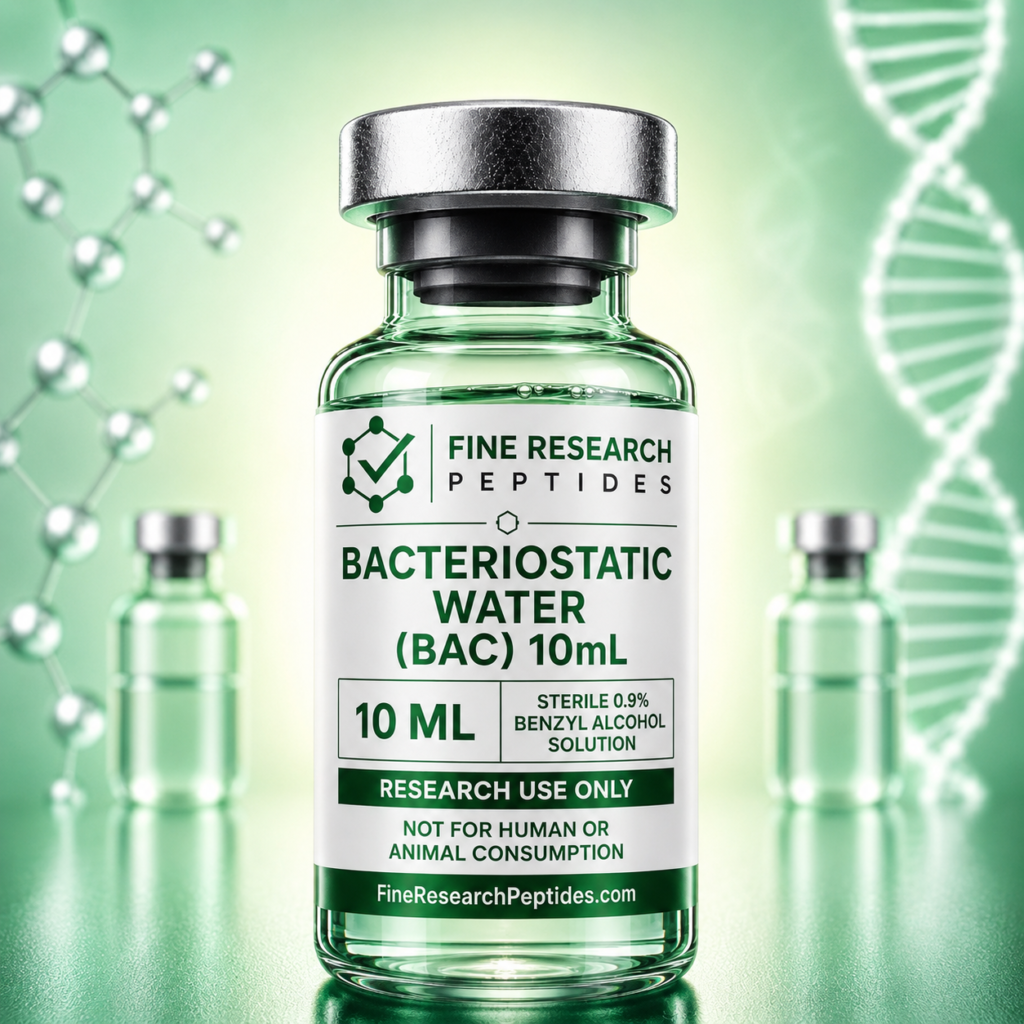
bacteriostatic water for injection
Bacteriostatic water for injection is a sterile water preparation used as a diluent for certain medications that require reconstitution before administration. Unlike ordinary sterile water, bacteriostatic water contains a preservative, commonly benzyl alcohol, which helps inhibit the growth of microorganisms in a properly handled multi-dose container. Its purpose is not to provide a therapeutic effect on its own. Instead, it is used only when the specific medication and its approved instructions identify it as an appropriate diluent.
Understanding this distinction is important because bacteriostatic water is not interchangeable with every other sterile liquid. Different medicines may require different diluents depending on their formulation, stability, compatibility, and approved instructions. Using an unsuitable diluent can affect the resulting preparation and may create unnecessary safety concerns. For that reason, bacteriostatic water should only be used for a medication when the product instructions or a qualified healthcare professional specifically indicate that it is appropriate.
Common Uses and Important Limitations
The primary role of bacteriostatic water for injection is pharmaceutical reconstitution. Some injectable medications are supplied as powders or concentrated formulations that must be combined with a suitable diluent before they can be administered. In these situations, the medication’s prescribing information specifies whether bacteriostatic water is appropriate and provides the relevant preparation requirements. The water itself is therefore a supporting pharmaceutical product rather than a treatment for a medical condition.
Bacteriostatic water should not be viewed as a universal solution for dissolving injectable substances. Some medications are specifically supplied with their own diluent, while others require preservative-free sterile water or another approved preparation. Compatibility can depend on the active ingredient, formulation, concentration, and intended route of administration. Patients and caregivers should never substitute a different diluent simply because it appears similar or is readily available online.
The preservative in bacteriostatic water is another reason that product selection matters. Benzyl alcohol is not appropriate for every patient or every medical situation, and some formulations specifically require preservative-free water. Particular caution is necessary for newborns because benzyl alcohol-containing preparations can present serious risks in this population. The exact product labeling and instructions from the healthcare professional should always take priority over general information found online.
How to Store Bacteriostatic Water Safely
Proper storage is an important part of maintaining the quality of bacteriostatic water. Storage requirements can vary by manufacturer and product, so the label should always be checked before the container is stored. Many approved products are kept at controlled room temperature and should be protected from inappropriate environmental conditions. The container should remain sealed and intact until it is needed for its authorized purpose.
Temperature exposure is also worth considering, particularly when products are transported or stored for extended periods. Extreme heat, freezing conditions, direct sunlight, or inappropriate humidity may affect packaging or product integrity. Consumers and healthcare facilities should follow the specific storage instructions supplied with their product rather than applying assumptions from another brand. If storage conditions have been significantly compromised, professional advice should be obtained before the product is used.
Expiration dates should always be checked before a product is used. A container that has passed its labeled expiration date should not be treated as reliable simply because the liquid appears clear. The same principle applies when the packaging is damaged, the seal is compromised, or the container shows signs of contamination. Pharmaceutical quality depends on more than visual appearance, which is why intact packaging, appropriate storage, and valid labeling are important.
Safety and Sterility Considerations
Although bacteriostatic water for injection is manufactured as a sterile pharmaceutical preparation, sterility can be compromised through improper handling. The outside of a container may become contaminated even when the liquid inside was originally sterile. Once a container is accessed, appropriate professional procedures are necessary to reduce contamination risks. For this reason, patients should not improvise handling techniques or reuse products in ways that conflict with their specific instructions.
A clear appearance does not guarantee that a product is appropriate for use. Cloudiness, visible particles, unusual discoloration, damaged seals, or other unexpected changes should be treated as reasons to stop and seek professional guidance. Pharmaceutical preparations should be evaluated according to their labeling and established handling requirements. When there is uncertainty about the condition of a vial, it is safer to consult a pharmacist or healthcare professional rather than relying on appearance alone.
Another important consideration is the difference between bacteriostatic water and sterile water for injection. Both are sterile preparations, but they are not necessarily interchangeable because their formulations and intended uses can differ. Bacteriostatic water generally contains a preservative, while sterile water for injection is typically preservative-free. The correct choice depends on the medication and its approved preparation instructions.
Bacteriostatic Water and Research Peptides
Online searches for bacteriostatic water sometimes occur alongside searches for research peptides, including listings using phrases such as tirzepatide research peptide for sale. Researchers should understand that the availability of a peptide and a diluent on the same website does not establish that they are intended to be used together. Research-labeled compounds can have different regulatory and quality considerations from approved prescription medicines. A research-use disclaimer also does not establish that a product is appropriate for human administration.
For legitimate laboratory work, researchers should evaluate peptide materials according to their approved research procedures and institutional requirements. Important considerations may include identity, batch information, analytical documentation, storage conditions, and traceability. Bacteriostatic water should likewise be selected according to the specific requirements of the laboratory procedure rather than based on an online bundle or promotional recommendation. Scientific procurement should be guided by documented requirements rather than assumptions about compatibility.
Consumers should be particularly cautious when online advertisements combine research peptides with instructions that suggest personal injection or treatment. Research materials are not substitutes for approved prescription medications, and bacteriostatic water does not make an investigational compound suitable for human use. Websites may use technical language to create an appearance of pharmaceutical legitimacy without providing adequate evidence of regulatory status or quality. Keeping research products separate from personal medical treatment is an important safety principle.
Choosing a Reliable Product
When selecting bacteriostatic water, buyers should focus on legitimate pharmaceutical sourcing and clear product information. Important details include the exact product name, manufacturer, concentration of preservative where applicable, container size, lot information, expiration date, storage requirements, and intended use. Packaging should be intact, properly labeled, and consistent with the product being purchased. These details provide a stronger basis for evaluating a product than promotional claims alone.
Buyers should also be cautious about websites that sell injectable supplies without clear information about their source or intended use. Extremely low prices, missing manufacturer details, damaged packaging, vague labeling, and unsupported claims about compatibility can all justify additional scrutiny. A professional supplier should provide enough information for customers and healthcare professionals to identify the product accurately. When important information is missing, purchasing a different product simply because it is cheaper or easier to obtain may not be a responsible choice.
For prescription treatment, the appropriate diluent should come from the medication’s approved instructions or qualified healthcare guidance. For laboratory research, the selection should follow the validated protocol and institutional procedures governing the experiment. This approach reduces the chance of using an incompatible product or treating a research material as though it were an approved pharmaceutical. Product selection should always begin with the requirements of the specific application.
Responsible Use and Final Considerations
Bacteriostatic water for injection has an important role in the preparation of certain injectable medicines, but its use requires more care than ordinary water products. It is a specialized sterile pharmaceutical preparation with specific formulation, storage, and compatibility considerations. Users should follow the instructions associated with the medication and the water product rather than relying on generic internet advice. When questions arise about compatibility, storage, or handling, a pharmacist or qualified healthcare professional is the appropriate source of guidance.
The growing online market for products described as tirzepatide research peptide for sale makes it especially important to distinguish research materials from prescription medicines. Bacteriostatic water should never be viewed as evidence that an investigational peptide is approved or safe for personal administration. Researchers should follow legitimate laboratory procedures, while patients should obtain prescription medications and related supplies through appropriate healthcare channels. This distinction helps protect both scientific integrity and individual safety.
Ultimately, responsible use of bacteriostatic water begins with understanding what the product is designed to do and what it is not designed to do. Buyers should verify the product, review its labeling, check storage requirements, protect container integrity, and use it only for an application where its suitability has been established. Researchers should maintain appropriate documentation and avoid relying on online marketing claims when selecting supporting materials. Careful sourcing and professional guidance remain the best ways to protect product quality and support safe, responsible use.