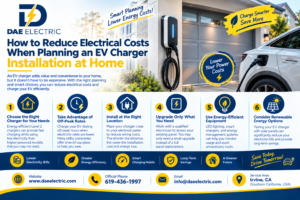
Home EV charger installation planned around electrical panel capacity and installation costs
Planning an EV charger installation at home requires more than choosing a charging unit. Homeowners need to consider electrical capacity, wiring distance, equipment requirements, installation location, and local permit rules. Making these decisions before work begins can help control expenses and prevent avoidable delays.
A practical plan focuses on what the property actually needs instead of paying for unnecessary upgrades. These seven tips explain how to manage costs while maintaining electrical safety and long-term reliability.
1. Check Electrical Capacity Before Your EV Charger Installation
Before starting an EV charger installation, ask a qualified electrician to assess your home’s electrical panel and existing circuits. Some properties may already have enough capacity, while others may require electrical modifications.
The electrician can review the panel rating, existing appliances, current electrical loads, and expected charging demand. This assessment helps determine whether a dedicated circuit can be added or whether a panel upgrade is necessary.
Do not assume every home needs a new electrical panel. Equally, avoid connecting a charger without confirming that the existing system can safely support the additional load. A professional assessment can help prevent unnecessary expenses and reduce the risk of electrical problems.
2. Choose a Charger That Matches Your Driving Habits
A charger with the highest available power rating is not automatically the most economical choice. The right equipment depends on your vehicle, daily mileage, charging schedule, and available electrical capacity.
For example, someone who drives short distances each day may have enough time to recharge overnight. A household with longer commutes or multiple electric vehicles may need a different arrangement.
Compare charging speed, vehicle compatibility, safety certifications, warranty coverage, and smart features before purchasing equipment. During an EV charger installation assessment, discuss your regular driving routine so the recommended equipment fits your actual requirements.
3. Select a Location That Reduces Wiring Costs
The distance between the electrical panel and the charging point can affect labor and material expenses. A location that requires extensive wiring or difficult access may cost more than a practical location nearby.
Before finalizing the layout, consider where the vehicle normally parks, where its charging port is located, and whether the cable can reach without crossing walkways or creating tripping hazards.
Outdoor installations may also require equipment suitable for the environment. Discuss mounting, cable management, and the wiring route with the electrician before work begins. Changing the location after installation has started can increase project costs.
4. Compare Itemized Installation Quotes
Installation estimates can vary because contractors may include different equipment, labor, materials, and electrical work. Comparing only the final price can make it difficult to understand which quote offers the best value.
Ask each contractor to explain the estimate and identify the costs for:
- Charging equipment and mounting hardware.
- Dedicated circuits, wiring, and protective devices.
- Installation labor and difficult-access work.
- Permit fees and inspections, where applicable.
- Electrical panel modifications, if required.
Request clarification about optional recommendations. If an upgrade is proposed, ask what issue it addresses and whether another compliant solution exists.
A detailed estimate makes it easier to compare the full cost of an EV charger installation without overlooking important work. Never remove required safety measures just to reduce the quoted price.
5. Consider Smart Charging and Electricity Rates
Installation expenses are only one part of owning an electric vehicle. Electricity rates and charging habits also affect long-term running costs.
Some utilities offer time-of-use plans with different electricity prices throughout the day. If lower rates are available during specific hours, a compatible smart charger may allow you to schedule charging for those periods.
Compare the actual rates, peak hours, and any additional fees before changing plans. Savings depend on your utility, vehicle usage, and charging schedule, so overnight charging is not automatically cheaper for every household.
Smart charging can also help organize charging around your daily routine. Choose features that provide genuine value rather than paying extra for functions you are unlikely to use.
6. Check Permits and Local Electrical Requirements
Permit and inspection requirements vary by jurisdiction and by the scope of the electrical work. Checking these requirements before scheduling the project can help prevent delays and unexpected expenses.
Ask the contractor whether a permit is required, who will arrange it, and whether an inspection must take place after installation. Keep copies of relevant documentation for future maintenance or property transactions.
Homeowners researching solar installers in Irvine CA should confirm that the provider offers the specific EV charging and electrical services they need. Solar installation experience alone does not establish qualification for every type of electrical project.
Before hiring a contractor, check applicable licensing, insurance, and experience with residential charging systems.
7. Plan for Future Charging Needs
A home charging setup should meet current requirements while allowing for reasonable future needs. A household considering a second electric vehicle, for example, may want to discuss future electrical capacity and charger placement before work begins.
Planning ahead does not necessarily mean purchasing the most powerful charger or upgrading every part of the electrical system immediately. Instead, ask the electrician which options make sense for the property and which changes could be completed later.
Homeowners comparing solar installers near Irvine CA should evaluate the provider’s relevant electrical experience and confirm the services available for their specific project.
A qualified professional can explain the options and help identify a practical balance between the current budget and future flexibility.
Why Professional Planning Matters
A successful EV charger installation combines suitable equipment, adequate electrical capacity, a convenient location, and compliance with applicable requirements. These details affect both the initial cost and the reliability of the finished system.
Before hiring a contractor, ask about the proposed installation method, expected timeline, warranty, permits, and any additional work that may be required. Request written answers so you can compare providers on a consistent basis.
Homeowners can learn more about the services offered by DAE Electric and confirm the details of their project before arranging an assessment.
Frequently Asked Questions
How can I reduce the cost of an EV charger installation?
Assess your electrical panel, choose a charger suited to your driving habits, and select a practical location. Compare itemized estimates and confirm permit requirements before work begins.
Does every home need a new electrical panel?
No. The need for an upgrade depends on existing panel capacity, current electrical loads, and the proposed charger. A qualified electrician should assess the system before recommending changes.
Is a more powerful charger always worth the extra cost?
Not necessarily. The appropriate charging speed depends on your vehicle, daily driving distance, and how long the vehicle remains parked at home.
Can smart charging reduce electricity expenses?
Potentially. Smart charging can schedule charging during lower-cost periods if your utility offers suitable time-of-use rates. Actual savings depend on your electricity plan and charging habits.
Should I check permits before installing a charger?
Yes. Requirements vary by location and project. Confirm permit and inspection requirements with the relevant local authority or qualified contractor before work starts.
Conclusion
A cost-effective EV charger installation begins with careful preparation. Assessing electrical capacity, choosing suitable equipment, planning the wiring route, comparing detailed quotes, and checking local requirements can help homeowners avoid unnecessary expenses.
Rather than automatically choosing the most expensive equipment or accepting upgrades without an explanation, plan around the property’s actual needs. Professional guidance and informed decisions can help create a convenient, safe, and practical home charging setup.