Sunken concrete is a common problem for homeowners and commercial property owners. Driveways, sidewalks, patios, garage floors, and other concrete surfaces can settle over time due to soil erosion, poor drainage, or changes in the ground beneath them.
When a concrete slab becomes uneven, replacement may seem like the only solution. However, that is not always necessary. Depending on the condition of the existing concrete, professional leveling methods can lift the slab and restore a more even surface without removing and pouring new concrete.
Understanding why concrete sinks and which repair options are available can help you determine the best way to address the problem.
Why Does Concrete Sink Over Time?
Concrete slabs depend on stable, well-compacted soil for support. When the ground beneath them changes, the concrete can settle or shift.
Several factors can contribute to this problem.
Soil Settlement
Soil that was not properly compacted during construction may gradually compress under the weight of concrete and regular use. As the soil settles, the slab above it can sink unevenly.
Water Erosion
Rainwater, leaking pipes, and poor drainage can wash away soil beneath concrete. This may create empty spaces that leave sections of the slab without adequate support.
Freeze-Thaw Cycles
In areas that experience freezing temperatures, moisture in the ground can freeze and expand, then thaw and contract. Repeated cycles may contribute to ground movement and uneven concrete.
Poor Drainage
When water repeatedly collects around a driveway, patio, or foundation, it can affect the supporting soil. Over time, this may lead to settlement and changes in the concrete’s elevation.
Identifying the cause is an important first step because lifting the slab without addressing ongoing drainage or soil problems may not provide a lasting solution.
Can Sunken Concrete Be Lifted Instead of Replaced?
Yes. Many sunken concrete slabs can be lifted without complete replacement, provided the concrete is still structurally suitable for repair.
Concrete leveling works by introducing a lifting material beneath the existing slab to fill voids and help raise the concrete toward its original position. The method selected depends on the extent of settlement, the slab’s condition, and the ground beneath it.
For property owners considering a concrete leveling company in St. Louis, an inspection can help determine whether the existing surface can be restored or whether replacement is the safer option.
Two common methods used to lift sunken concrete are polyurethane foam injection and mudjacking.
Common Methods for Leveling Sunken Concrete
1. Polyurethane Foam Injection
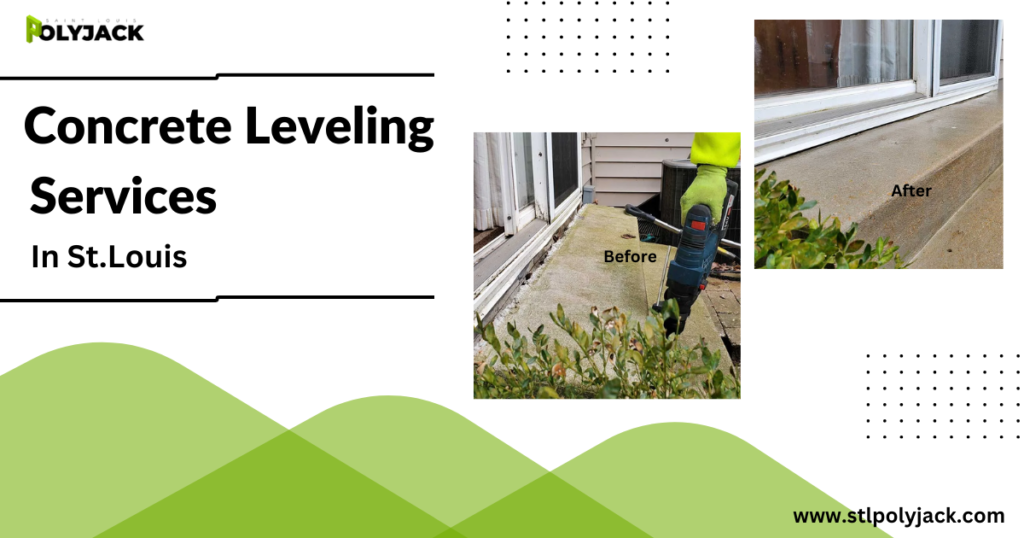
Polyurethane concrete leveling uses expanding foam to lift and support settled concrete. A contractor drills small holes through the slab and injects the foam underneath.
The material expands to fill accessible voids and applies controlled pressure to raise the concrete. Once the slab reaches the desired position, the holes are patched.
This method is often selected because the foam is lightweight, the injection holes are relatively small, and the material generally cures quickly. The actual results depend on the slab, soil conditions, and the quality of the installation.
Polyurethane foam injection may be suitable for driveways, sidewalks, patios, garage floors, and certain commercial concrete surfaces.
2. Mudjacking
Mudjacking is another method used to raise sunken concrete. It involves pumping a cement-based slurry beneath the slab through drilled holes.
As the material fills voids, it helps lift the concrete toward a more level position. The holes are then patched after the lifting work is complete.
Mudjacking can be a practical option for certain concrete leveling projects. However, its suitability depends on the site’s conditions, the weight of the lifting material, and the amount of settlement.
A professional can compare the two methods and recommend the approach that best fits the repair requirements.
What Are the Benefits of Leveling Existing Concrete?
When a slab is suitable for lifting, leveling may offer several advantages over complete replacement.
Reduced Demolition
Leveling generally avoids the need to break up and remove the entire slab. This can reduce disruption to surrounding landscaping, walkways, and nearby structures.
Potential Cost Savings
Replacing concrete can involve demolition, disposal, ground preparation, and new concrete installation. Leveling may avoid many of these expenses, although the final cost depends on the size and condition of the slab and the repair method required.
Faster Repair
Many concrete leveling projects can be completed more quickly than full replacement. Some lifting materials also cure quickly, allowing the repaired area to return to service sooner, subject to the contractor’s instructions.
Less Material Waste
When the existing concrete can be retained, there may be less demolition debris and less demand for new concrete materials.
Improved Surface Safety
Lifting uneven slabs can help reduce height differences between adjacent sections of concrete. This may improve the usability of driveways and walkways and reduce certain trip hazards.
When Is Concrete Replacement Necessary?
Although leveling can restore many sunken slabs, it is not suitable for every situation.
Replacement may be necessary when:
- The concrete is severely cracked or broken into multiple unstable pieces.
- The slab has extensive structural deterioration.
- The concrete cannot be lifted safely without causing further damage.
- The underlying soil remains unstable and cannot be adequately supported.
- The existing surface has major design or drainage problems that require reconstruction.
In some cases, additional repairs may be needed even when leveling is possible. For example, a drainage issue may need to be corrected to reduce the likelihood of future settlement.
A professional assessment can help distinguish between concrete that can be restored and concrete that needs replacement.
How Much Does It Cost to Level Sunken Concrete?
The cost of leveling depends on several project-specific factors. These include the size of the affected area, the degree of settlement, the number and size of voids beneath the slab, site accessibility, and the repair method.
A small section of sidewalk may require considerably less work than a large driveway or commercial concrete floor. The condition of the existing slab also matters because damaged concrete may need additional repairs.
When comparing estimates, ask the contractor to explain the recommended method, the work included in the price, and whether any drainage or soil issues need attention.
Comparing the cost of leveling with the full cost of replacement can help you decide which option offers the best value for your property.
How to Prevent Concrete from Sinking Again
Although concrete leveling can correct existing settlement, prevention also matters. The following steps may help reduce the risk of future problems.
- Improve drainage: Direct rainwater away from concrete surfaces and building foundations.
- Repair leaks promptly: Underground plumbing leaks can erode the soil beneath slabs.
- Maintain gutters and downspouts: Ensure that roof runoff does not repeatedly saturate the ground near concrete.
- Monitor new cracks and gaps: Changes in the surface may indicate ongoing settlement.
- Address soil problems: Where practical, identify and correct the underlying cause rather than treating only the visible symptoms.
These measures cannot eliminate every cause of settlement, but they can help protect the supporting ground and reduce avoidable moisture-related problems.
Choose the Right Solution for Sunken Concrete
Sunken concrete does not automatically mean you need a complete replacement. When the slab remains in suitable condition, methods such as polyurethane foam injection and mudjacking may help restore its position while avoiding extensive demolition.
The best approach depends on why the concrete has settled, how much it has moved, and whether the underlying soil can provide stable support after the repair.
Property owners considering concrete leveling services in St. Louis should arrange an inspection to understand the available options and receive an estimate based on the actual condition of the concrete.
With the right assessment and repair method, many uneven concrete surfaces can be restored without the cost and disruption of replacing the entire slab.