Solar panels are becoming an increasingly popular choice for UK homeowners looking to reduce electricity bills and generate cleaner energy at home. If you are considering solar power, understanding the installation process, costs, requirements and potential benefits can help you make a more informed decision.
For homeowners researching Solar Panel Installation work for UK Homes, it is important to consider more than just the price of the panels. Your roof condition, property location, energy usage and the size of the system can all influence the final result.
What Is Solar Panel Installation?
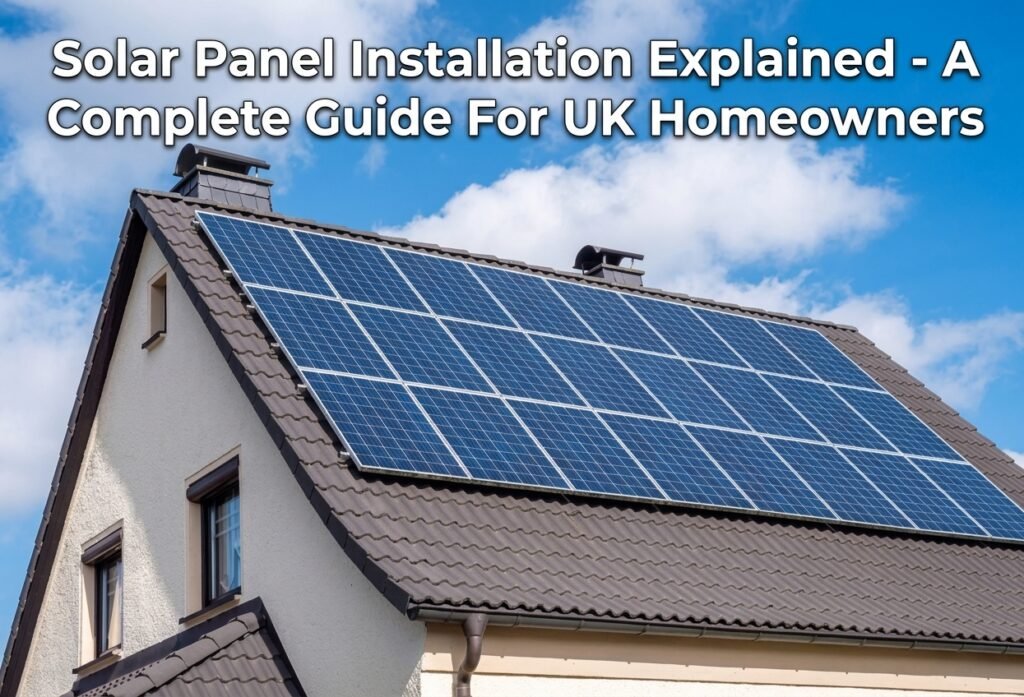
Solar panel installation involves fitting photovoltaic (PV) panels onto a suitable part of your property, usually the roof. These panels capture sunlight and convert it into electricity that can be used around your home.
A typical residential solar system may include:
- Solar PV panels
- Roof mounting equipment
- An inverter
- Electrical wiring and protection equipment
- A generation meter or monitoring system
- Optional battery storage
The electricity generated can help power everyday appliances such as lights, refrigerators, washing machines and other household equipment.
How Does Solar Panel Installation Work?
Although the exact process varies between properties, professional installation generally follows several important stages.
1. Property Assessment
An installer first assesses your roof and property. They may consider the roof’s size, angle, orientation, shading and structural condition.
This assessment helps determine whether solar panels can be installed effectively and what system size may be appropriate.
2. System Design
The installer designs a system based on your electricity requirements and available roof space. The design may also consider whether you want battery storage.
A correctly sized system can help you make better use of the electricity generated by your panels.
3. Installing the Mounting System
Mounting equipment is securely attached to the roof. The panels are then positioned onto this framework.
Installers need to ensure the equipment is properly secured and suitable for the roof type.
4. Electrical Installation
The panels are connected to an inverter, which converts the electricity generated by the panels into a form that can be used by household electrical systems.
The system is then connected safely to the property’s electrical installation.
5. Testing and Commissioning
Once installation is complete, the system is checked and tested to ensure everything is operating correctly.
The homeowner should also receive relevant information about operating and maintaining the system.
What Does Solar Panel Installation Cost in the UK?
The cost of installing solar panels varies considerably from one property to another. There is no single price that applies to every UK home.
Factors that can affect the cost include:
- Number and type of solar panels
- Roof size and condition
- Installation complexity
- Inverter type
- Battery storage
- Scaffolding requirements
- Labour costs
- Electrical work
- Property location
The following table gives a general overview of factors that can influence your installation budget:
| Installation Factor | Potential Impact on Cost |
|---|---|
| Number of panels | More panels generally increase the overall system price |
| Roof condition | Repairs may be required before installation |
| Battery storage | Adds to the initial investment |
| Roof accessibility | Difficult access can increase labour requirements |
| Inverter choice | Different technologies have different prices |
| Scaffolding | May be required for safe roof access |
| Electrical upgrades | Additional work may increase installation costs |
Because every property is different, homeowners should obtain a detailed quotation based on their specific requirements rather than relying only on a general online estimate.
What Are the Benefits of Solar Panels?
Installing solar panels can provide several potential advantages for homeowners.
Lower Electricity Bills
Generating your own electricity can reduce the amount of energy you need to purchase from the grid. The actual savings depend on your system, electricity usage and how much of your generated energy you use.
Renewable Energy
Solar energy is renewable and does not require fuel to generate electricity. Using more renewable energy at home can reduce reliance on conventional energy sources.
Better Energy Independence
Solar panels can give homeowners greater control over where some of their electricity comes from. Adding battery storage can potentially allow surplus electricity to be stored for later use.
Potential Property Appeal
Energy-efficient features can be attractive to some future buyers. However, homeowners should view solar panels primarily as an energy investment rather than assuming they will automatically increase property value.
What Should UK Homeowners Check Before Installation?
Before agreeing to an installation, it is sensible to consider the condition and suitability of your property.
Important checks include:
- Is the roof structurally sound?
- Is there significant shading from trees or nearby buildings?
- How much electricity does your household normally use?
- Is there enough suitable roof space?
- Will you need battery storage?
- Does the proposed system comply with relevant requirements?
- What warranties are included?
- Is the installer suitably qualified and experienced?
Homeowners should also review applicable Solar Panel Guidelines and discuss any property-specific requirements with a professional installer.
How Long Does Solar Panel Installation Take?
The physical installation for a typical residential system can often be completed relatively quickly, but the overall project timeline depends on the property and installation requirements.
Factors such as roof access, system size, scaffolding, electrical work and administrative requirements can affect how long the process takes.
A professional installer should explain the expected timeline before work begins.
How Can Homeowners Get the Most From Solar Panels?
The amount of electricity you use directly from your solar system can affect its financial benefits.
Try to use high-energy appliances during periods when your panels are generating electricity. For example, you might run a washing machine or dishwasher during daylight hours rather than automatically using them in the evening.
Other options include:
- Monitoring your solar generation
- Reducing unnecessary electricity consumption
- Considering battery storage
- Maintaining the panels properly
- Reviewing your household energy habits
Are Solar Panels Suitable for Every UK Home?
Not necessarily. Solar panels can work on many different types of properties, but suitability depends on factors such as roof orientation, available space, shading and structural condition.
A professional assessment is therefore important before making a final decision.
Conclusion
Solar panel installation can be a practical way for UK homeowners to generate renewable electricity and potentially reduce their dependence on grid-supplied energy. However, choosing the right system requires careful consideration of your roof, electricity usage, installation requirements and long-term energy goals.
Before making a decision, compare quotations and discuss your property with an experienced professional. Choosing reliable Solar Panel Installation Services can also help ensure that your system is properly designed, installed and commissioned for safe and effective operation.
Frequently Asked Questions
1. How many solar panels does a UK home need?
The number depends on household electricity consumption, available roof space, panel efficiency and the desired system capacity. An installer can recommend a suitable system after assessing your property.
2. Can solar panels work on cloudy days?
Yes. Solar panels can still generate electricity in cloudy conditions because they use available daylight. However, generation is generally lower than during bright, sunny conditions.
3. Do solar panels work in winter?
Yes. Solar panels continue to generate electricity during winter, although shorter daylight hours and lower levels of sunlight can reduce their output compared with summer.
4. Should I install a solar battery?
A battery can store surplus solar electricity for use later, such as during the evening. Whether it is worthwhile depends on your energy consumption, solar generation and budget.
5. How long do solar panels last?
Solar panels are designed for long-term use and typically have warranties covering many years. Their performance can gradually decline over time, so checking the manufacturer’s warranty and performance guarantees is important.