A Monument Is Never Only Its Façade
Lahore’s historic character comes from forts, mosques, gardens, colonial institutions, havelis, bazaars, gateways, streets, drains, courtyards, and the ordinary buildings between famous landmarks.
Conservation fails when it treats one front elevation as a stage set and ignores roof leakage, foundations, utilities, residents, trades, and movement through the neighbourhood.
The photogenic wall gets attention. The blocked drain decides how long it survives.
Religious buildings and private homes require different access expectations. Public value does not erase worship, ownership, privacy, or the routines that kept a place meaningful before tourism arrived.
The Walled City Is a Living Urban System
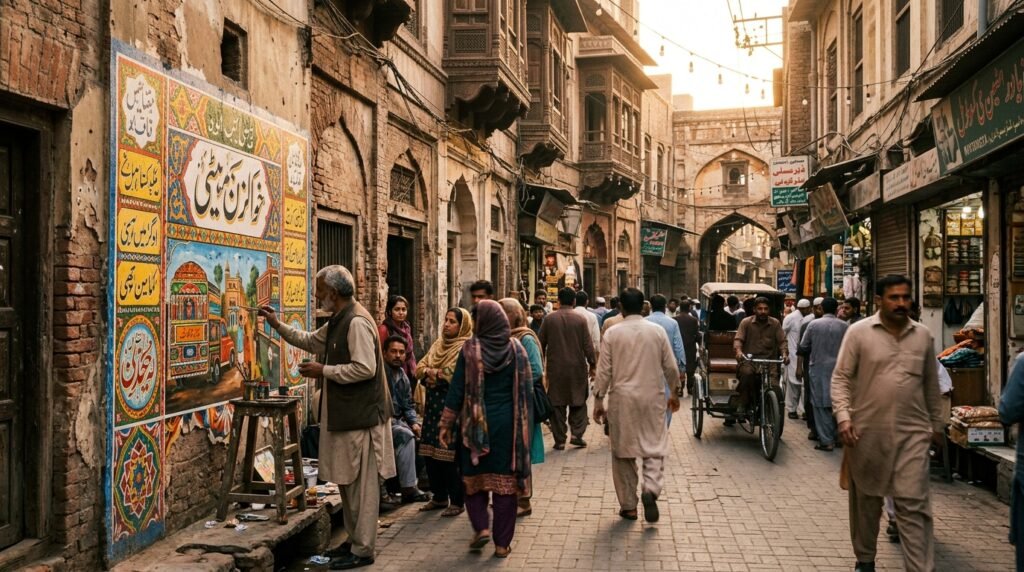
The Walled City of Lahore contains layers from Mughal, Sikh, colonial, and later periods. It is also home to residents and businesses with present-day needs for sanitation, access, safety, schools, and income.
Projects supported by the Walled City of Lahore Authority and the Aga Khan cultural network have demonstrated integrated approaches, including monument conservation and infrastructure improvement along connected routes.
The central lesson is practical: heritage policy must improve daily life. If conservation makes a neighbourhood beautiful but impossible to inhabit, displacement becomes part of the project.
Street width, plot rhythm, sightlines, shade, and mixed use are heritage attributes too. Saving isolated buildings while replacing the surrounding urban pattern can empty them of context.
Documentation Comes Before Design
Architects need measured drawings, photographs, material analysis, structural assessment, ownership records, earlier repair history, and an account of current use before proposing an intervention.
Digital survey tools, photogrammetry, laser scanning, and Historic Building Information Modelling can record complex geometry and attach condition data. Studies in Lahore have explored these methods at sites including Chauburji and structures within Lahore Fort.
A three-dimensional model is not preservation by itself. It becomes useful when teams update it, connect it to maintenance, and keep the files accessible after the consultant leaves.
Survey files need durable formats, backups, naming standards, and clear custody. Otherwise an expensive scan becomes unreadable evidence stored on a forgotten workstation.
Compatible Repair Is Usually Quiet
Historic brick, lime mortar, timber, plaster, tile, fresco, and stone respond differently from modern cement-rich systems. A hard new repair can trap moisture or force stress into older material.
Conservators therefore test, document, and intervene as little as necessary. Replacement should match physical behaviour, not only colour.
Good repair can look almost uneventful. That is a virtue, though it makes ribbon-cutting photographs rather difficult.
Lime work also depends on curing and workmanship. Specifying a traditional material without trained masons, suitable aggregates, and site supervision can create a historically labelled failure.
Adaptive Reuse Gives Buildings a Reason to Be Maintained
A historic structure with a suitable new use can support regular inspection, staffing, income, and public access. Possible uses include cultural spaces, archives, small museums, learning centres, guest accommodation, offices, or carefully managed retail.
The word suitable does heavy work. New services, fire exits, kitchens, air-conditioning, signage, and visitor loads can damage the very building meant to be saved.
An adaptive-reuse proposal should check:
- structural capacity
- reversible interventions
- safe access and evacuation
- impact on residents
- utilities and drainage
- long-term operator and budget
New use should be tested against several seasons, not only opening week. Summer heat, monsoon rain, winter damp, and festival crowds place different demands on services and fabric.
Architecture Reporting Should Stay With the Building
PakistaniArt covers Pakistani architecture and design alongside visual art, photography, fashion, and cultural life. That editorial connection helps readers understand a restored site as more than a property announcement.
Useful coverage returns after opening day. It asks whether repairs are holding, whether the promised use began, how public access works, and who pays for maintenance. Before-and-after images are satisfying; a five-year condition report is more valuable.
Writers should name conservation architects, craftspeople, engineers, historians, funders, and community partners. Good heritage work is collaborative, even when publicity prefers one official at the podium.
Tourism Must Not Turn Residents Into Scenery
Heritage walks, food streets, lighting, and public events can generate income and strengthen interest in conservation. They can also increase rent, noise, traffic, waste, and pressure on private homes.
Residents and traders need early participation, not a presentation after the route is fixed. Benefits should include local employment, service upgrades, and clear channels for complaints.
Visitor capacity matters in narrow streets and fragile interiors. More footfall is not always better footfall.
Interpretation can direct visitors toward less fragile routes and explain why some rooms remain closed. Restriction feels less arbitrary when the conservation reason is stated plainly.
Maintenance Is the Real Conservation Project
Large restoration campaigns attract funding because change is visible. Routine maintenance struggles for attention even though gutters, roofs, vegetation, wiring, and water ingress cause predictable damage.
Every conserved building needs a calendar, named responsibility, inspection forms, emergency contacts, and an annual budget. Small defects should be photographed and repaired before they become structural work.
Lahore does not need every historic building polished into newness. It needs thousands of modest, technically sound decisions repeated before the next monsoon.
Maintenance teams should retain samples and specifications from repairs. When a patch fails, that record lets the next team diagnose materials instead of repeating an undocumented experiment.